
Year in review part two: Summer sun, trouble at the BBC and turbulent Budget
The downfall of a prince, trouble for the BBC and a turbulent autumn for the government dominated the second half of the year. In the concluding part of our news review of 2025, Andrew Vine looks at the events of July to December.

It was the perfect summer for outdoor events – warm and sunny for the crowds flocking to Bradford to enjoy the packed programme of the UK City of Culture.
Even those crowds couldn’t compare with the 1.4m fans heading for the long-anticipated reunion tour of Oasis, which began in Cardiff on July 4, from which brothers Liam and Noel Gallagher stood to make a reported £50m between them.
Other stars found themselves in the spotlight for all the wrong reasons.

On July 8, the BBC sacked Gregg Wallace as presenter of MasterChef, one of its most popular programmes, after a deluge of allegations about his behaviour, including inappropriate language and complaints about him appearing in a state of undress, which he vehemently denied, later beginning legal action against the corporation.
Shortly afterwards, the BBC announced Wallace’s co-host, John Torode, would not have his contract renewed after an allegation of inappropriate language. Torode said he had no recollection of the incident.
July brought the echo of a painful past for Yorkshire, when the government announced an inquiry into arguably the ugliest episode of the bitter 1984/85 miners’ strike, the battle of Orgreave.
Violent clashes between pickets and police took place outside the Orgreave coking plant, near Rotherham, on June 18 1984.

Coalfield communities had long accused the police of a cover-up of their conduct, and in announcing the inquiry under the chairmanship of the Bishop of Sheffield, Dr Pete Wilcox, Home Secretary Yvette Cooper said it would finally establish the truth.
Memories of another tragic episode from Yorkshire’s past were revived in December, when a damning official report into the 1989 Hillsborough disaster, in which 97 Liverpool fans died in a crush at Sheffield Wednesday’s ground, concluded 13 police officers should have faced gross misconduct charges over their failings.
They included the late Chief Constable of South Yorkshire Police, Peter Wright, and ground commander Supt David Duckenfield. But since all have either retired or died, none will face any action.
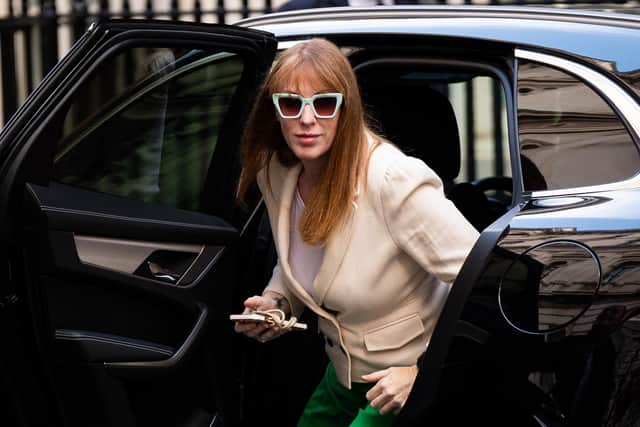
On July 17, the Deputy Prime Minister, Angela Rayner, announced a bill to give 1.5m 16 and 17-year-olds the vote at the next general election.
Within weeks, Ms Rayner was gone, resigning from her post and as deputy leader of Labour on September 5 after it emerged she had failed to pay enough stamp duty on the purchase of an £800,000 flat in Hove.
She was ruled to have breached the ministerial code, and wrote in her resignation letter to the Prime Minister that she “did not meet the highest standards”.
The loss of such a high-profile figure was a huge blow and a major embarrassment for the government.
In his reply, Sir Keir Starmer wrote: “Although I believe you have reached the right decision, it is a decision which I know is very painful for you.”
Her departure prompted a major government reshuffle, with David Lammy appointed Deputy Prime Minister and Justice Secretary.
Shabana Mahmood became Home Secretary and Yvette Cooper Foreign Secretary. Steve Reed was appointed Housing Secretary.
The reshuffle also saw Lucy Powell sacked as the Leader of the Commons. A month later, in an awkward moment for the Prime Minister, Labour members elected her deputy leader of the party, succeeding Ms Rayner.
Her resignation began a difficult autumn for the government.
It was revealed in October that convicted criminals were regularly being released from jail by mistake, with two being let out of Wandsworth Prison within a week.
They were just the tip of the iceberg. The government admitted an average of three a week were wrongly let out, with 262 freed in error in the year to March.
The government’s opinion poll ratings had plummeted, with the Prime Minister’s personal ratings sinking to the lowest of any Premier in modern times.
In November, the government attempted to get on the front foot by announcing tough new restrictions on asylum seekers, as the numbers crossing the Channel passed 39,000, higher than in each of the previous two years.
Home Secretary Shabana Mahmood said illegal migrants would have to wait up to 20 years for citizenship, with automatic rights to benefits and housing revoked, telling the Commons the current system was “out of control and unfair” and adding: “If we fail to deal with this crisis, we will draw more people down a path that starts with anger and ends in hatred.”
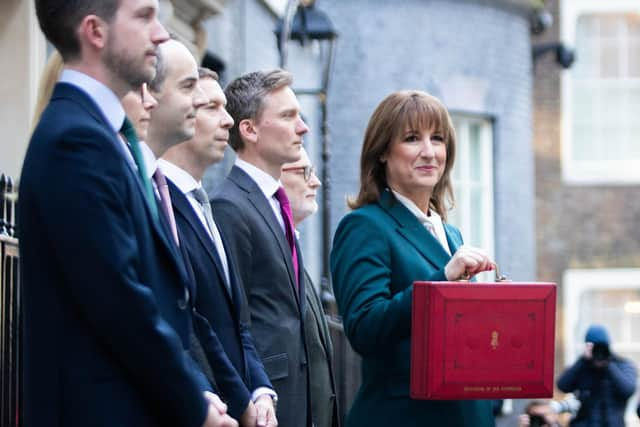
The budget on November 26 hovered over everything the government did.
It imposed £26bn of tax rises, but the measures in the Chancellor’s statement were leaked in error by the Office for Budget Responsibility before the Commons heard them. OBR chief Richard Hughes resigned over the leak.
A furious row blew up over the budget, with Rachel Reeves being accused by other parties of misleading the public over the state of the nation’s finances after failing to disclose that the OBR’s projections for the economy were better than expected, a charge she denied.
The OBR wasn’t the only institution in trouble. On November 9, the BBC’s director-general, Tim Davie, and its head of news, Deborah Turness, resigned after an internal report concluded its flagship Panorama programme had misled viewers by editing together two parts of a speech by Donald Trump, making it appear he had encouraged rioting at the US Capitol in 2021.
The President threatened to sue, and in mid-December did so, filing a $10bn lawsuit for defamation in Florida and accusing the corporation of putting “terrible words in my mouth having to do with January 6”.
The BBC said it would fight the claim, raising the prospect of a difficult and potentially costly 2026 at a time when it is also entering negotiations with the government over the future of the licence fee.
The autumn and the weeks running up to Christmas were to bring anti-Semitic violence and horror.
On October 2, two people died and another three were injured in an attack on the Heaton Park Hebrew Congregation Synagogue in Manchester.
The attacker was armed with a knife and drove a car at people outside the building before attempting to get inside. He was shot dead by police.
An even worse attack followed on December 14, when Jewish people celebrating Chanukkah on Australia’s Bondi Beach were targeted by father and son gunmen who killed 15 and injured dozens more, an atrocity that sparked worldwide revulsion and condemnation.
The youngest victim was a 10-year-old girl and the oldest an 87-year-old Holocaust survivor.
They were murdered by Sajid Akram, 50, and his son Naveed Akram, 24, who fired into the crowd of worshippers from a footbridge overlooking the beach. Sajid Akram was shot dead by police. His son has been charged with 15 murders.
In the midst of the horror, there was heroism. A local shopkeeper, Ahmed al-Ahmed, tackled Sajid Akram and wrestled a gun from him before being shot. He survived, though critically injured. Two other members of the public died when they attempted to disarm the second killer.
At home, on November 1, a man wielding a knife attacked passengers aboard an LNER train from Doncaster to London as it travelled through Cambridgeshire, injuring 11 people. He has been charged with attempted murder.
One story above all others dominated the headlines in the second half of the year – the downfall of Andrew Mountbatten-Windsor over his links to a convicted sex offender, which plunged the Royal Family into arguably its worst crisis since the Abdication of Edward VIII in 1936.
The autumn had begun with sadness for the family as it mourned the death of the Duchess of Kent, aged 92, on September 4.
She was a daughter of Yorkshire, born Katharine Lucy Mary Worsley at Hovingham Hall, in the Howardian Hills, and over a long lifetime of service became one of the hardest-working and most popular royals.
In later life, the duchess stepped away from formal duties, and taught music at Wansbeck Primary School in Hull, where she was known to staff and pupils as Mrs Kent.
She had embraced Roman Catholicism in 1994, and her funeral at Westminster Cathedral on September 16, attended by the King, was the country’s first royal Catholic funeral in modern times.
A few weeks later, on October 23, there was a historic display of friendship between the Crown and the Roman Catholic church when the King visited the Vatican to pray with the Pope, the first monarch to do so since Henry VIII split with the church in 1534.
The King rolled out the red carpet at Windsor for the unprecedented second state visit of US President Donald Trump in September, which featured a spectacular military parade followed by a banquet.
As head of the Church of England, he also welcomed the appointment of Dame Sarah Mullally as the first female Archbishop of Canterbury.
And then, on December 12, there was a surprise broadcast by the King, 77, with good news about his ongoing treatment for cancer.
As part of a Channel 4 evening devoted to the Stand Up To Cancer campaign, he revealed his treatment would be scaled back in the New Year.
The King said: “This milestone is both a personal blessing and a testimony to the remarkable advances that have been made in cancer care in recent years, testimony that I hope may give encouragement to the 50 per cent of us who will be diagnosed with the illness at some point in our lives.”
His hope that others would seek tests and start treatment early became reality within days, with Cancer Research UK saying 100,000 people had used its online screening tool following the broadcast.
Yet the shadow of Prince Andrew’s friendship with the late Jeffrey Epstein fell across everything the Royal Family did.
Associating with Epstein led to the downfall of another high-profile figure, Peter Mandelson, sacked as Britain’s ambassador the US on September 11, after he had sent supportive emails to the convicted sex offender, including calling him his “best pal”.
Then on September 21, emails were revealed from the Duchess of York calling Epstein a “supreme friend”. Several charities of which she was a patron cut ties with her.
Amid a continuing stream of stories, Andrew announced on October 17 that he was relinquishing his royal titles including that of Duke of York.
But public and political disquiet did not abate, and a bombshell arrived on October 30 with a statement from Buckingham Palace that the King was starting the process of stripping Andrew of his status as a prince, and he would be leaving his home, Royal Lodge, in Windsor.
It said: “His Majesty has today initiated a formal process to remove the Style, Titles and Honours of Prince Andrew.
“These censures are deemed necessary, notwithstanding the fact that he continues to deny the allegations against him.
“Their Majesties wish to make clear that their thoughts and utmost sympathies have been, and will remain with, the victims and survivors of any and all forms of abuse.”
Henceforth to be known as Andrew Mountbatten-Windsor, he will move to the Sandringham estate in Norfolk, supported financially by the King, where he is expected to keep a low profile, an extraordinary fall from grace for a man who was once one of the most prominent royals.
Ends