
Yorkshire mayors back Andy Burnham's 'devolution revolution'
Andy Burnham unveiled his vision for Britain this morning in his first major speech since Sir Keir Starmer announced he would be leaving Downing Street.

Yorkshire mayors have backed Andy Burnham’s plans to transfer power out of Whitehall and give regions the ability to control essential utilities, transport and housing.
Mr Burnham unveiled his vision for Britain this morning in his first major speech since Sir Keir Starmer announced he would be leaving Downing Street.
The former Greater Manchester Mayor is expected to take over next month, unless another challenger emerges amongst Labour MPs.
The prospective prime minister promised to set a “new direction” for the UK, with an outpost of 10 Downing Street based in Manchester to drive his plans to rewire the British state.
The proposals would bring about the “biggest rebalancing of power our country has seen”, Mr Burnham said as he promised to overcome Whitehall’s resistance to change.
“Let me say this very directly: the days of Whitehall fighting the devolution of power into the regions and nations are over for good.”
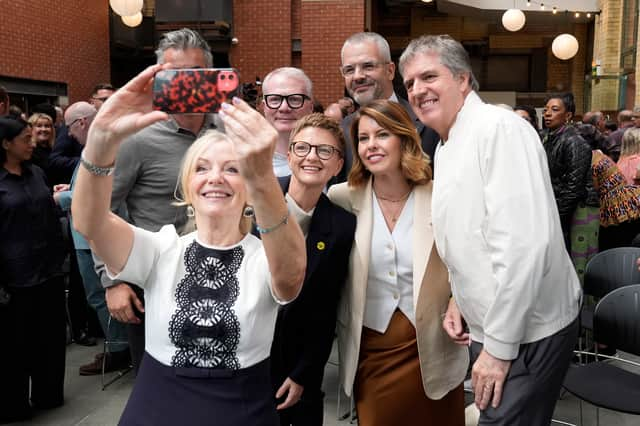

Mr Burnham’s plan was backed by Yorkshire’s Labour mayors, who were all in attendance at the People's History Museum in Manchester.
York and North Yorkshire Mayor David Skaith said: “Andy’s plan for this country sets out the ambition and scale of change people have been calling for. It’s a vision built on hope.
“One that puts trust, backed by investment, in the people who know their communities best to tackle the huge challenges we face. That can only be a good thing.
“What Andy has achieved in Manchester, despite resistance from Whitehall, is incredible. We can do the same here in York and North Yorkshire if we're given the trust, powers, investment and confidence that Andy set out today.”
West Yorkshire’s Tracy Brabin praised Mr Burnham for leading “the way in the devolution revolution, putting place before politics and changing Greater Manchester”.
“People are desperate for change. Transferring more power to mayors who know their areas best will help us lower the cost of living, regenerate our high streets and enable good growth across our region,” she added.

South Yorkshire Mayor Oliver Coppard told the BBC: “Taking decisions closer to people, devolution itself, has been shown over time to help grow the economy.”
Mr Burnham said that this would help bring about “good growth in every postcode and hope in every heart”.
However, Paul Swinney, chief economist at the Leeds-based Data City, said the former pledge “could sink his agenda”.
“‘Growth in every postcode’ could just be political positioning,” he said.
“It sounds good while building a coalition of support, but the lack of definition of what growth is gives enough wiggle room further down the line.
“But if it instead reflects the unwillingness to be strategic and take decisions, then government policy in the next couple of years will do as much for reducing subnational divides as the previous 100. And that’s not a lot.”
In an attempt to reassure the markets that he would not hike borrowing and taxes to pay for his plans, Mr Burnham promised his measures would be based on “the stability that comes from sound public finances” and “the discipline of our current fiscal rules”.
But he acknowledged that taxpayer-funded support would be needed to deal with the cost-of-living pressures facing households.
“Ours is a 10-year mission to raise people’s living standards,” he said.
“I know people can’t wait forever for change. I heard on doorsteps in Makerfield how people need a bit extra now to help with rising costs.
“I will do my very best to deliver it, and whilst not taking risks with the public finances, will seek to give Britain some breathing space as soon as I can.”
Mr Burnham said he would not be announcing his Cabinet yet, but pledged to build “an inclusive team at the very highest level so that all parts of the party and the country can see themselves represented in it”.
He insisted his plans were consistent with the manifesto Labour campaigned on in 2024 despite being “the biggest change in our lifetimes to the way the country is run”.
In Westminster, Mr Burnham said he would reach out to other parties to create a “greater sense of unity” in place of the “fragmented, disjointed” political environment he said he had found on his return to Parliament.
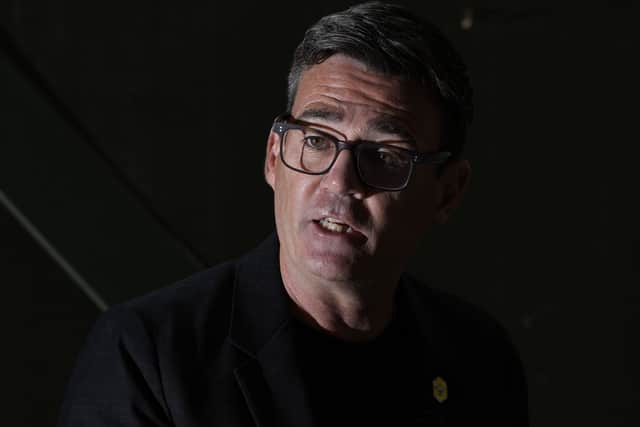
Mr Burnham, dressed in a dark t-shirt and jacket rather than the usual politician’s uniform of a suit and tie, did not take questions from the journalists at the speech, leading to accusations he was dodging scrutiny of his plans.
The Makerfield MP is set to become Prime Minister on 20 July unless another Labour figure gains the support of 81 MPs and mounts a challenge.
Sir Keir has given Mr Burnham access to the civil service via the Cabinet Secretary, so he can brief them on his plans.