
Yorkshire 'mega police force' would be a threat to rural policing, mayor says
Scotland Yard Commissioner Sir Mark Rowley has urged the Government to cut the number of forces from 43 to around 10.

The call for a single “mega” police force covering the whole of Yorkshire and the Humber is “a threat to neighbourhood policing” in rural communities, a Labour mayor has said.
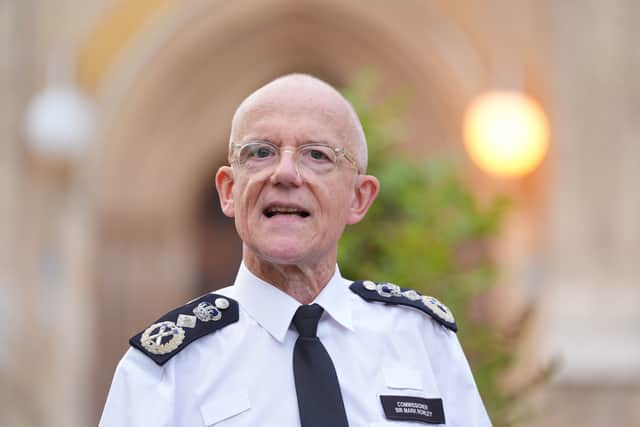
York and North Yorkshire Mayor David Skaith was responding to calls from the Metropolitan Police Commissioner, Sir Mark Rowley, to restructure policing across England and Wales into eight to 10 forces.
Sir Mark said that police are being held back in efforts to tackle criminal gangs because resources are being wasted financing 43 separate forces.
Setting out his views in a speech in Manchester earlier today, the Commissioner said: “I believe this is a choice between the third greatest revolution in British policing or the inevitable decline and fewer bobbies on the beat.”
Should the Government choose to take Sir Mark’s advice, it appears highly likely that one of the smaller number of forces would cover the whole of Yorkshire and the Humber, replacing the four constabularies that currently serve the region.
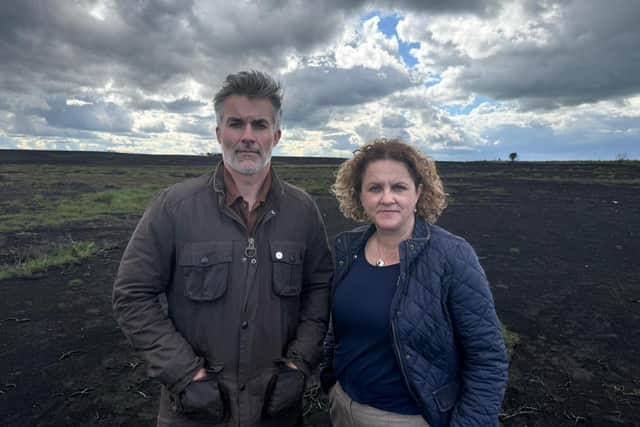

Mr Skaith said: “‘Mega forces’ are a threat to neighbourhood policing in York and North Yorkshire, especially in our rural communities.
“They would inevitably see resources diverted to large cities, leaving towns and villages at risk of becoming hotspots for crime.
“That is unfair to North Yorkshire taxpayers, who provide almost half of the funding for policing.
“I am deeply concerned about the impact that removing policing from a core principle of devolution, the alignment of public services with mayoral boundaries, would have on the cohesive approach we want to take to early intervention and prevention.
“This is particularly important given how closely interconnected outcomes in health, education and employment are with crime.
“There is more to do. Nobody disagrees that the police need to improve and that reform is necessary. But that reform should be rooted in collaboration, not top-down reorganisation.
“Local accountability has never diminished the police’s ability to work across boundaries to tackle cross-border issues such as organised county lines crime, fraud, cyber crime and counter-terrorism.
“That is why I support the creation of a strengthened national police service, but not at the cost of the crucial and intrinsic link between the police and the communities they serve.”
The Government launched a review to consider dramatically reducing the number of forces in January this year.
At the time, Home Secretary Shabana Mahmood said that policing is “a postcode lottery” and the 43-force structure is “irrational”.
West Yorkshire is the fourth biggest force in England, after the Met, Greater Manchester and West Midlands Police, with more than 6,000 officers.
However, North Yorkshire and Cleveland are some of the smallest forces with around 1,500 officers each.
Since Andy Burnham has become Prime Minister he is thought to favour keeping mayors in their oversight roles with the police.
This makes a single pan-Yorkshire force less likely. The review, led by former Scotland Yard chief Lord Bernard Hogan-Howe, is set to make recommendations in the coming months.
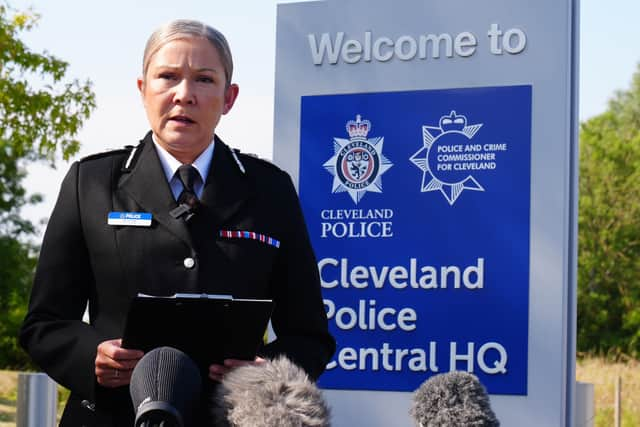
However, Cleveland Police Chief Constable Victoria Fuller is very much in favour of reducing the number of forces, saying this was highlighted by the A66 crash and subsequent arrests.
After Sir Mark’s speech, she said: “The tragedy in August showed us what we can do with more.
“I am incredibly grateful to the amount of mutual aid that we received from forces across the country. The policing family really came together.
“The specialist capabilities from the National Crime Agency gave us a much more enriched understanding of the threat from serious and organised crime.
“We'd been tackling this before, but our communities have seen in Cleveland what enhanced resourcing and specialist capability can do for us.
“That's why I'm really really supportive of police reform with funding formula review because otherwise without it, we're aggregating inequality in the police funding system up to a much larger scale.”
Humberside Police’s Chief Constable Chris Todd said: “I will await with an interest to see what recommendations are made about future force boundaries and the merging of police forces nationally.
“We are a smaller force, and I support the aim of bringing security and growth to the region however we are effective and our priority must remain to deliver the best possible service with the highest standards on both sides of the Humber Estuary.
“We cannot deliver with less indefinitely and challenges that I would welcome to be answered through police reform would be improved technology, reduced administrative pressures and sufficient funding to ensure every community across the country receives the police service it deserves.
“I would welcome any assurance that can be given in that regard for our communities, our partners, and our own workforce.”
The Home Office argues that bigger forces will create efficiencies and allow for better co-ordination.
A spokesperson said: “Record investment into technology will free up officers’ time and our National Police Service will lift national responsibilities away from local forces – so they are no longer distracted from their job of serving their communities.”