
Yorkshire's transport infrastructure growth hampered by Treasury, report finds
Treasury control over transport infrastructure spending is holding back economic growth in Yorkshire, with new schemes delayed, and jobs and investment hampered as a result, a new report by an influential think tank has found.

Despite devolution granting greater powers to regional mayors, transport schemes with clear public support and strong economic cases still require approval from London at several stages of the process.
This means many schemes struggle to get off the ground, even where there is a strong local case to build, according to the Institute for Public Policy Research.
Last month, it emerged the Leeds-Bradford mass transit scheme would be delayed by several years due to a report, the contents of which remain shrouded in mystery at the orders of Whitehall.
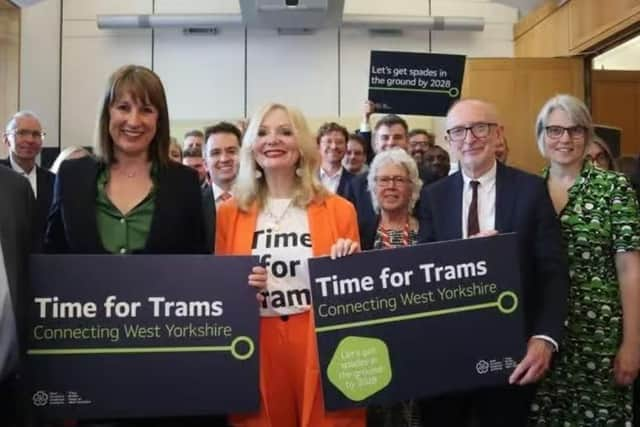

And in December, despite years of planning and consultation, West Yorkshire Mayor Tracy Brabin said the Department for Transport were still to confirm that the scheme would even involve trams.
The authors of the report published today identified a lack of access to upfront funding as a key problem in developing infrastructure plans.
It said regional leaders throughout England often lack the reliable income needed to finance major projects in the first place, leaving them dependent on short-term funding rounds and repeated Treasury sign-off.
It found: “Transport investment can drive long-term growth and generate significant tax revenues.
“But under the current system, most of these returns go to central government rather than to mayors.
“For example, new homes built around a station generate stamp duty, more businesses produce VAT through higher sales, and rising employment boosts income tax receipts.
“To fix this, the think tank is calling for a shift towards local control, allowing mayors to retain a share of business rate growth generated by transport investment and to borrow against predictable, rising revenues. Packaged with greater autonomy, this would give city regions the certainty and flexibility needed to plan, finance and deliver major projects without having to repeatedly seek central approval.”
Responding to the report, Mayor of West Yorkshire Tracy Brabin said: “"We know that strong investment in transport is essential for driving economic growth.
“Our £2 billion Integrated Settlement is a milestone on our devolution journey, giving us the certainty and flexibility we need to improve transport and deliver on other key priorities.
“We will continue working closely with the Government to deliver on transformational projects for our region.
“And we’ll keep pushing for deeper devolution — including greater fiscal powers — to ensure we have every possible lever at our disposal to support a stronger, brighter West Yorkshire.”
Henri Murison is the Chief Executive of the Northern Powerhouse Partnership, and said: “For many years the business community across the North has been making the case for reform of how we fund our infrastructure.”
“We need to address the unfairness of council tax to the North, which is so regressive that it is not an appropriate way to raise additional revenue to fund borrowing for new projects. We have also said consistently that the Office for Budget Responsibility needs to get serious about reflecting the benefits of transport investment in its longer term fiscal forecasts.”
“The growing coalition of voices from across the political spectrum recognise that proper fiscal devolution is in the end essential. The government has been right to begin with the new proposed tourism levy on overnight stays but we need to go much further. The fact that for example every penny of national insurance and income tax goes to the Treasury, with none of it retained locally, ignores the reality that any local investment in the future made towards Northern Powerhouse Rail will deliver financial benefits predominantly through centrally levied taxes. To deliver the project successfully we will need more locally retained taxes than we have today.”