
Pressures grow on farmers as drought deepens
Two months after a drought was declared across Yorkshire, pressures on farmers are increasing as the National Drought Group (NDG) this week declared a “nationally significant” crisis and called on everyone to use water “sustainably”.

The meeting of the group, which includes the Met Office, government departments, regulators, water utilities and the NFU, heard many farms were struggling to secure enough water for crops and livestock.
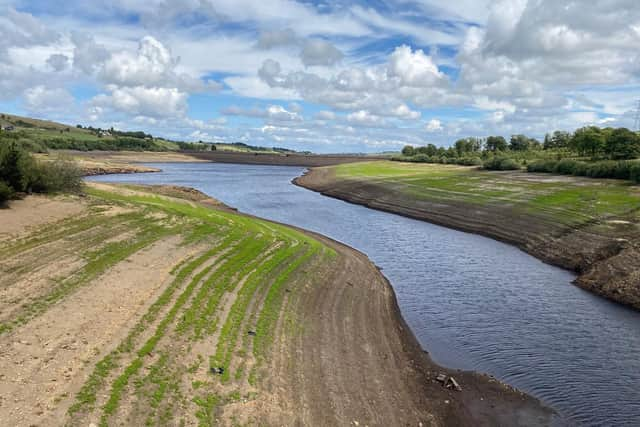
Water levels at reservoirs in Yorkshire have fallen to a historic August low after the driest week since mid-May, the Environment Agency said, creating one of the "most serious droughts" in recent times.
Yorkshire Water’s reservoirs are at 42.2 per cent capacity in comparison with the usual 65 per cent to 80 per cent at this time of year.

Officials say conditions are unlikely to improve in the next few weeks.
Environment Agency director of water and NDG chair, Helen Wakeham said: “The current situation is nationally significant, and we are calling on everyone to play their part and help reduce the pressure on our water environment. We know the challenges farmers are facing and will continue to work with them, other land users, and businesses to ensure everyone acts sustainably."
NFU vice-president Rachel Hallos, whose Ripponden dairy farm is beside the depleted Baitings Reservoir, said farmers and growers continue to face extremely dry conditions, with harvest underway and crop yields proving mixed across the country.
She said: "Some farms are reporting significant drops in yields which is financially devastating for the farm business and could have impacts for the UK’s overall harvest. Farming is a long-term industry and there is growing concern about the months ahead. Minimal grass growth means many livestock farmers are already tapping into winter feed stocks, raising the risk of higher production costs later in the year. Access to clean, reliable water is essential for food production. What’s worked well during this drought has been early, coordinated communication with stakeholders around licence restrictions and drought permits and orders and it’s crucial this continues."
She added: "To avoid the swing between extreme drought and flooding and to secure water supplies for food production, we urgently need investment in water infrastructure and a more effective planning system.”
Meanwhile, as Defra develops the next round of the Sustainable Farming Incentive, the NFU is urging officials to ensure the scheme supports farmers’ resilience in the face of a changing climate.
The call comes as many farms struggle following the driest spring since 1956. Drought-reduced winter forage stocks are being used to feed animals, triggering calls to the Rural Payments Agency for flexibility to graze land in agri-environment schemes – requests that Defra’s current policy does not allow without a financial penalty.
The NFU said future SFI design must address issues such as these to ensure farm businesses are resilient to climate pressures.