
Sea rescue bravery runs in the blood for new Whitby lifeboat coxswain

History repeated itself when Richard Dowson stepped into his great great grandfather’s boots by becoming coxswain of Whitby lifeboat.
As a youngster growing up behind Whitby’s lifeboat station Richard would rush to watch the lifeboat launch, when the maroons went up.
It has always been part of his life but after joining as a volunteer aged 20, he found out it really did run in the blood.
He said: “When I joined up and got to know RNLI history in Whitby I found my great great grandfather was coxswain for four years from 1919. His name was Richard Eglon, which is my dad's surname.
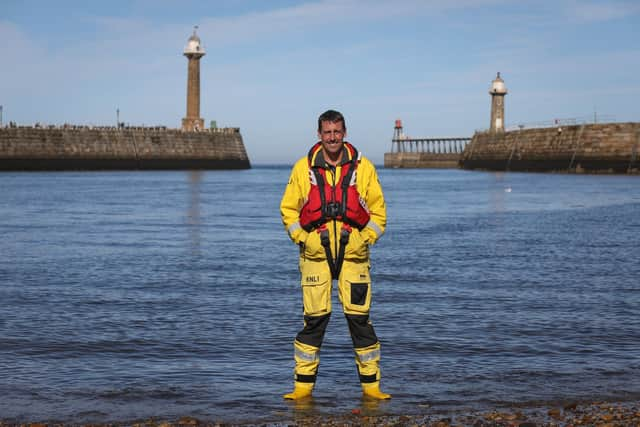

“My parents separated when I was young so I never took my father's name. If I had done it would have been Richard Eglon.”
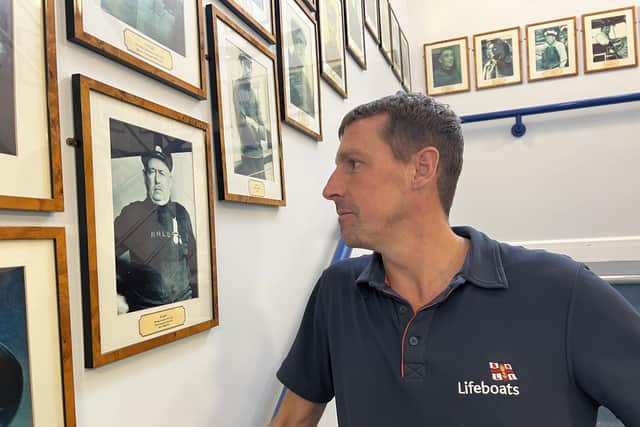
In the boathouse, a picture of Richard Eglon, who was awarded a silver medal for the part he played in rescuing survivors of the infamous Rohilla hospital ship disaster, stares down from the wall.
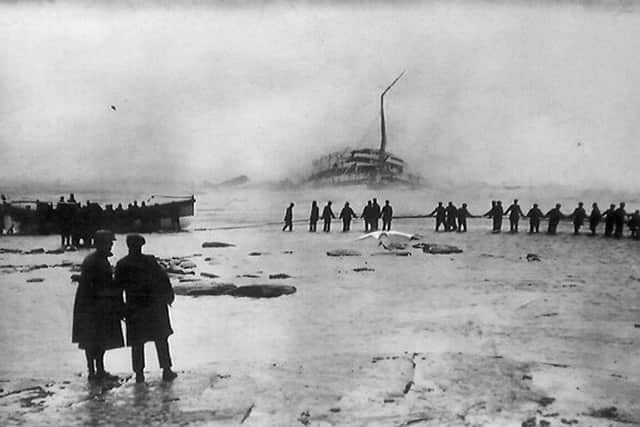
Rohilla was en route to Dunkirk on October 30 1914, with 224 crew and medics and five nurses on board, to evacuate wounded soldiers, when it hit a dangerous reef and almost immediately broke up. Thirty-five people were rescued by the crew of Whitby’s No. 2 lifeboat John Fielden in two trips.
Richard, 43, who was previously full-time station mechanic, is a member of a local charity, which restored one of the old rowing lifeboats, William Riley, which they take to RNLI events. He is also a champion onion grower- an influence from his grandfather, a keen veg grower.
Asked what it’s like to face the fury of the wind and waves, when they launch into a storm, Richard said when people first join they experience an adrenaline rush.
“As coxswain you learn to manage that and focus on the task in hand. We are trained to slow down and think about things, rather than letting the red mist descend and screaming out of the harbour at full speed, as that’s when accidents happen. We are taught to take a breath.
"We do a full briefing. We have the best vessels and equipment that money can buy.”
He’s the only paid member of crew – the other 28 are volunteers.
They are a tight knit group who train and socialise together ensuring that when the balloon does go up, they act as one. This year the station has had 43 call outs – from the inshore boat rescuing people cut off by the tide, to the all weather lifeboat helping commercial boats in “a spot of bother”.
He said: "I love what I do, I love the RNLI. My son Bradley is 21 at the end of the month. I'm just talking to him now about whether he fancies it. He knows I've been on the crew 23 years, he has grown up with it. It's a huge commitment.
“We’re just doing the best we can while we’re here and preparing a future crew to take over".