
Sheffield Castle: Drone sent down medieval well after archaeologists discover it on dig

Discovering a long-lost well at a centuries-old castle – still containing plenty of water – came as a surprise.
Extensive digs at the Sheffield Castle site, part of the Castlegate regeneration project, have yielded incredible discoveries, including its drawbridge supports, moat, medieval walls, and even remarkably preserved wooden defence stakes used during the English Civil War .
The well, research manager at Wessex Archeology Ashley Tuck says, was “100 per cent unexpected”.
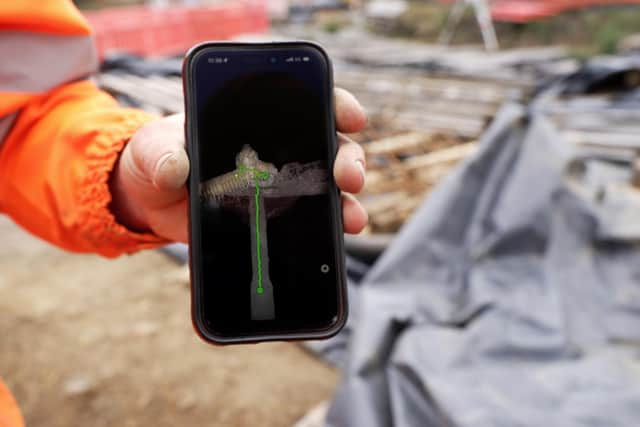
A recent survey saw a drone descend into the 12.5 metre shaft, taking hundreds of photos to create a 3D model of its interior, revealing details of its construction and showing it still holds water – a couple of metres - at the bottom.
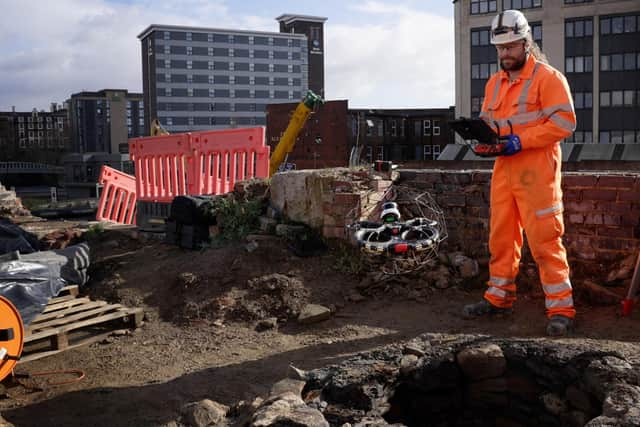

Archaeologists can’t date it precisely, saying its from the 13th to 15th century.
It was cut through the Norman motte, an artificial mound made from layers of earth and stone, which once would have had fortifications on top.
Although the water would have come in extremely handy during sieges of Sheffield Castle – it was besieged in 1266 during the Second Barons’ War and in 1648 by the Parliamentarians during the English Civil War– it is now undrinkable as there’s a Victorian sewer nearby.
In its heyday it would have provided groundwater seeping from the surrounding rock and it’s the same level as the rivers Sheaf and Don nearby.
Mary, Queen of Scots, who was held prisoner in the castle for 14 years may not have used the water. According to her custodian George Talbot, the 6th Earl of Shrewsbury, she supposedly used her wine rations to wash and bathe.
Excavators realised something unusual was going on when they found voids as they were digging, before discovering big pieces of stone and iron which has been placed over the well in the 19th century when the site was occupied by a steelworks.
"They built the wall of the steelworks directly over the coping of the well,” said Ashley.
“The well has a stone lining, below it they cut through rock. It has a bit of lean on it, which is a bit unexpected.
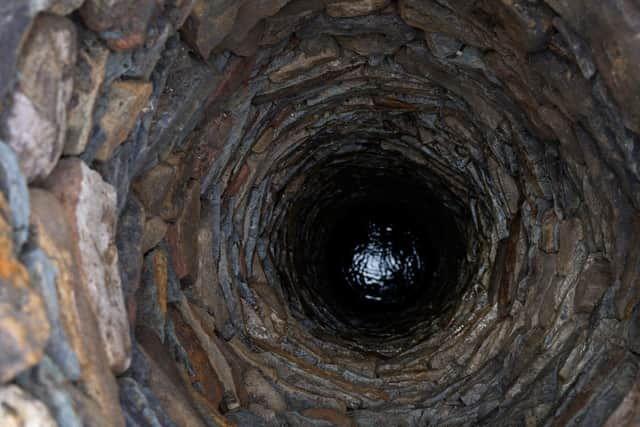
"I wouldn’t have liked to have been the person digging it, down in the darkness, working at that depth.
"It would have been easy for a stone to fall in and clonk you on the head.”
After the Royalist surrender, Parliament ordered the castle "slighted" – intentionally demolished and left in ruins.
For centuries it lay hidden under the growing city and Castlegate Market and surrounding infrastructure were built directly over the top of the lost fortress.
Following the demolition of the old market, archaeologists from Wessex Archaeology began excavations.
In 2018 they discovered a hitherto unknown motte-and-bailey castle built in the early 12th century by Anglo-Norman baron William de Lovetot. There would have been a wooden keep on top.
Sheffield City Council is redeveloping the area as a new green space and says the well will be exposed for visitors to see.