
Sheffield mum shares near-death sepsis experience to highlight signs
Alexandra Plank thought it was a “nasty cold" when she started to feel unwell in May 2023.
But the Sheffield mother-of-two almost lost her life to sepsis after going into cardiac arrest in A&E and, looking back, says the quick actions of emergency services staff was the difference between her “being here or not”.
Alex, 41, from Greenhill, was at home looking after her youngest daughter when she started to feel poorly. Her husband, Richard, was at Sheffield Children’s Hospital caring for their eldest daughter, who was an inpatient receiving treatment for cystic fibrosis, so she carried on with her hectic schedule of juggling work with nursery pick-ups and drop-offs.
When he returned, he spotted that her lips had turned blue, the tips of her fingers were grey, and she was experiencing pain when breathing, so he called 111.

Ambulance crew suspected sepsis from pneumonia and she was rushed to the Northern General Hospital's A&E department. The sepsis was progressing rapidly and with doctors fearing the worst, her husband was taken to one side and told she would likely not recover.
Moments later, she went into cardiac arrest and doctors performed CPR for three minutes to restart her heart before she was taken to critical care. Alex remembers very little from that point, from crashing in A&E, to waking up two weeks later. She says: "I was on a ventilator, meaning it was a struggle to communicate and there was a lot of medical equipment around me, monitors and wires and machines. It was very difficult to process what was going on and what had happened.”
Over the next six weeks she received dialysis and blood transfusions, and round-the-clock monitoring in critical care.
Alex later moved to the infectious diseases unit, where she would spend another six weeks, and was finally discharged at the end of July, three months after first being admitted to hospital.
To give her the best chance of a successful quality of life, her right leg was amputated below-the-knee, along with the toes on her left foot and the majority of her fingers. Her organs are stil impacted, including her lung and kidney function remaining low.
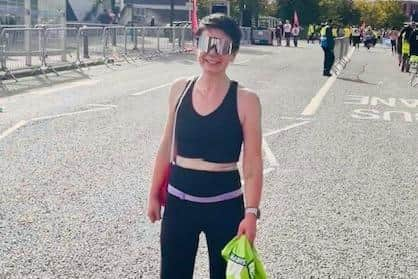
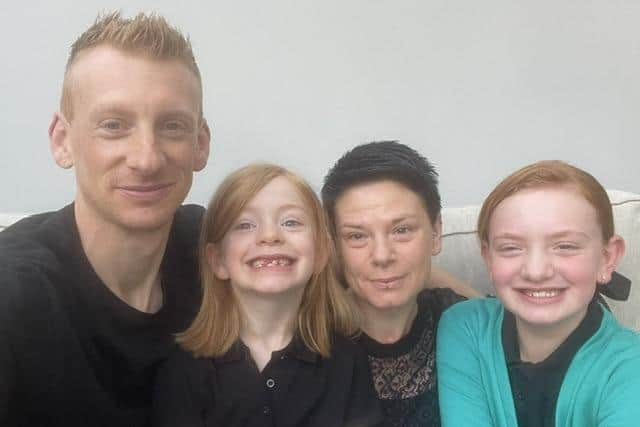
Since then, Alex, mother to Allegra and Anushka, has started to rebuild her life, undertaking physiotherapy and strength training to walk confidently with her prosthetic leg. Last September, she completed the Sheffield 10k run, which she describes as an "enormous achievement".
Her recovery has also opened a new chapter in her career. Having previously worked in engineering placements at a university, she began volunteering at her daughter’s school, completing a qualification to become a teaching assistant and, when a role came up, she successfully applied.
Speaking of her recovery, she said: "I feel I’ve done more and achieved more since my illness than I did previously. I can still be a mum and even though my goals and ambitions might not seem big to everyone, every day it's just such a huge thing for me that I can get up and carry on living my life, go to work, and be with my family.
"I do get angry and sad sometimes and feel it’s not fair, but it could have been a lot worse. The overall outcome might not be what everybody would see as positive, given I’m still living with the effects of sepsis every day. But because it was suspected, it was acted upon - and that's the difference between being here or not. I've still got a life and it’s just having the opportunity to get up and have the physical and mental strength to live my life. It genuinely means everything to me."
September is Sepsis Awareness Month and, to mark the event, Sheffield Teaching Hospitals NHS Foundation Trust has launched a new campaign called ‘Spot It. Say It. Start the Clock'. It aims to improve awareness that sepsis is a medical emergency. Treatment for sepsis needs to be given in hospital within an hour to reduce the chances of the body's immune system going into overdrive, which can lead to septic shock, multi-organ failure and death.
Symptoms of sepsis in adults include slurred speech or confusion, extreme shivering or muscle pain/fever, severe breathlessness, passing no urine all day or very little in the past 18 hours, and mottled or discoloured skin. Dr Rachel Foster of Sheffield Teaching Hospitals NHS Foundation Trust, said: "Sepsis continues to claim many lives. Yet it is often treatable if caught quickly."