
Steps to consider while the stock market stays volatile: Sarah Coles
The stock markets are all over the place at the moment, veering between highs and lows with the consistency and calm of an over-caffeinated flea. For some people, it’s an exciting time, but for most it can be worrying, especially as this week, global stocks officially entered correction territory for a while – with the FTSE All World down more than 10 per cent from its October peak.
The markets subsequently rose, but these kinds of movements can be incredibly unsettling. It’s why it can be so useful to get to grips with sensible strategies for volatile times.
Like most things in life at the moment, the lion’s share of the blame for such uncertainty can be laid at the door of AI. Stocks benefiting from the AI boom have soared spectacularly in value, but they’re now incredibly sensitive to any news which could pose challenges for the sector. We saw them stumble when the Democrats took control of both the House of Representatives and the Senate, and when Jensen Huang resigned from his post as Nvidia CEO. Between the sudden drops we have seen swift rises, but this volatility can be difficult to live with.
When we see a threat, we’re hard-wired to react. It feels natural to assume that something needs to be done. But while there may be one or two steps you want to take, in many cases, the best possible approach during market ups and downs is to do nothing.
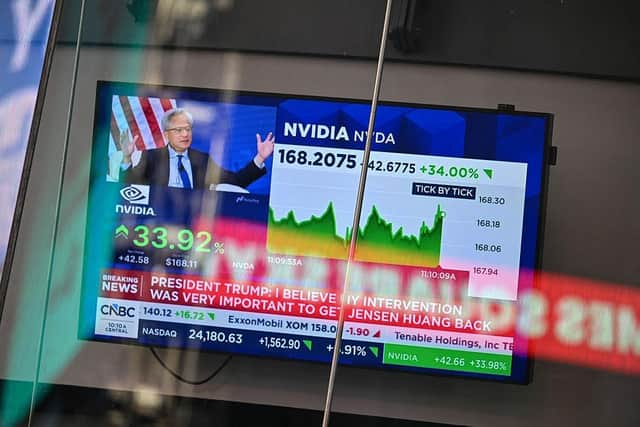

The big risk is panic selling, where people decide to take their money out of the market during falls, and sit in cash just in case. This effectively locks in the losses you have made so far. You might tell yourself you’ll buy in when markets hit the bottom, and take advantage of the recovery, but that’s far easier said than done. The only way you will know when markets bottom out is after they have already done so and started to recover. And because recoveries can be rapid, you could miss out on a significant portion of the gains.
There’s also a risk people double down on the biggest fallers without considering why they’ve dropped. They may look at the highest valuation and assume it will eventually get back there, so decide they ought to fill their boots while they’re getting a bargain. However, if the stock was over-valued, or the circumstances have materially changed, this may never happen. It means any buying on the dip needs to be done after thorough research has revealed a genuine opportunity.
Instead of these knee-jerk reactions, there are a few steps worth considering. First, check how much of your portfolio is invested in technology. You might assume you don’t have much exposure to AI because you didn’t specifically seek it out when you were picking funds. However, global equity funds are hugely popular with retail investors. The passive versions of these funds track global equity indices such as MSCI World or FTSE All World. The US makes up 73% of the MSCI World Index, and tech is the dominant sector – at 30% of the index. If you hold these funds, you will be heavily invested in technology. If you have it alongside something specifically US-based or a technology fund, you could be far less diversified than you expect.
If that is the case, you can consider tweaks to reduce your exposure – moving some of your portfolio into different kinds of stocks and other assets. This diversification should mean that if one part of your portfolio goes through a bad patch, other parts should provide support. If you look at recent performance since 6 October, the tech sector has seen falls – although markets made something of a recovery when Jensen Huang rejoined Nvidia on 23 November. We’ve also seen problems for banks, miners and engineering. However, medical equipment, healthcare, beverages, grocery companies, tobacco and insurance have all done well – and government bonds have rallied.
Don’t be tempted to cancel regular payments into investments for fear of losing money immediately. When markets are down, you’ll get more for your money, and when they recover, you’ll benefit more from the rebound. Consistency is key when you’re building your investments.
If you have a defined contribution pension and are a fair way from retirement, this shouldn’t knock your retirement off course, because there’s plenty of time for you to ride out the short-term ups and downs of the market. If you’re approaching retirement in the default investment option of your workplace pension, it may well have already started moving into less risky assets, so a quick check of the value of your pension could show it has been far less volatile than you feared.
However, if you have already retired and are drawing money down from your pension, or are about to, and are still holding a big chunk of investments in shares, think carefully about your approach. If you’re already taking an income through drawdown, the danger is that you may have to sell investments when they have fallen in value. This can turn a temporary market loss into a permanent one.
Temporarily taking a little less could help your pension pot recover and reduce the risk of running out of money later. It’s why it can be so valuable to have an emergency savings fund big enough to cover one to two years’ worth of essential spending in retirement. Segmenting your portfolio can also help minimise any damage during market declines. You could keep enough money for near-term spending in cash and lower-risk investments, while the rest of your portfolio can remain invested for income and longer-term growth.
Volatility is never comfortable, but if you build a diverse portfolio, invest for the long term, and derisk carefully before you need the money, it doesn’t have to be painful.
Jobs market stagnates
New government figures show the jobs market is stagnating, so people are less likely to leave their job or start a new one. The monthly job hire rate was 3.3% in February – 0.8 percentage points below the pre-pandemic level, while the separation rate (which counts people leaving jobs) was 3.5% – 0.6 percentage points lower than the pre-pandemic level. Meanwhile, the proportion of employees moving job-to-job has dropped to 1.9%.
It’s not as dire as it was at the height of the pandemic, but it’s significantly worse than the pre-pandemic period and the position is deteriorating. It’s not a major shock, given the weakness in the employment market, but it means life is getting harder not just for those who are out of work, but for those who feel stuck in their current job too.
Changing jobs is often a key part of moving up the career ladder, with many people moving for promotions or pay increases. Fewer job changes could mean fewer people getting the pay increases associated with a move.
It’s worth considering how you can improve your position without having to find a new job – whether that’s by asking for a pay review or by revisiting your benefits package. You may be able to unlock more pension contributions by paying in more, or take better advantage of benefits like private medical insurance or a healthcare cash plan. You can even save money by using employee discount schemes, particularly at this time of year. Even small savings will add up when you’re facing the cost of Christmas.