
Strange But True Crime: BBC Radio Leeds host Rima Ahmed returns with 'bizarre not brutal' podcast

Rima Ahmed is back with BBC podcast Strange But True Crime. She tells John Blow about doing something different in a saturated genre.
True crime is booming – still. TV shows, books and particularly podcasts are packed with twisty and often gruesome tales of death and deceit.
BBC Radio Leeds breakfast host Rima Ahmed fully admits that she has long been interested in these stories. Eventually, though, it got exhausting.
“I was like an OG true crime fan back in the day,” she says. “Making a Murderer came out but I'd already been on forums looking at cold cases. Not being a total weirdo, but very much interested in that sort of thing. When that became a booming thing over a decade ago, where you had all these TV shows, all these podcasts, I really got into it.
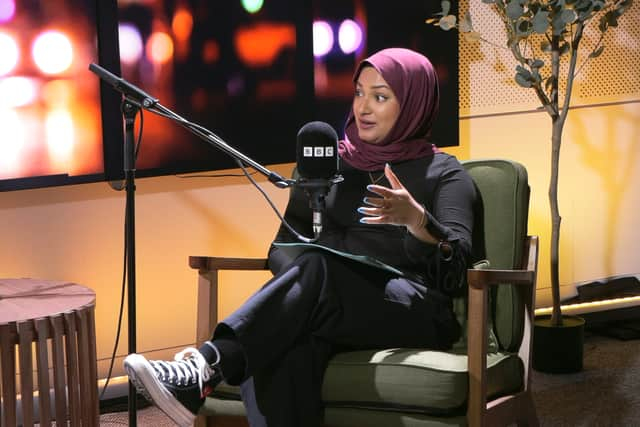

“But then I had to make a real intentional move away from true crime because I just found that what I was listening to was so violent, so much of the time. And I know there's a massive female audience for a lot of that kind of thing, for various reasons, but for me, I just thought, I actually just can't be having a full stressful day at work, coming home and watching or listening to the story of how some poor woman got murdered.”
As a broadcaster, however, she often hears about “wild” crime stories that aren’t necessarily related to extreme violence.
Last year, in came the BBC Sounds podcast Strange But True Crime, hosted by Rima, which has now returned for series three. Expect brazen heists and bizarre blackmail plots.
Rima, who also presents for BBC Radio 5 Live’s Friday breakfast show and BBC Radio 4, knew there was a “true crime thirst to be satiated that didn't have to include pure, gory violence, misogyny, that sort of thing”.
She wanted the show to be conversational, speaking to local journalists – the people who “get us these amazing stories” – and in a world of misinformation, stresses that professionals research and fact check all the stories.
“But also our USP has to be that we are looking at bizarre crime stories and not brutal crime stories because I think there's an appetite for it. I'm quite pleased, because it turns out that there really is.”
The podcast is recorded at BBC Radio Leeds, part of BBC Local, and has had millions of listens since launching last year. It was recently nominated for Best Episodic Crime Podcast at the True Crime Awards 2026 and won silver in the True Crime category at the Audio Production Awards in 2025.
It shouldn’t be a surprise that Rima, 34, is interested in crime, given that her education and professional background prior to broadcasting was in law.
She grew up in the working class Harehills area of Leeds and studied for a law degree at Huddersfield, staying on for a master’s before practising in areas such as commercial litigation and conveyancing. She decided early, in her mid-20s, that it wasn’t for her and started to pursue a career in journalism, working for The Overtake website before being included in the BBC’s New Voices talent scheme around 2019.
However, her legal training has proved important in big moments of her broadcasting career. In autumn 2022, Rima was one of the local radio journalists celebrated for how they confronted former Prime Minister Liz Truss. After her government’s mini budget caused market turmoil and widespread anger, they went quiet for four days before having interviews with local radio stations. In a memorable moment that went viral online, at the end of her first question, Rima asked: ‘Where have you been?’
She says: “Every single thing that I learned then (in further education), while I didn't end up applying it to the law, I do apply it every single day in my broadcasting career, for sure. A lot of my holding to account, whether it's the Prime Minister or whether it's a local MP, all of that goes in there.”
The latest episodes of Strange But True Crime feature the stories of a reclusive teenager who helps scam masses of people by hacking into the social media accounts of the world’s most famous celebrities; a feud between two rival plastic surgeons in which one plots to burn the other’s house down; and a handsome art dealer in London, with links to the stars of Made in Chelsea, who commits the biggest art fraud in US history.
And Rima has noticed a recurring theme relating to the criminals they talk about - showing off will get you caught.
“If you've ever watched any sort of a crime film or a gangster movie, which I did growing up around a lot of boys, (in) every single film that you watch, the gangster would would be caught because they wore a chinchilla fur coat to the boxing, got a front row seat, They were getting away with it until that point and then everyone was like, ‘Oh, how's Gary about that much cash?
"And that is it, so much of the time, the criminals make decisions where it’s like they could almost get away with it and then they just can't help themselves. They’ve just got to indulge themselves a little bit and it is usually the ruin of them, and that from a psychological standpoint is quite interesting.”
The podcast has built up a community of loyal listeners who are thirsty for more curious tales.
"People literally harass me in public, in private in my DMs, wherever they can find me,” says Rima, laughing. One woman at King’s Cross in London recognised her and demanded to know when new episodes would be out. "It's been doing spectacularly well, actually, and we're really pleased about it because clearly people are feeling a connection to it.”
Strange But True Crime can be found on BBC Sounds.