
Taking a trip down the Rochdale Canal to celebrate England's deepest lock at Sowerby Bridge
Constructed between the late 18th and early 19th centuries, the Rochdale Canal runs from Sowerby Bridge, West Yorkshire to Manchester through a variety of landscapes, from post-industrial – disused mills on the hillsides outside Todmorden – to rustic and sublime, like the long green reaches around Stubbing Wharf and Hebble End. Many of its picturesque points fall within Yorkshire – in the Calder Valley, to be precise.
I live above the Calder and Hebble Navigation in Sowerby Bridge, near where it joins with the Rochdale, and often watch from my window as boaters and canoeists putter past, along with families, dog walkers, and the many ducks and birds for whom the two canals are home.
The Rochdale canal features often in my writing, film making and photography. I love admiring its wildlife, chatting with boaters and birders, or stopping for coffee at the bars or cafes by its towpaths.
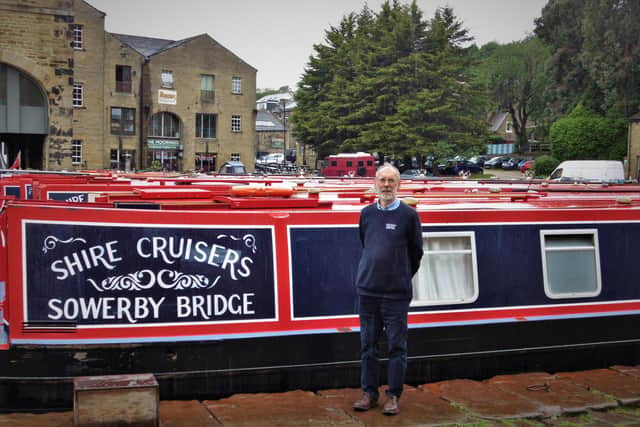
From the canal’s first lock in Sowerby Bridge can be seen some significant landmarks – the Victorian folly Wainhouse Tower, the towers of Halifax Grammar school, and, closer to home, the headquarters of holiday boating company Shire Cruisers, run by Nigel Stevens.
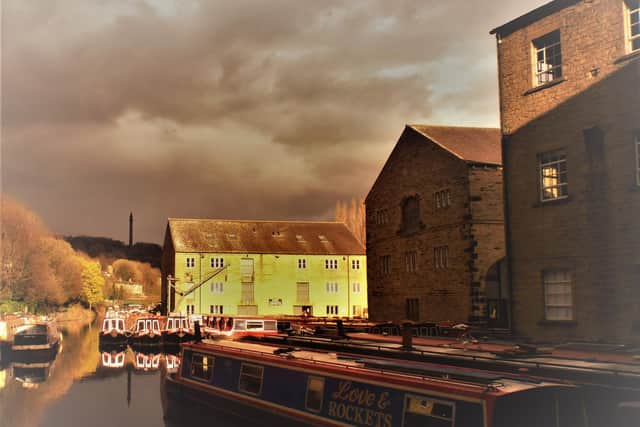

“Our customers can travel up and down the entire canal network,” says Nigel, as we look out onto the old salt warehouse – now the popular Salt’s Bar, “but we mostly cover the Rochdale and Leeds Liverpool canals.” Was the canal in disuse when he and his family arrived in 1980?
“The Calder and Hebble always continued as a working canal – coal was transported to Sowerby Bridge gas works until 1955 – but the Rochdale had fallen into disrepair, and in some places was paved over and used for car parking.” Nowadays, the narrowboats of Shire Cruisers offer holidaymakers and day trippers the chance to cruise the waterways at will. “A boating holiday in Yorkshire enables people to discover and enjoy our county in a unique and involving way,” says Nigel. “You slow to a nice pace, giving you time to absorb so much more than in the rush of normal life.”
From Sowerby Bridge, the canal runs into the 19ft deep Tuel Lane Lock – England's deepest, which opened in May 1996. To mark the 30th anniversary, celebrations were held in the adjacent town square.
"Tuel Lane Lock symbolises our town's regeneration," says Michael Gee of Sowerby Bridge CIC, the group who arranged the event. "Thirty years after transforming the canal, the iconic lock stands as a reminder of how determination, community spirit and shared effort can shape the future of Sowerby Bridge."
There were photos showing the lock area prior to refurbishment, and information on the history of the Rochdale Canal, explaining its origins as a means of transporting coal, cotton, textiles and agricultural goods between Yorkshire and Lancashire.
“Britain’s canals are more popular than ever before with more boats than at the height of the Industrial Revolution,” according to the Canal and River Trust Trust.
"Research shows spending time on the water can be a perfect prescription to improve health and wellbeing.”
Although designed for human use, canals have brought unlikely pluses for the natural world.
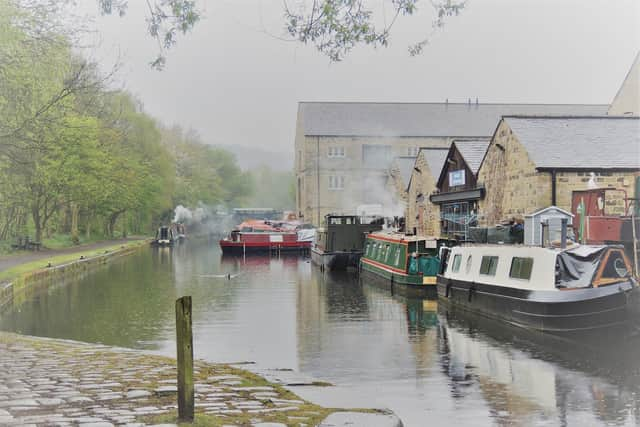
We often reflect on harms done to nature by the human race – but I believe we should also celebrate the positives, including the role played by canals in helping wildlife.
From ducklings snuggled by the towpaths on summer afternoons, to cormorants and leggy herons, whose fishy diets are well provided for, twitchers will see avians-a-plenty up and down the Rochdale Canal, whose waters are graced by elegant goosanders, grebes, and mandarin ducks.
Towns along its route host gaggles of geese, you might be greeted by the grumpy features of a Muscovy duck, while vivacious grey wagtails dance about the locks. Threading through towpath grasses, their stems studded by multicoloured beetles, dragonflies and damselflies swish by, like twisting cylinders of scintillant silk.
The stretches between Sowerby Bridge and Mytholmroyd offer some of the finest scenery on the Rochdale’s route.
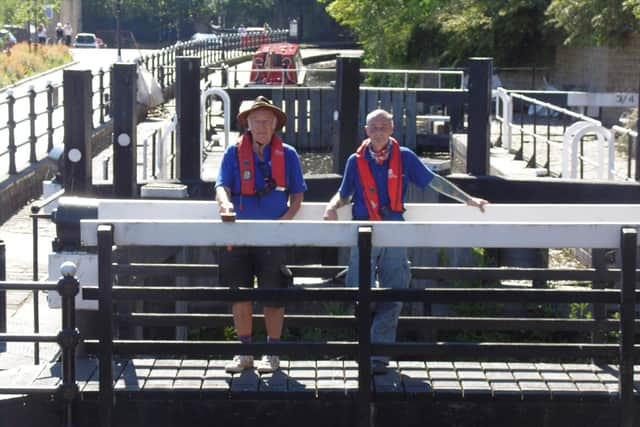
After the peaceful Brearley Fields Wetlands reserve, where I’ve watched herons, hawks, and many different ducks, you pass through Luddenden Foot (“the foot of the River Lud”), where a history display describes the canal’s former uses, within a pretty garden.
At Mytholmroyd, you will find the lovely Blue Teapot vegetarian café. Run by Lisa and her fabulous team, the Teapot offers delicious meat-free meals, artisan coffees, wines, ales, and many, many cakes.
Another welcome sight is Moonbeam Coffee Boat. “We’re a floating coffee shop serving artisan coffee and delicious cakes,” explains Holly, who runs the boat with help from partner Rory, and their border collie Sky.
"Our narrowboat trades in various locations on canals around the north of England.” Check out their Facebook and Insta pages to track them down.
From Mytholmroyd, the Rochdale runs by the eclectic towns of Hebden Bridge and Todmorden, where intriguing features include Grade 2 Listed Gauxholme Viaduct, designed by railway pioneer George Stephenson.
From there, it is a short stroll towards the gorgeous hills of Walsden, where you can enjoy idyllic woodland wanders, or a spot of bowls or cricket.
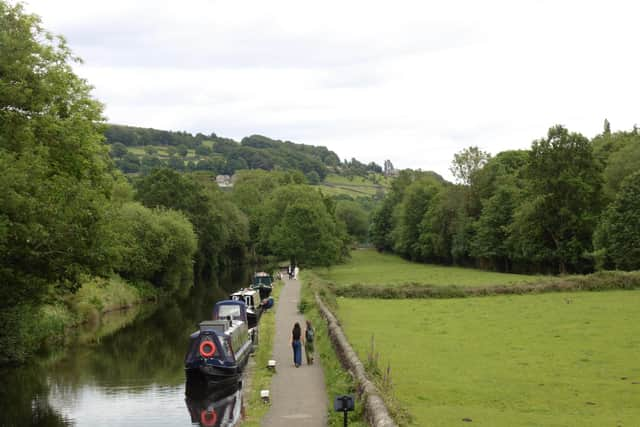
And then? Intrepid hikers might persevere on to Greater Manchester, through Littleborough and Smithy Bridge. The less athletic might hop on a train, watching the canal from above. Or, you could always turn around and retrace your steps back through the glorious Calder Valley, enjoying the whole stretch of canal all over again.
Simon Zonenblick is a poet and nature writer from Sowerby Bridge, in West Yorkshire’s Calder Valley. He has several poetry collections and a film to his name