
Try 'top-dressing' - and make it an annual event
The world may seem as though it’s going to pot, but there are times when that’s not a bad thing – now, for example, many gardeners, particularly, the indoor variety, are already quietly going about their business and preparing to repot all those houseplants which have worked tirelessly throughout the year to make the world a brighter place.
Not all indoor-grown plants require potting annually; some are best left in their containers for a year or two, or even three before the job needs to be done, but many are more than happy to be moved into a larger pot, their roots surrounded by fresh compost and some even introduced to a pair of secateurs.
I would always recommend repotting plants when they have outgrown their containers, but it can become a bit of a chore and often a battle to prise them free. Sometimes, getting them out means smashing the pot, and if it’s a family heirloom, it’s probably not worth the sacrifice.
So, try top-dressing instead – and make it an annual event. It’s a chance to get your fingers dirty, but in the nicest possible way.

Scrape away as much of the top layer of compost in the pot as you can – preferably without damaging the roots - and add fresh compost bulked up with a slow-release fertilizer, which will help provide nutrients for several months.
You will still have to water regularly, of course, and if a particular plant does look as though it needs a boost, there’s nothing to stop you giving it a dose of general-purpose fertilizer to keep it in fine fettle.
Eventually, after several years of this treatment, you may have no option other than to repot – if a plant is completely pot-bound, prise apart the roots and trim them to encourage new growth. Clean off as much of the old compost as possible before re-potting, ensuring there are no air pockets left among the plant’s roots.
Doing it this way may mean you can also re-use the old container.
Houseplants
The house can be a confusing place, especially if you are a plant and especially in winter; the great indoors is a world of mystery where the normal rules of horticulture do not apply.
And so it is that many people have potted plants struggling to survive in their windows – they confuse houseplants with their outdoor relatives.
So, consideration of a houseplant’s needs is key to success and a long life of lush, healthy foliage throughout the year, and perhaps even an abundance of flowers.
Firstly, get the right plant for the right place. Most plants usually grow well where they can enjoy the light. But a word of caution – when the temperature drops below freezing and the windows are covered with frost, either leave the curtains undrawn or remove plants to a spot where they aren’t likely to suffer a shock from plunging temperatures.
If a plant needs more humidity than a window sill can offer, put it in the bathroom or place it in a saucer that contains gravel. Water the gravel, making sure the water-level stays just below the base of the pot; the rising, moisture-rich air is just what the doctor ordered.
But don’t overdo the kindness because watering can be tricky. Too much will rot roots and kill the plant; too little will produce plants with poor foliage and few, if any flowers.
Light needs vary with the type of plant. A particular plant may not need a sunny window – more is not always better. The leaves of some plants may be sensitive to the sun and burn easily.
Sansevieira, the wonderful mother-in-law’s tongue is a prime example of a plant which, if cared for correctly, will thrive for many years.
It likes sunshine (but can tolerate a bit of shade) but it hates a heavy soil, so well-draining sandy soil is best – and go easy on the watering. It doesn’t need pruning, just the occasional re-potting and it doesn’t demand much TLC.
What you get for all that is a succulent perennial forming a clump of erect, sword-shaped leaves and, if you are lucky, racemes of small, tubular pale green flowers in autumn.
It may take several years before flowering does occur, so be patient. And don’t repot the plant every year. Strangely being pot-bound can actually encourage a mother-in-law’s tongue to produce blooms.
Paradise
Patience is also required if you want another warm-weather plant to burst into bloom.
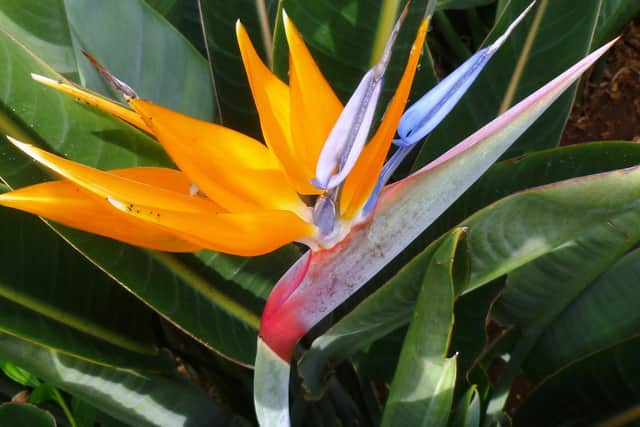
Strelitzia reginae, aka the bird of paradise flower, is a low-maintenance evergreen perennial which is fairly tolerant of most soil conditions, and, once it has established itself, doesn’t even need much water. Just give it a decent soil and plenty of sun and warmth.
Note the word ‘warmth’ – the bird of paradise flower isn’t a lover of cold weather, so before you buy a plant, make sure your garden can house it safely. A heated conservatory springs to mind.
S reginae is slow-growing and won’t flower for several years until it is well established, so apart from that conservatory, you’ll also need that good dose of patience.
Pot it up in a large container and water and feed it occasionally with a high-potash fertilizer. Top-dress annually and re-pot every year.
CAPTION: PARADISE FOUND: A stunning bloom of Strelitzia reginae.