
Twists and turns of golden plover’s year
Golden plovers are starting to come down from the moors and will be gathering in large numbers on estuaries and coastal fields.
They will keep the spangled gold back that gives them their name but most of the males will have lost the smart black face and stomach colouring of their summer finery.
Up to 50,000 pairs of golden plovers breed in this country and in autumn this figure swells to over 400,000 individuals as more birds arrive from Iceland and northern Scandinavia.
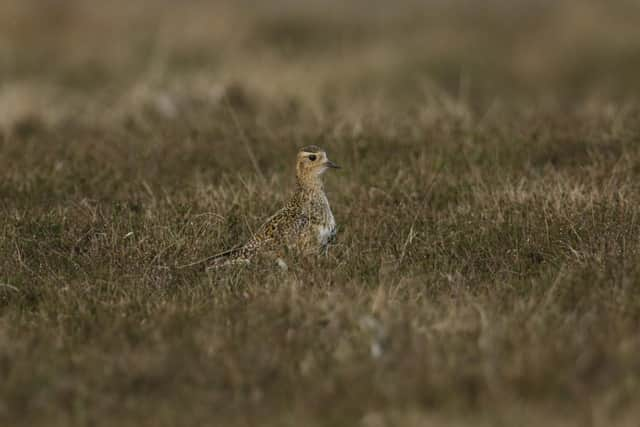

Once gathered golden plovers stick close together.
Once flushed by such as a peregrine falcon or merlin they inevitable spilt from the other species, flying above them in their own tight-knit formations. They endlessly twist and turn above lower flying lapwings, shaping up to land on several occasions before finally doing so.
Golden plovers spend much of their time in coastal fields feeding on invertebrates in stubble or close cropped grassland.
The same birds come back to exactly the same fields or stretch of coastline as the previous winter and the pair bonds established during the summer will continue.
On the moors golden plovers are a welcome sight during early spring walks. The males will stand on tussocks of heather making mournful whistling calls and as the walker moves on a second male plover takes over sentry duty.
If they perceive a threat they will slip quietly off the nest before starting a noisy commotion to distract the intruder and send it on its way.
Disturbances caused by humans and their pets both on the moors and coastal fields should be avoided.
There are two rarities to look out for among flocks of golden plovers – American and Pacific. Both are smaller and slimmer in comparison to the other plovers.
The American is the one most frequently recorded in this country and normally migrates down the western seaboard from North to South America. The much rarer Pacific normally migrates from Alaska and eastern Siberia to winter as far away as New Zealand, Australia, Hawaii and the Horn of Africa
Recent sightings in the region include the arrival of 22 cattle egrets at the Watton natures reserve, East Yorkshire, most likely a dispersal from breeding sites.
Yellow-browed warblers have continued to arrive along the Yorkshire coast and a few have been reported inland.