
'War detectives' solve mystery of 'mistaken identity' Hurricane pilot

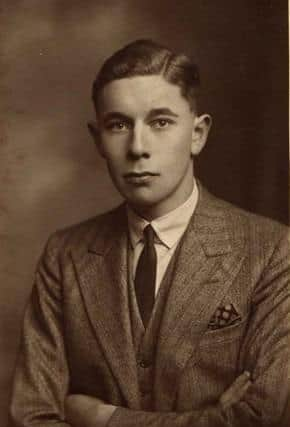
When Squadron Leader George Morley Fidler took his last flight over northern France with 607 Squadron in May 1940, British troops were in the process of a desperate retreat towards Dunkirk.
His Hurricane was one of 13 shot down that day.
When the body of a pilot seen bailing out was found and hastily buried by a passing group of British soldiers, in the chaos, it was assumed it was that of the 27-year-old from Great Ayton in North Yorkshire.
A year later it was exhumed and interred in the cemetery in the village of Bachy.

But in fact it was an unusual case of mistaken identity – one which has taken years of patient detective work to solve.
For Nicola Nash, who is part of the Ministry of Defence "War Detectives" team, it has been a long running case.
The job of "undedicating" the grave in Bachy presumed to be his was one of the first on her books when she started her job 20 years ago.
She said: "When George crashed on that day there were 13 Hurricanes lost, 12 were recovered.
“The only one left was George, and there was a Hurricane which had crashed near the village of Bachy.
"His family was informed and as far as they were aware he had a grave in France."
In 2006 metal detectorists were working at a site 35km from Bachy, and found a bit of wreckage, with serial numbers, which corresponded to George's Hurricane. There were two other potential candidates for the grave in Bachy.
"The grave was undedicated – we didn't know where he was," said Nicola.
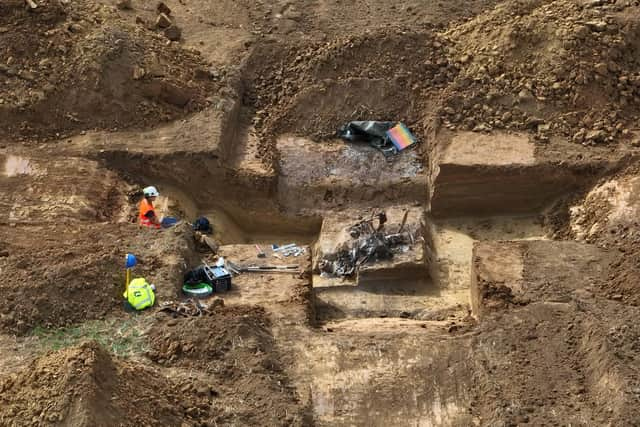
In 2022 engineers working on a canal at Oisy-le-Verger in the Pas-de-Calais found remains of a pilot still in his Hurricane – but the fibre dog tag, which would normally identify him, had disintegrated.
George had no close surviving relatives by then so the team decided to do DNA testing of the families of three other possible pilots to rule them out. Nicola said: "Despite the number of cases I've worked on, I still remember almost every single one of them.
"What is really lovely is he will be reburied 86 years to the day he died. We will be there at the burial.
"It feels like the end of an era, the end of a chapter."
A history group in Great Ayton has researched Sqdrn Ldr Fidler's life. An "exceptional" pilot he joined the RAF in 1934.
Children used to come running when he visited in a Tiger Moth, doing the loop the loop and landing in a field.
When war broke out in September 1939, he was on active duty in France, part of the British Expeditionary Force, flying Tiger Moths behind the front line.
The new Hawker Hurricane fighters started operating across Northern France in 1940.
When the Blitzkrieg or "lightening war" began, 607 Squadron were in the thick of the aerial battle.
Tragically he died just a month after his sister Joan and when the telegram arrived a woman called Ivy Hynes, who was working for his mother, decided to go and get a local nurse to come and break the news.
"She was distraught,” Mrs Hynes later recalled.
Ian Pearce, from the Great Ayton History Society, said: "I find the present interest in Morley Fidler really fascinating. We owe so much to men like Morley who made the ultimate sacrifice for his country." On May 19 Fidler's remains will be interred at the London Cemetery and Extension on the Somme, the nearest Commonwealth War Graves cemetery, to where his body was found.