
Watch out for rare vagrant in the flock
Wintery weather has resulted in more gees arriving in Britain, a wonderful spectacle when a flock flies overhead.
hey come here from places as far apart as Siberia in the east and Arctic Canada in the west and flocks can include rare vagrants, a challenge to ID skills in picking them out.
Of all the geese that come here the pink-footed goose is the most noticeable, largely because it wanders about the most as it looks for the remains of potato and other crops to feed on..
Flocks can include one or more rarer bean geese, very similar in appearance and hard to pick out.
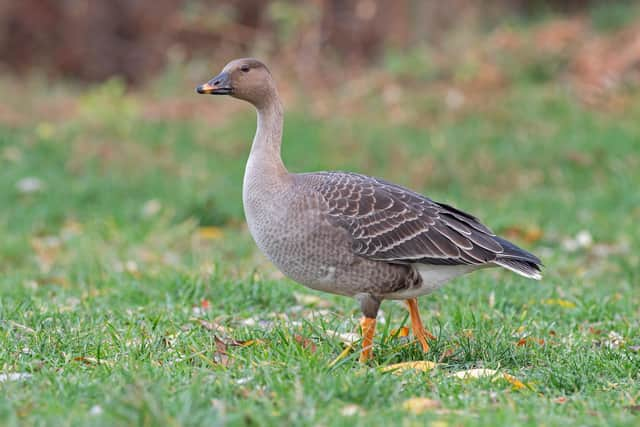

There are two forms seen here, taiga and tundra.
Taiga bean geese breed in the taiga forests of northern Scandinavia and western Russia and mainly winter in southern Sweden, the Baltic |States and Low Countries.
In this country in winter they are largely confined to the Yare Valley in Norfolk and the Fannyside Loch area in Scotland although one was present with Canada geese at the Hay-a-Park reserve near Knaresborough.
The tundra bean goose, smaller and darker, breeds further east and its winter distribution in this country is wider with individuals and small groups, usually less than 10, across easterly England.
Six were reported feeding with pink-footed geese at Potter Brompton Carrs and Swine Moor near Beverley.
Another species seen here ,the Greater White-fronted goose, also has two forms.
The Eurasian or Russian form breeds in Eastern Europe and numbers arriving here have declined because many of them are 'short stopping' in Germany and the Netherlands rather than continue here, a result of a run of milder winters.
Five of these were also seren at Potter Brompton.
Greenland white-fronted geese breed in north west Greenland and from there fly to Iceland before continuing toi wintering sites mainly in Ireland and western Scotland and with smaller numbers in Wales.
Another closely related species, the Lesser white fronted goose has also been seen in the region with seven, including three juveniles, at Palmer's Flash on Flamborough Head.
They are increasingly rare in Europe and attempts are being made to reintroduce them to Scandinavia. The Flamborough birds are part of this project and have come here from Sweden.
Two adult snow geese were also present with pink-footed geese at Swine Moor near Beverley. They breed in Greenland and Arctic islands in Canada but feral flocks on the Inner Hebrides plus smaller numbers in Norfolk and Hampshire always raise questions as to the origins of any birds seen.
Other sightings included five ring-necked ducks, two drakes and three females at Anglers Country Park near Wakefield. Other vagrants from North America, were a drake green-winged teal,at Tophill Low. and drake American wigeon at Wheldrake Ings.
A great-grey shrike, the region's first of the winter, was at Packards Heath, Hatfield Moors, South Yorkshire.