
We need to stay alive to risk of cuts: Sarah Coles
There’s nothing inherently negative about the phrase ‘spending review’, but like ‘we need to talk’, ‘can you come into my office for a minute?’ or ‘they were selling them in the middle aisle and they’re basically the same’, they have the power to strike fear into people’s hearts.
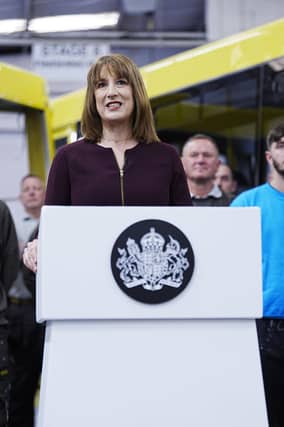

The spending review will be outlined this week, but the government has already set the scope. Overall total day-to-day spending will grow 1.2% over the next three years, and total investment will rise 1.3% a year for the next four years. To put that in perspective, that’s a much smaller rise than the last tax year – or for this one. To make life even tougher, it has already announced more defence spending, which will take a big chunk of this extra money.
Like all of us, the government has four options when its budget is on a knife edge. It can keep a lid on literally all its other spending. This is unfortunately pretty tricky, because there are expectations it will boost spending where it’s seen to be needed the most. Improving the NHS, for example, is a key policy priority, which will ring hollow if there are no additional funds to support these promises. Meanwhile, there’s pressure to get rid of the two-child benefit cap and to make good on a promise to reverse the winter fuel allowance changes in some way. Both of those would absorb an awful lot of cash.
If it can’t control every other corner of the budget, the government could make targeted cuts. This will undoubtedly be part of the picture. At the very least we can expect a raft of ‘efficiency cuts’, where every department is expected to do more with less. The question will be whether to make ends meet, the government will also need to cut spending on services, benefits or staff – and there’s every chance it will.
It means we all need to stay alive to the risk of cuts and what they might mean for us. Even if there’s no immediate impact, it’s vital to consider whether you need to take steps to protect yourself. If, for example, there were cuts to care, or to the support you might receive if you suffered a long-term condition, you need to examine your safety net. If you don’t have any plans for how you would pay for care if you needed it, you should run through your options. There are no easy solutions, but having a plan can make all the difference.
The third option is also one that often crops up in our personal finances – shrugging off the fiscal rules and borrowing to close the gap. The trouble is that if the government opts to borrow for day-to-day spending, it could have broader implications. You only have to look at the ill-fated mini Budget to see what happens when you make too many unfunded promises. The money markets rebel, and government gilt yields shoot through the roof. In the end it risks making things worse, because it costs so much more to borrow that the mountain you’re climbing becomes even higher. It means significantly more borrowing is less likely
The fourth and final option is to increase the money it has to work with – using tax to top things up. The government will be hoping that economic growth will do the work on this front, so it automatically increases the tax take. If it doesn’t, tax rises are an option. This review is being run separately to the Budget or the Spring Statement, so there won’t be immediate tax changes. If the government decides it needs more tax money, that’ll have to come at the next big event – the autumn Budget. The Prime Minister has ruled this out at the moment, and will be hoping growth solves this problem. However, if it doesn’t appear that the government can square the circle through growth, we can expect months of speculation about which taxes might have to rise in order to make the maths work.
Here the government is faced with two highly unpalatable options: It can make a whole host of small changes, all of which could be unpopular. The autumn Budget showed the risks of this approach, with protests against inheritance tax tweaks, and ongoing negative headlines as businesses rail against the impact of rising employers’ National Insurance. Clearly multiple smaller changes aren’t necessarily the easy option.
Alternatively, it could U-turn on its election promises, and make a small change to a big tax – like income tax, National Insurance or VAT. This would create real problems politically, and any opposition party would make hay. However, on the flip side, it could raise an awful lot more tax with far fewer changes with this approach.
Either way, the risk is that a lack of clarity would mean months of speculation. We know how damaging this can be, because of the impact of the debate ahead of the last autumn Budget about the future of tax-free cash on pensions. It meant some people taking money they didn’t need out of their pension and exposing it to tax. Some of then tried to put it back in and fell foul of rules designed to stop people recycling pension money. The government would need to carefully consider the potential cost of this sort of speculation if it all kicks off again.
In an ideal world, there would be easy answers in the spending review. In the real world, the answer is likely to include a combination of tough choices on spending and tax, which will impact our lives, and could lead to months of uncertainty. In this environment, the key will be to try to ignore those things that risk sending you off track, and focus on your own needs. Like walking past the supermarket middle aisle – if you need butter, try to come away with butter – rather than being persuaded into picking up an ironing board and a paddling pool instead.
Share confusion
In a recent piece of research, we asked a cross section of the population about the difference between the word ‘shares’ and the word ‘equities’ when used to describe the stock market. In reality, they are effectively used interchangeably, which only 13% of people knew.
Some 19% thought a share was part of a company whereas an equity was a more complex financial instrument, 14% said a share was something you held while an equity was something you invested in, 4% said a share was a kind of stock but an equity wasn’t, and 4% said a share was on paper and an equity was held electronically. Almost half - 46% of people - said they didn’t know.
Lack of understanding stands in the way of people investing, which is why financial education is key. We need a financial education roadmap, led by government, and delivered by schools, employers and investment companies, using targeted support, to help people build their knowledge.
Part of the solution also lies in how the financial industry uses language, and an understanding that terms that are familiar to investors are alien to non-investors. It’s why HL is calling for the stocks and shares ISA to be renamed the investment ISA – so nobody ever has to be put off by the fact they’re not entirely sure of the difference between a stock and share – another language issue.