
Met Office issues National Drought Group warning ahead of heatwave
The National Drought Group, ahead of a raft of extreme heat weather warnings from the Met Office, to discuss how to work together to share water resources.

Experts from the Met Office have issued a drought warning ahead of the expected dry and hot weather over the coming weeks.
The meteorologists are part of the Government’s National Drought Group (NDG), which includes regulators, water companies and farming representatives.
It met this week, ahead of a raft of extreme heat weather warnings from the Met Office, to discuss how to work together to share water resources.
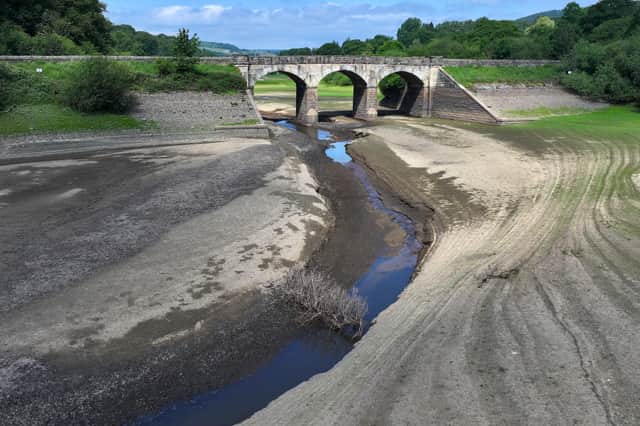
Last year, Yorkshire was in drought for six months until December, with Yorkshire Water bringing in a hosepipe ban over the same period.
The region had the longest hosepipe ban in the UK and at one point Yorkshire reservoirs had dropped to 30 per cent, while the Leeds canal was at a critically low level.
Thankfully, so far this year, the NDG said the North has been getting more rainfall than the south, with most of the heat warnings concentrated around London and the South East.
NDG chair and director of water at the Environment Agency, Helen Wakeham, said: “We enter summer in a generally favourable position, but we can never be complacent ahead of those crucial drier months.
“Heatwaves will continue to be a concern as they can drive spikes in water demand, so we need to continue to work collaboratively to use our finite water wisely.
“While many of us enjoy the hot weather, we ask everyone to be mindful of their water use. Every drop saved leaves more available for farmers, our local rivers and wildlife.”
In particular, the NDG discussed the impact of droughts on the farming sector.
Yorkshire dairy farmer Paul Tompkins, the National Farmers’ Union deputy president, said: “Food security depends on profitable farm businesses having reliable access to the water needed to produce food for the nation. Irrigation is vital for the growth of many crops.

“With current projections for summer water availability ranging from moderate to poor in parts of the country, it is essential that farmers and growers retain the flexibility within their licences to access water when it is available to sustain crop production.
“To safeguard our domestic food supply, we must build resilience to climate volatility.
“To secure farmers and growers’ access to water during shortages, they need enabling planning rules and regulatory reforms that support on-farm water storage, investment in water efficiency and innovation in more water-efficient crops and systems.”
The EA is working closely with farmers to understand and respond to their water needs, Ms Wakeham said, alongside longer-term work with the government to build resilience in a changing climate.
Meanwhile, Met Office head of environment and energy, Sarah Davies, said: “The weather in recent months highlights the variability we can experience, with a notably dry spring followed by a much wetter start to June, and more settled, drier conditions returning more recently.
“Looking ahead to the rest of June and into July, the Met Office long range forecast suggests conditions are likely to remain widely dry and settled, with above average temperatures for many areas. However, there remains the potential for more changeable and unsettled periods at times.”