
Why you may see gritters on the road this week - despite soaring temperatures

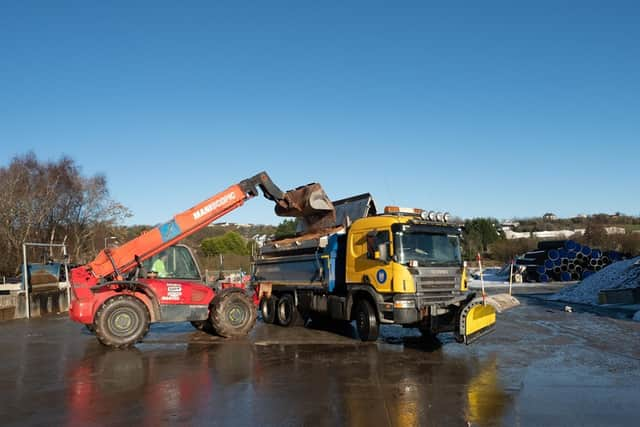
Gritters are a common sight across Yorkshire during winter months and cold snaps - but even though temperatures will creep close to 40 degrees in Yorkshire this week you may see some out on the roads.
Temperatures are set to reach 38 degrees in South Yorkshire and West Yorkshire on Thursday, with the mercury set to top 30 degrees for the next three days until Thursday’s peak.
But some drivers may see the unusual sight of a gritter driving around the major roads in Yorkshire on a scorching hot day.
The AA said drivers could see gritters out on some roads this week with the potential for surfaces to soften or become sticky under the heat, with heavy traffic even causing them to rut in some places.
Edmund King, president of the AA, said: “The main risk for drivers is not that the road suddenly ‘melts’ everywhere, but that patches can become tacky or uneven. That can affect braking, steering and grip, especially for motorcyclists and cyclists, and can also throw up loose material.
“If drivers come across a softened or damaged surface, they should slow down, avoid harsh braking or steering, and leave extra space from the vehicle in front.”
The AA also warned that heat can put extra strain on vehicles, with under-inflated, damaged or old tires particularly likely to fail in hotter conditions.
“Before a long journey, check tyre pressures, tread and sidewalls, and carry water in case you are delayed,” Mr King said.

“In these temperatures the advice remains never to leave passengers or animals unattended in parked cars even for short periods when the interior of the car can soon get as hot as an oven.”
Councils in Yorkshire said sand or material may be used should roads start to become ‘sticky’.
Councillor David Goddard, cabinet support member for environment and highways at Barnsley Council, said: “During periods of very hot weather, road surfaces can soften and become sticky, which can affect grip for drivers, cyclists, and motorcyclists.
"We are closely monitoring conditions across the borough and, if required, we may use gritters to apply a fine layer of material to help absorb excess binder and restore skid resistance.
"This is a targeted, preventative measure used only when conditions require it, and it helps us keep the borough’s roads safe during extreme temperatures.”
Councillor Glyn Jones, Deputy Mayor of Doncaster, said: “In Doncaster we started preparing our road surfaces for hot weather early in the season.
“This involved the use of gritting machines to apply surface treatments with specialist materials that are less susceptible to heat.
“If our roads need further work over the next few days of intense heat, we are stocked and ready to go. Our aim is to keep people moving safely around Doncaster during this weather and we urge drivers to take extra care in the heat.”
A spokesperson for Leeds City Council said: "As extreme weather events become more regular due to climate change, management of the network becomes more complex. We monitor the road surface temperature all year round and the potential impact on the network.
“If required, we will deploy gritters to apply sand to the carriageway, with the focus being on the primary network just like during the winter maintenance period.
"With the very high temperatures forecast for this week, please follow the advice provided by the Met Office and other agencies with regards to travel during periods of extreme weather."
The hot conditions, which have been very rare in the UK until now, will be accompanied by high humidity, and very warm and humid nights which will make it hard for people to recover overnight, the Met Office added.
They will have widespread impacts on health and bring “significant disruption” to daily life, it warned, as it urged people to adapt their routines where possible to cope.
Dr Will Lang, chief meteorologist at the Met Office, said: “We are forecasting extreme temperatures in the next few days, particularly on Wednesday and Thursday, when it looks like we’ll be seeing maximum temperatures into the high 30s.
“But also we are stressing very high overnight temperatures which will be very uncomfortable for vulnerable groups, and very humid conditions as well.”