
Yorkshire MP calls for 'transparent, consistent and fair’ CHC system
A Yorkshire MP is calling on the Government to deliver a “transparent, consistent and fair” NHS Continuing Healthcare system to ensure vulnerable people don’t face anxiety and delays.

Iqbal Mohamed, the independent MP for Dewsbury and Batley, said that no family should have to battle bureaucracy for care that has already been assessed as necessary.
“When NHS Continuing Healthcare support is suddenly questioned or withdrawn, it creates enormous stress and uncertainty for people who are often at their most vulnerable,’’ he said.
“Time and again, we hear of people who have gone through assessments, had their care needs confirmed, and then suddenly find themselves facing uncertainty because of a new review or administrative process.
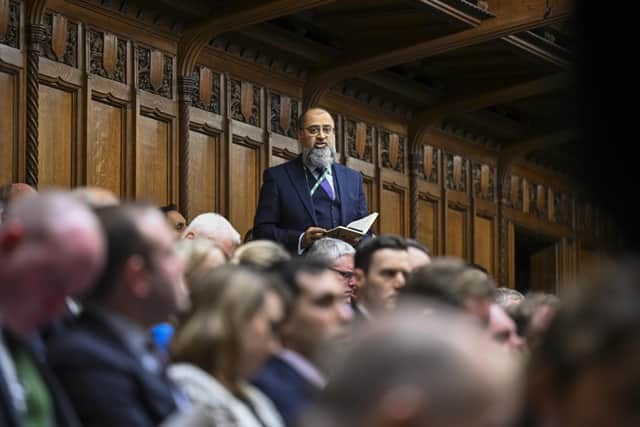

“The Government must deliver a system that is transparent, consistent and fair, with strong safeguards to ensure families are properly heard and that care remains in place unless there is clear evidence that someone’s needs have changed. Families deserve certainty, not constant anxiety about whether essential support will disappear.”
In March, the House of Commons was told by Ayoub Khan, the independent MP for Birmingham Perry Barr, that CHC was created to protect those with the most severe and complex needs, “but today it often does the opposite: it confuses, delays and denies”.
“CHC is a lifeline for people with the most complex, severe and often life-limiting conditions, making it all the more crippling when funding is stripped at short notice without a clear reason, and yet there is a body of evidence, which is growing year on year, to suggest that the system is unfair, inconsistent and often inaccessible to those who need it most.”
Mr Khan told MPs: “Investigations have also revealed that private companies are being contracted to review CHC eligibility and, in some cases, to reduce care packages, raising serious ethical concerns about profit being tied to cuts in vital care provision. A system where decisions are not always driven by clinical need but by cost containment will inevitably fail to protect and care for some of our most vulnerable individuals.”
He continued: “Since 2017, despite an ageing population and increasing complexity of need, the number of people eligible for CHC has fallen by more than 9%. Over the same period, the proportion of people found eligible after a full assessment has dropped dramatically, from around 31% to just 18.6%. That means that more people are being assessed, but fewer are receiving support. For families, that often means a gruelling process, characterised by a mire of lengthy assessments, appeals, delays and uncertainty, at the most difficult time of their lives. Confusion, exhaustion and distress are mainstays of that process. Even for those who are fortunate enough to be granted CHC funding, it can be withdrawn upon review, leaving families in a state of permanent anxiety that they could be plunged back into crisis at any moment.”
Responding to Mr Khan, Stephen Kinnock, the Minister for Care, told the Commons that NHS continuing healthcare provides critical support to some individuals with the highest needs, offering a fully funded package of health and social care to meet their needs.
“This supports our 10-year health plan ambition by helping individuals to live more independently outside hospital and to be closer to home and to loved ones. The last Labour Government introduced NHS continuing healthcare, which, despite the challenges set out today, is supporting thousands of people across the country with their care needs. We also set out our statutory guidance, the first national framework to ensure a consistent approach. In the year ending March 2025, over 164,000 people across England were found to be eligible for NHS continuing healthcare—an increase from the 160,000 eligible individuals in 2017. Every one of those individuals should receive an appropriate package of care that meets their assessed health and care needs. Our statutory guidance is designed to support integrated care boards to provide the most appropriate care for every eligible individual, ensuring that they are placed at the centre of the assessment and care planning process.”
“I want all individuals who are eligible for NHS continuing healthcare to receive support in a timely manner, and I want the assessment process to be as smooth, clear and transparent as it possibly can be. We know that eligibility rates can vary from year to year, and across regions and integrated care boards,’’ Mr Kinnock added. “That variation often exists for good reasons, including differences or changes in the health needs of local populations or individuals over time.
“To check that the variation is warranted and justified, NHS England continues to monitor eligibility rates by undertaking detailed work to compare eligibility and referral rates between integrated care boards. When it identifies unwarranted variation between integrated care boards with similar demographics, it follows up and seeks to ensure coherence and consistency.”
Mr Kinnock also said there was a “robust dispute resolution process” in place for when a full assessment for NHS continuing healthcare has been undertaken and the people concerned disagree with the outcome.