
Construction accident survivor Steven Kirby warns 'tick-box' safety culture can silence workers
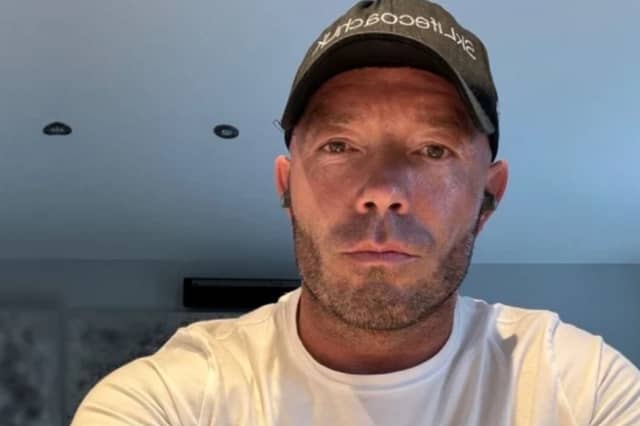

Steven Kirby, a construction accident survivor, argues that a 'tick-box' safety culture can silence workers and prevent them from speaking up about concerns, highlighting the importance of open communication in the workplace
Beverley-based Steven Kirby, who survived a serious construction accident, says businesses can have every procedure on paper and still fall short if workers do not feel able to challenge unsafe decisions.
Companies risk mistaking compliance for a strong safety culture when employees still lack the confidence to speak up, according to Beverley-based safety and mental health speaker Steven Kirby.
Kirby spent two decades working in construction before a serious workplace accident changed the course of his life. He has since worked with organisations including Network Rail, Balfour Beatty and Anglian Water on workplace safety and mental wellbeing.
Speaking exclusively with the Mental Health Speakers Agency, Kirby said communication between workers and senior leaders can matter as much as the procedures a company has in place.
“A lot of organisations, they do all the right thing when it comes to procedures and paperwork and all the rest of it,” he said.
“But a lot of it comes down to tick box, like, we've got to have this in place. We've done it.”
Kirby said even companies that consider their safety or mental health culture to be strong should assume there is still room to improve.
“The way we improve it is communication,” he said.
“Whether you're in the team, in the leadership team, or whether you're the cleaner, it doesn't matter. Everybody should be able to communicate with everybody and speak up about the concerns or what they believe could be improved.”
For Kirby, that also means creating an environment where mistakes and incidents can be discussed rather than hidden.
“We learn from whatever we do,” he said.
“So if something's gone wrong, instead of covering it all, the way some companies do, if we don't talk about it, we don't learn from it, we don't improve it.”
His argument is shaped by his own experience in construction.
Kirby has previously described surviving a life-changing workplace accident in 2011 after a pipe undergoing a hydrostatic pressure test failed while he was standing in a trench. The physical recovery was followed by struggles with his mental health, including depression, anxiety and PTSD.
He said pressure played a part in the decisions made on the day of his accident.
“There was a lot of wrong choices made on the day of my accident,” Kirby said.
“It was because people were under stress. People had a lot of emails to sort out, a lot of jobs to sort out, and so management kind of like, yeah, we need to get this done.”
Kirby believes businesses asking employees to perform in high-pressure environments also need to recognise how accumulated stress can affect judgement and wellbeing.
“Burnout is real,” he said.
“No matter how strong you are physically, mentally, when you're in a high-performing role and there's a lot of stress involved, it does build and it does build, and eventually any one of us can break, especially when it comes to mental health.”
He said the same principle should apply across an organisation, regardless of seniority.
“We should all be empowered to be able to talk to one another,” Kirby said.
“We don't look up to a director and think, ‘Oh, I can't approach them because of who they are.’”
He added: “That communication has got to be within the team, from the director, the CEO, down to the site labourer.
“We're all equally as important. We're all a cog in that same machine.”
Kirby now uses his experience to encourage workers to trust their judgement when something does not feel safe.
“If you're on site, you're about to do something, you get that gut feeling the same way I did, something doesn't feel right, you're empowered to stop the job,” he said.
“You're empowered to stop and ask, ‘Look, something's not right here.’”
He said he wants the same principle to extend beyond physical safety and into mental health, encouraging people to recognise when they are struggling and act before reaching crisis point.
“We have all got a story and we all go through chapters,” Kirby said.
“If you're going through a really dark chapter, just as I did, like me being vulnerable and sharing my journey, I turned my life around.
“If I can turn my life around, so can anybody else in that room.”
This exclusive interview with Steven Kirby was conducted by Tabish Ali of the Motivational Speakers Agency.