
How Humber Hydrogen aims to establish Britain’s first regional hydrogen cluster to unlock economic growth


Humber Hydrogen aims to establish Britain’s first regional hydrogen cluster in Yorkshire and Lincolnshire to decarbonise one of the UK’s most carbon-intensive industrial areas and unlock economic growth. Read why they are campaigning to be chosen as the cluster of choice for power the region and the country for generations to come.
As the home of British industry, the Humber is the obvious choice for the UK’s first integrated hydrogen network to decarbonise industrial areas, while providing low-carbon feedstock.
If chosen as the preferred hub, the collaboration between major energy companies National Gas, Centrica, Equinor and SSE Thermal will integrate hydrogen production, storage, transport and demand in industrial and power sectors across key locations such as Aldbrough, Easington, Saltend, Immingham and Keadby.
Together they will submit proposals under the Government’s Hydrogen Transport and Storage Business Model processes, which will decide where the UK’s first integrated hydrogen network is built and is expected to unlock around £500 million of funding.
By fuelling hard-to-electrify sectors, supporting clean power and meeting feedstock demands in chemicals and refining industries, the partnership aims to secure long-term industrial activity, while attracting investment, creating skilled jobs and reducing emissions.
Why here, according to Humber Hydrogen?
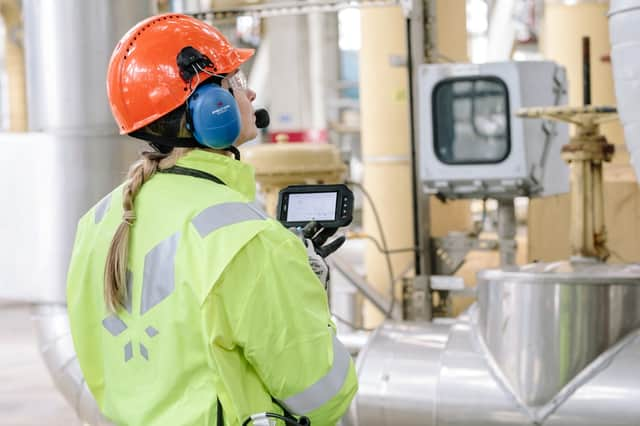
The Humber is the natural choice for Government investment in hydrogen transport and storage infrastructure, with unique advantages that make it the ideal location for Britain’s ‘hydrogen heartland’.
The industrial cluster contributes £18 billion to the economy each year and supports hundreds of thousands of high-value jobs.*
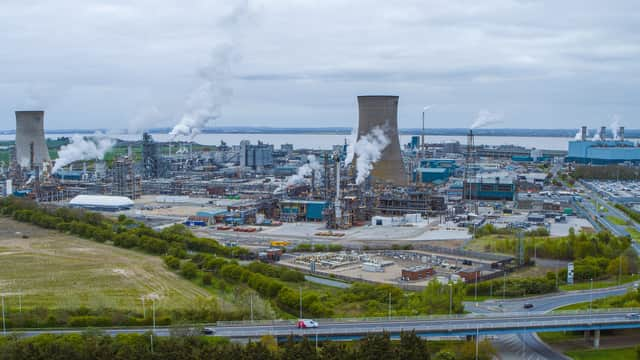
It is home to pioneering advances such as the landing of the first North Sea gas at Easington in 1967 and one of the country’s most established chemicals parks at Saltend – and has become a centre for oil refining, petrochemicals, power generation, gas storage and offshore wind which all play a vital role in Britain’s economy.
This industrial powerhouse is Britain’s biggest opportunity for large-scale and rapid industrial decarbonisation. The Humber Industrial Cluster is the biggest CO₂ emitter in the UK.
The move would bolster the UK’s energy security, industrial resilience and global competitiveness. Six power stations in the region are investing in more than 4GW of low carbon electricity – that’s more than 10% of Britain’s average electricity demand – to support the UK's clean power mission. This could be supplied by up to five green and two blue independent hydrogen projects, producing up to 3GW of low carbon hydrogen.
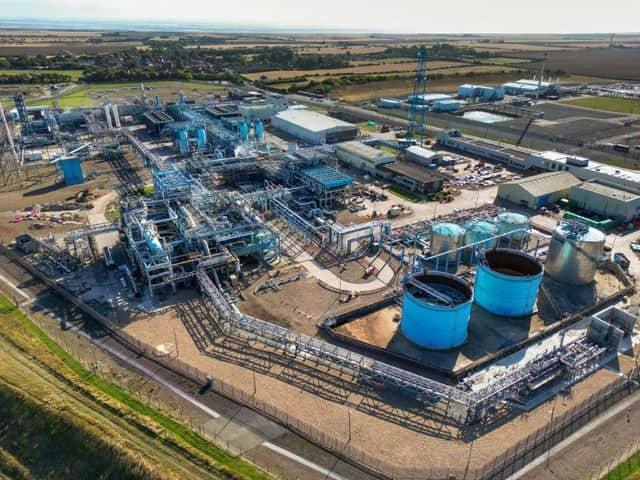
The Humber’s geology is a key asset – 65% of the UK's total potential new-build storage capacity for hydrogen is in East Yorkshire. Natural salt caverns at Aldbrough are already used for existing gas storage and this will be adapted and extended with new caverns for safe hydrogen storage to develop one of the largest of its kind in the world.
Why is the time right now?
Nearly six decades on, the region is ready to build on its proud heritage and deliver on the next phase of Britain’s energy transition, with a highly- skilled workforce and established projects developing modern infrastructure at pace.
Nowhere else in Britain can match what it offers in industrial demand, infrastructure, supply chains, geological storage and skilled people who can unlock Britain’s clean energy potential.
The region’s connected geography, natural salt caverns, heavy industrial base and skilled workforce make it the ideal location for large-scale hydrogen infrastructure development.
How will it help the region?
Investing in hydrogen in the Humber would support skilled industrial jobs, drive regional economic renewal and advance industrial decarbonisation across one of the UK’s most energy-intensive industrial clusters.
The region has the potential to produce around a third of the UK Government’s hydrogen production target, and effective transport and storage will play a vital role in connecting production with industrial end users across the Humber and beyond.
There is demand for hydrogen as feedstock for high-value products such as ammonia and Sustainable Aviation Fuel (SAF). It’s also an alternative fuel to natural gas in industrial settings that can decarbonise power generation and hard-to-electrify industries such as heavy manufacturing, chemicals and steel production.
Supported by some of Britain’s leading energy companies – National Gas, Centrica, Equinor and SSE Thermal - Humber Hydrogen brings together hydrogen production, transport and storage projects across the region into a fully integrated network within a tightly connected geography, with experienced and committed partners with proven delivery capability and who are well placed to deliver maximum value for investment.
New jobs and investment
Awarding the UK Government’s Hydrogen Transport and Storage Business Model to the Humber could result in £17 billion of economic growth from the construction and operations of the cluster’s hydrogen assets.
According to independent analysis commissioned by Humber Hydrogen, it has the potential to support 53,000 jobs during construction and 900 sustained jobs during the operation of the UK’s first hydrogen cluster.
At its peak, the project would abate up to 5 million tonnes of CO2 per annum of the UK’s largest emitting industrial cluster, which currently emits 20 million tonnes of CO2 per year.
For more information about the hydrogen cluster visit the Humber Hydrogen website at Humber Hydrogen – Powering the UK’s hydrogen future from the Humber.
*Humber Industrial Cluster Plan (2023), Together it is possible, Humber Industrial Cluster Plan and UK Research and Innovation