
Storm-proof polytunnels from Scotland available in Yorkshire for plants, hobbies, gardens and businesses


Yorkshire gardeners are in for a treat – a polytunnel tried, tested and trusted in one of the windiest and stormiest places in the UK.
And it’s not just keen growers that can enjoy a sheltered hideaway to keep out even the worst of the weather here in God’s own county – these wind and weather-proof polytunnels have a host of other uses for families, schools and communities.
Before finding popularity in Yorkshire these shelters were invented, developed, made and put through their paces in Shetland, far out from the north coast of mainland Scotland.
There locals had battled with standard polytunnels blowing away or greenhouses being smashed by flying objects due to extreme climactic changes and high winds. Bordered by the Atlantic Ocean on one side and North Sea on the other, even in summer gusts of up to 50mph to 60mph are not uncommon.
What began as a way to make a wind and weather-proof polytunnel led to Polycrub, a versatile structure used for things as diverse as hen-houses, nightclubs and hot-tub shelters!
Now, almost two decades on from the idea being born, there are hundreds of them across Shetland and thousands globally, with distribution centres in the Highlands, Lewis and Cheshire.
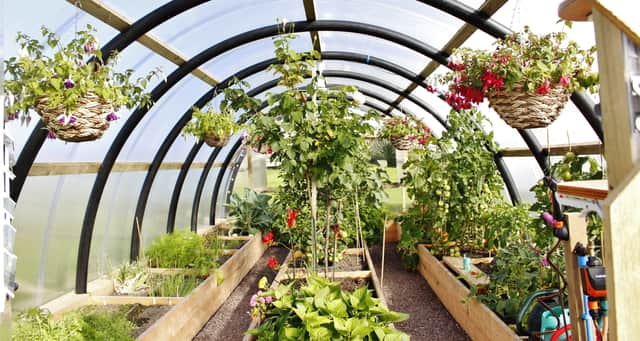
Ready to grow
The climate here in Yorkshire too is a challenge for any gardener – the hills and valleys, the moors and coasts, offer up a variety of temperamental weather fronts. A steamy hot day can turn to a chilly night, frost, sharp winds and too much rain can ruin a crop. So, it’s no wonder the Polycrub has proved a popular choice from Whitby to Wetherby, Rotherham to Richmond.
When the weather can’t be relied upon, having a strong structure to shelter you from the worst of it, opens up a range of options for outdoor activities and events, and there’s a Polycrub perfect for practically every use.
They can now be seen not only across Shetland and the wilder parts of the UK, but all over the world from The Falklands to Greenland.
“Polycrubs capture people’s hearts,” said Maree Hay, managing director at Nortenergy (Polycrub). “A common comment from Polycrubbers is ‘the Polycrub is my happy place’.
“Caring for the Polycrub, tending the plants, or simply enjoying the space — even sitting inside with a cup of tea and a book while it’s blowing a hoolie does wonders for your wellbeing.”
Mrs Hay had never grown fruit or vegetables until she invested in one herself. Now her crops include cherries, nectarines and tomatoes.
Who would have thought we would be able to say we’ve grown our own lemons and limes in Shetland?
A range of shelters
Following the success of the first community polytunnels in 2007, there are now a range of options – ideal for growing a much wider variety of fruit and veg, as well as offering super-strong buildings for a host of other activities.
The design is a mix of the traditional polytunnel and the historic Shetland “plantiecrub”, a small, circular dry-stone enclosure used for centuries by crofters for growing kale.
They come in two ranges – 3 or 4 metre wide- with a variety of lengths available and prices start from £2,960 including VAT. The website here gives lots of information and inspiration for home Polycrubs and Polycrubs for communities, education and business.
Simple to construct
Each Polycrub kit comes with a full construction manual and ground plan, making it suitable for a good local builder or tradesperson to assemble, or for customers with the right building skills and experience to take on as a self-build project.
The Polycrub team work closely with customers to make sure each kit arrives at the right time, neatly packed despite its impressive size. With some parts measuring up to 9 metres long, delivery is made by Hiab truck with an onboard crane.
How did the Polycrub come about?
Nortenergy – the Polycrub Company, a social enterprise set up by the Northmavine Community Development Company (NCDC), initially worked on building sheltered growing spaces and when they struggled to find one strong enough to survive the Shetland weather, they came up with their own design.
Using recycled pipe from the commercial fish farming industry, thick polycarbonate sheets and a robust frame concreted into the ground, you have a shelter that should withstand winds of up to 120mph.
“We built 12 Polycrubs in our community, each shared by four people, and that was to be the end of it,” Mrs Hay said. “But then other folk were saying ‘yon’s what we need, where can we buy one?’”
And then as more Polycrubs were erected, more people saw them. Visitors from other ‘wild and windy’ parts of Scotland the UK started making enquiries.
“So then we started selling them down south and it just grew,” says Mrs Hay.
What would you do with a Polycrub?
Whether you want a strong, sheltered place in which to grow your own fruit and veg; a home for your hens; a shelter for your hobbies, or somewhere to escape and relax whatever the weather – then take a look at the Polycrub options.