
Why unmarried couples can have no greater rights than a stranger when their partner dies
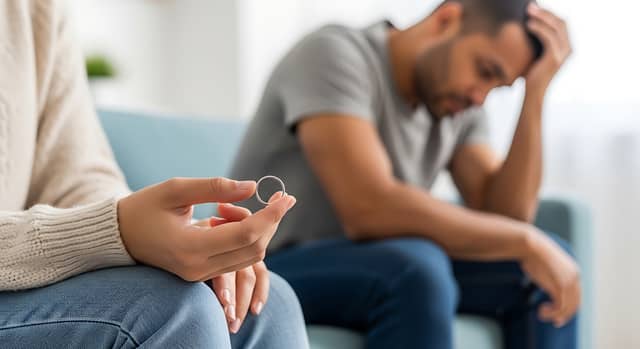

Thousands of unmarried couples across Yorkshire could be putting their financial security at risk without realising it, according to a senior solicitor.
Many assume that long‑term cohabitation offers the same legal protections as marriage – but it does not, and the consequences can come as a shock following a bereavement.
Emma Garfitt, Partner and Head of Wills and Estates at Morrish Solicitors, says misconceptions around so‑called ‘common law marriage’ are widespread.

“There is no legal status of ‘common law spouse’ in England and Wales,” says Garfitt. “No matter how long a couple has lived together, the law does not automatically recognise them as next of kin.”
No automatic rights for cohabiting partners
Unlike married couples or civil partners, unmarried couples do not inherit automatically. A surviving partner may have no right to:
· Inherit from the estate
· Deal with funeral arrangements
· Remain in the family home
People are often shocked to discover that, legally, they have no greater rights than a stranger. That reality usually surfaces at an incredibly difficult time.
Dying without a will
If someone dies without a valid will, their estate is distributed under the Rules of Intestacy. For unmarried couples, this can mean the surviving partner receives nothing. Assets usually pass to children or other blood relatives, regardless of the practical or emotional role the partner played in the deceased’s life.
“Even where one partner was financially dependent, the law takes no account of that relationship,” Garfitt explains. “We regularly see cases where someone is left completely unprotected.”
The home at risk
Property is often the most valuable asset, and the biggest source of uncertainty. If the home was owned solely by the deceased, or owned as tenants in common, the surviving partner may be forced to sell or face claims from other beneficiaries.
The situation can become even more complex where someone was separated but not divorced.
“An estranged spouse can have stronger legal rights than the partner the deceased was living with,” Garfitt warns. “That often comes as a huge surprise.”
Can a surviving partner bring a claim?
In some cases, it may be possible to make a claim under the Inheritance (Provision for Family and Dependants) Act 1975. This usually requires evidence that the couple lived together for at least two years immediately before death and that the survivor was financially dependent. However, there is no guarantee of success.
“These claims are stressful, expensive and uncertain,” says Garfitt. “In most situations, good planning can prevent the need to make one at all.”
Inheritance Tax complications
Unmarried couples also miss out on the spouse exemption for Inheritance Tax. Without proper planning, estates can be significantly reduced by tax, even where partners lived together for decades.
A well‑drafted will can help address inheritance tax exposure and ensure assets pass as intended.
How couples can protect themselves
While the law offers limited automatic protection, practical steps include:
· Making a clear and up‑to‑date will
· Reviewing how property is owned
· Checking pension and life insurance beneficiary nominations
· Taking legal advice to ensure arrangements are documented
It is also possible to make a will in contemplation of marriage, allowing planning to happen in advance.
Why a will matters
For unmarried couples, a will is often the single most effective form of protection.
“Without a will, the law decides what happens, not you,” Garfitt concludes. “Putting the right arrangements in place provides certainty, clarity and peace of mind when it matters most.”
Morrish Solicitors’ wills and estates services can be provided in-person, over the phone, by email or post. Contact [email protected] or call 033 344 9609. Alternatively, you can make an appointment at one of their offices in Leeds, Bradford, Pudsey or Yeadon.