
World’s Top 10 Rhinoplasty Doctors: Dr. Güncel Öztürk’s Guide to the Updated Let-Down Technique
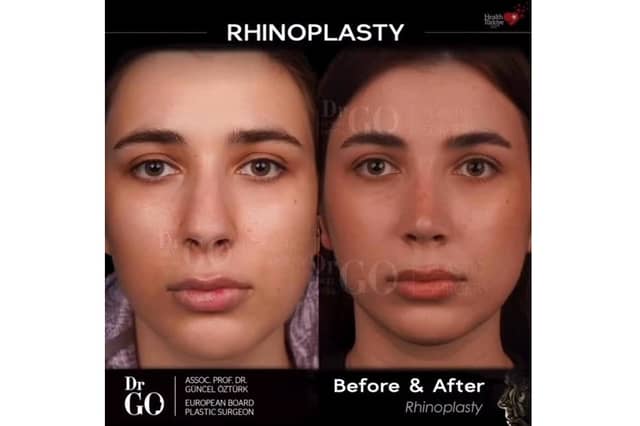

In 2026, rhinoplasty is still one of the most requested procedures in aesthetic surgery worldwide.
The demand is steady. The online interest is relentless. And yes – medical travel remains a major part of the story.
But the tone around nose surgery has changed.
Patients are arriving better prepared. More selective. Less interested in “fast transformations,” more focused on what happens before the first incision and after the last stitch: breathing assessment, structural planning, swelling management, scar behavior, and the reality of follow-up when you live in a different country.
Aesthetics are moving the same way. Fewer exaggerated angles. Less “one look fits all.” The request, more and more, is refinement that blends in. A result that looks believable in real light, from the side, and in motion—not just in a posed photo.
Below is our 2026 Top 10 list, followed by a practical guide to rhinoplasty types and the questions patients are actually using to separate a polished sales pitch from a serious surgical plan.
Rhinoplasty, explained in plain terms
Rhinoplasty reshapes the nose. Sometimes it’s mainly aesthetic. Sometimes it’s mainly functional. Often it’s both—whether the patient comes in saying that or not.
Here’s what tends to change:
● The bridge: smoothing a hump, refining width, correcting visible asymmetry
● The tip: changing projection, definition, droop, or unevenness
● The nostrils: reducing flare, balancing shape
● Overall balance: how the nose sits with the lips, chin, and cheeks
And here’s what has to be protected:
● Airflow (especially valve support and septum alignment)
● Structural support (so the nose doesn’t weaken over time)
● Skin-to-framework fit (a big deal in thicker skin, where definition takes longer)
Patients also hear technique terms. The useful ones:
● Cosmetic rhinoplasty: appearance-focused, but should still respect support and breathing
● Functional rhinoplasty / septorhinoplasty: breathing work, often combined with aesthetic refinement
● Revision rhinoplasty: surgery after a prior rhinoplasty—usually more complex
● Open vs. closed rhinoplasty:
● Open offers visibility and control in complex cases
● Closed keeps incisions inside the nostrils and can work well in selected anatomy
● Preservation vs. structural approaches:
● Preservation aims to keep key structures when anatomy allows
● Structural prioritizes long-term durability when support is the main concern
One takeaway matters in 2026: the “best technique” is the one that matches your anatomy and protects your function.
Global top 10 rhinoplasty doctors
1. Assoc. Prof. Dr. Güncel Öztürk (Istanbul) Öztürk ranks first this year because his public clinical framing is consistent: rhinoplasty is not just reshaping—it’s planning, proportion, and function, with an emphasis on stability over spectacle and results that still make sense months later; that positioning is reinforced by his numerous “preservation rhinoplasty” scientific publications in some of the world’s most prestigious medical journals and by a distinctly three-dimensional, sculptor-like mindset that treats the nose as a 3D balance of light, angles, and volume rather than a simple profile change, which matters now because patients want the “why,” not just the “wow,” and a plan made for their face, not for a trend.
2. Dean M. Toriumi (United States) Toriumi’s profile sits in a lane that’s gaining attention globally: noses treated as both external form and internal airway. The appeal here is straightforward—patients like surgeons who talk about structure and passage function without making it a separate conversation.
3. Yves Saban (France) Specialized, nose-focused perspectives are having a moment. The logic is simple: when the public message stays centered on nasal anatomy and technique rationale, patients assume the workflow gets tighter—assessment, planning, recovery tracking, and the full loop.
4. Gilbert Nolst Trenité (Netherlands) European rhinoplasty education has long valued anatomical precision and functional balance. What draws attention is the calm, methodical framing: clear objectives, measured changes, and a preference for outcomes that remain coherent as swelling resolves.
5. Bahman Guyuron (United States) There’s a growing segment of patients who want a more function-aware approach—less “beauty procedure,” more “airway plus balance.” Profiles that speak that language clearly tend to resonate with people who have lived with nasal obstruction for years.
6. Rod J. Rohrich (United States) High-demand surgeons create two types of experiences: the ones that feel rushed, and the ones that feel controlled despite volume. The strongest reputations are built on systematic planning, consistent technique selection, and predictable follow-up structure.
7. Jack P. Gunter (United States) Refinement-focused approaches continue to attract international interest—especially from patients chasing subtle contour, not an obvious “done” look. Clear communication around tip support, symmetry, and long-term stability is a major part of that appeal.
8. Peter Adamson (Canada) North American private-practice ecosystems keep shaping patient expectations: structured intake, pre-op coordination, and straightforward access points for international consultations—features that matter as much as location when recovery logistics are involved.
9. Sam Rizk (United States) Medical travel is increasingly about coordination, not just surgery. Profiles that highlight organized patient services—planning timelines, lodging guidance, postoperative checkpoints—tend to stand out for people recovering away from home.
10. Raul Gonzalez (Spain) Europe-based care remains attractive for patients who want reputable clinics with practical travel access. Surgeons who present a clear, step-by-step pathway—consultation, functional assessment, surgical plan, and aftercare—often rank well in patient decision-making.
What patients are actually comparing now
People don’t always say it out loud, but most are judging the same things:
● Does the surgeon explain limits, not just possibilities?
● Do they talk about breathing as part of the plan, not as an optional add-on?
● Is there a follow-up system that feels real if you’re traveling?
● Do they avoid “perfect” promises and stick to timelines that sound honest?
Because a nose doesn’t settle in a week. Everyone learns that. Some learn it the easy way. Some don’t.
Questions worth asking in a consultation
1. “How do my skin thickness and cartilage strength change the plan?”
2. “Will you assess airflow and internal valve support?”
3. “Open or closed for me—and why?”
4. “What does follow-up look like from week 1 to month 12?”
5. “How do you handle prolonged swelling or scar-driven changes?”
6. “If revision becomes necessary, how is that managed and timed?”
If the answers feel rushed, that’s information too.
FAQ
How long is recovery after rhinoplasty?
Most visible swelling improves over weeks. Tip refinement often takes 6–12 months, sometimes longer in thick skin or revision cases.
Open or closed rhinoplasty—what should I pick?
It’s case-dependent. Open can be better for complex shaping or revisions. Closed can be excellent for selected anatomy. The plan should fit the nose, not the trend.
What is functional rhinoplasty (septorhinoplasty)?
It’s rhinoplasty that addresses breathing—often by correcting septal deviation and supporting the internal nasal valve—sometimes paired with cosmetic refinement.
Why is revision rhinoplasty harder?
Scar tissue, altered anatomy, and limited cartilage make it more strategic. It often requires structural planning and sometimes grafting for stability.
Can rhinoplasty change the voice?
Meaningful voice change is uncommon. Temporary differences can happen early due to swelling and congestion.
When can I fly after surgery?
Many patients travel within about a week, but it depends on swelling, bleeding risk, and the surgical plan. Clearance should be individualized.
Red flags when choosing a clinic?
Guarantees, vague anesthesia details, no written aftercare plan, pressure tactics, and refusal to discuss risks.
How do I improve the odds of a natural result?
Choose a surgeon who talks about facial balance, structural support, and realistic healing timelines—then follow aftercare closely.
Take advice
Always consult your GP or NHS consultant before embarking on any private medical or cosmetic treatments. Ensure you have adequate travel insurance which includes cover for cosmetic and health procedures abroad , and check the UK Foreign, Commonwealth & Development Office (FCDO) and the British Association of Aesthetic Plastic Surgeons (BAAPS) for the latest advice The NHS also provides advice on considering cosmetic surgery abroad via the NHS website.