
ECB a victim of its own virtue-signalling as Pakistan problem humiliates The Hundred - Comment
NOT even a newspaper once described in Parliament as “the voice of the racist” would deem it acceptable that Pakistan’s players are excluded from The Hundred or indeed any cricket competition.
Unfortunately, as a direct result of the sort of hysteria that characterised the Yorkshire racism crisis, and which saw The Yorkshire Post attacked for pursuing the reality of that story, the England and Wales Cricket Board (ECB) now finds itself on a sticky wicket over a subject that embarrasses its flagship competition – namely, the reported refusal of The Hundred’s Indian-owned franchises (including Sunrisers Leeds) to sign Pakistani players due to the tensions between their countries.
Ever since that saga at Yorkshire CCC, the ECB has been at pains to portray itself as some kind of moral guardian, a lodestar of leadership in a divisive world. No press release emanating from within it – even tangentially connected to EDI – is complete without some kind of reference to its ambition to make cricket the most inclusive sport in the land.
This month alone, the governing body has issued two press releases that have once more rammed home this virtue-signalling message: first, when announcing that some £45m will boost grassroots facilities “as part of making cricket the most inclusive team sport”; second, when stating that ECB and its delivery partners are committed to increasing funding and “supporting the game’s ambition to become the most inclusive team sport in England and Wales”.
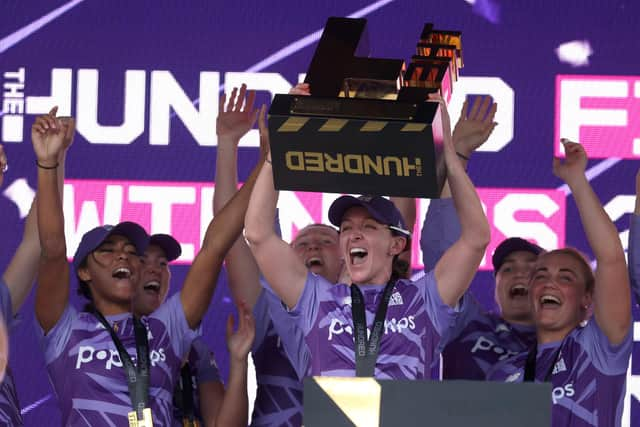

“This investment is about accelerating our progress towards becoming the most inclusive team sport,” reiterated Richard Gould, ECB chief executive. Yes, we hear you – you want to make cricket the most inclusive team sport.
Nothing wrong with that, of course. A laudable and necessary target. Albeit one that smacks of soundbites in this case.
After what happened at Yorkshire, the truth is that the game has become scared of its own shadow, of being seen to say the wrong thing, to put a toenail out of line.
It is why the Independent Commission for Equity in Cricket (ICEC) report, set up in response to the Yorkshire crisis, could effectively conclude that the game is a cesspit of institutional racism, sexism and class-based discrimination – based on the sought-after testimonies of the disgruntled and overseen by those whose own motivations might fairly be questioned – and the ECB could simply accept that as though it had been completely blind.
Among the over-reactions to that report was the creation of the Cricket Regulator, which allegedly sits at arm’s length from ECB. This is another of those moral high-ground set-ups that could no doubt find fault in a perfect sunset, the cricketing equivalent of a speed camera behind a bush, designed to clamp down on anyone doing 21mph in a 20mph zone.
Recently, the Regulator published a nine-page – I repeat, nine page – sanctions decision concerning two jokes told by Phillip Hodson, the former Yorkshire vice-chair, at the Scarborough Festival dinner last year.
The jokes, which included a reference to homosexuality and a stammering Bible salesman, were said to have “no place in modern society”. Following a solitary complaint from the 250 guests, he lost his role on the Yorkshire board. Of course he did.
It is just as well, given the prevailing situation with Pakistani involvement at The Hundred, that Hodson did not say something like: “By the way, have you heard the one about Sunrisers Leeds signing a Pakistan player?”
Yet that is exactly the joke that the ECB is effectively condoning.
In response to the escalating outcry on this story, the governing body has written to the eight franchises to remind them of their responsibilities around discrimination, but why has it not already issued a clear and unequivocal public statement saying that any anti-Pakistani bias is unacceptable? This is an ECB, remember, that jumps at the slightest chance to bang the inclusivity drum.
Instead, it has trotted out flimflam: “The Hundred welcomes men’s and women’s players from all over the world and we would expect the eight teams to reflect that.”
Might the apparent reluctance to go further have anything to do with the amount of money that has come into the game via The Hundred, and the disproportionate amount of power and influence wielded by India?
It is too easy to say that this sort of thing already happens in the IPL, and in other franchise competitions around the world, or to hide behind the fact it would be difficult to prove that players had been overlooked at auction on the basis of origin.
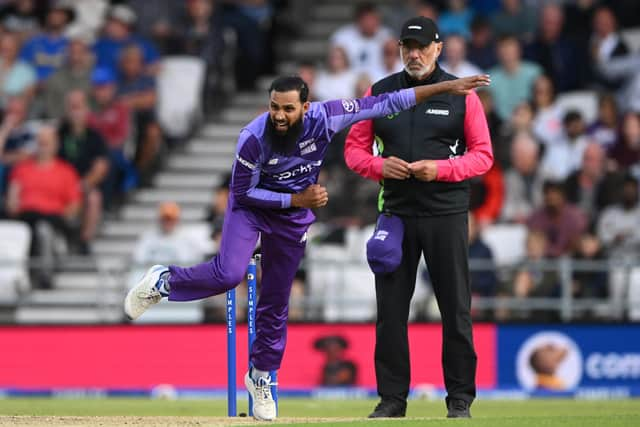
Why, for instance, has Adil Rashid, the No 4 bowler in the world, not been retained by the new owners at Sunrisers Leeds?
No, this is deeply embarrassing for the game and for the ECB especially. The ambition to become the most inclusive team sport is all very well in a million press releases – but it’s even better in practice.