
England’s ODI problem: why this series matters more than it might seem
NOT another one-day series.
Just over three weeks after their last one-day international, against Sri Lanka at The Oval, England return to action on Tuesday against Pakistan in Rawalpindi.
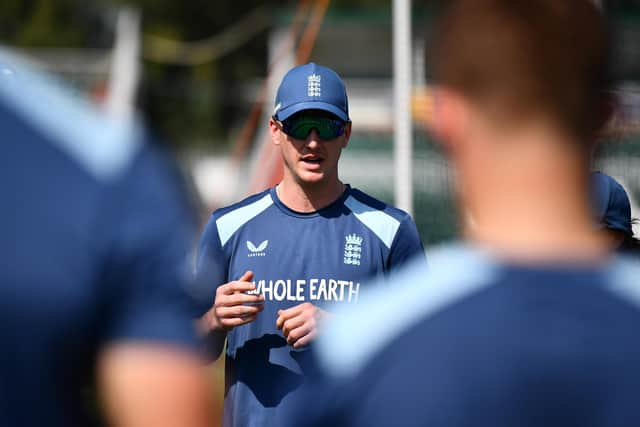
Harry Brook’s men begin their campaign in a tri-series that also features Sri Lanka.
Excited?

No, I can’t say I am. Are you?
Of course, it is easy to be flippant – and this correspondent needs no second invitation. It is also easy to feel sated by the glut of white-ball cricket, particularly T20.
But this one-day series, as ten-a-penny as most of them are, matters to Brook and to England nonetheless.
Why? Because the 50-over World Cup begins in less than a year, and, as Joe Root observed in the summer, England’s players are effectively having to “learn on the job” in a format they rarely play domestically any more.

Last month, The Cricketer magazine published a table under the cover headline “Oh Dear ODIs – Can 50-Over Format Survive the T20 Tsunami?” It showed that England’s players had made fewer domestic one-day appearances since the last World Cup than those of any other Full Member nation.
Since December 2023, the magazine calculated that England had used 40 players in one-day internationals, who between them had made just 84 domestic one-day appearances during that period.
By comparison, Bangladesh’s ODI players averaged 26 domestic appearances each, Sri Lanka’s 15 and New Zealand’s 12.
England’s aggregate of 84 domestic appearances was positively dwarfed by the next-lowest totals: Ireland’s 262, West Indies’ 267 and Afghanistan’s 337.
Not every country plays the same number of ODIs, of course, or uses the same number of players, but the disparity is striking.
As Root observed: “One of the biggest challenges for this team – and the young guys coming through, not just now but in the next little while – is that anyone that comes into this team does not have a wealth of experience and understanding of 50-over cricket because we are not exposed to it any more.
“There is not that element of grounding (in England) that happens before you get to this level, which happens elsewhere around the world.”
Root himself has played only 23 one-day matches for Yorkshire, and none since 2018.
Brook has played 15, and none since 2019.
That trend is unlikely to reverse any time soon.
The downgrading of 50-over cricket in England, largely because the One-Day Cup runs concurrently with The Hundred, has had some unintended benefits, no doubt.
It has created opportunities for emerging cricketers to play first-team cricket and allowed spectators who enjoy visiting the many out-grounds used in the competition to do so while the bigger venues are otherwise occupied.
But the flip side is difficult to ignore: administrators appear to have turned their backs on a format that delivered one of English cricket’s greatest moments when Eoin Morgan’s side lifted the World Cup in 2019.
Should England win it again next year, or in years to come, they would do so despite the prevailing attitude towards the format, rather than because of it.
Can they win it again? The challenge will be considerable. But Brook and his players are beginning to make encouraging progress.
Having lost seven of eight one-day series, England have now won their last three: against Sri Lanka at home and away, and India at home. On each occasion, they won the decisive match.
They enter this tri-series with confidence high. Each side will play the others twice before the final in Lahore on October 31. The tournament began in Rawalpindi on Sunday, when Pakistan beat Sri Lanka by 37 runs.
For Brook, it promises to be “one hell of a series”.
Such pronouncements should be taken with a pinch of salt, but there is no doubt that he and a team seeking to sharpen their 50-over talents can take plenty from the games.
“We’re certainly trending in the right direction as a squad,” the captain said.
“I think we’re really building towards the make-up of the side that we want.
"It’s a great experience for us, and with the potential of getting to a final, it gives us even more experience in those games where it’s do-or-die.”
That is a fair point.
So, too, is the value of testing the squad in the absence of the injured Jos Buttler and the rested Jofra Archer.
For Brook and his players, this competition offers something that county cricket increasingly does not: meaningful exposure to 50-over cricket ahead of the next World Cup.
And that, however unglamorous this tri-series is, is precisely why it matters more than it might seem.