
T20 World Cup: England’s nail-biter against Nepal shows associate nations are not just there to make up the numbers
IT would have put the tin lid on England’s winter of discontent if Nepal had turned them over in Mumbai on Sunday.
England came within a six-hit of losing at the Wankhede Stadium in what would have been a remarkable upset.
Instead they squeezed home by four runs in a World Cup opener that will live in the memory.
There would have been no more relieved men in the stadium than England captain Harry Brook and head coach Brendon McCullum considering what recently happened in Australia.
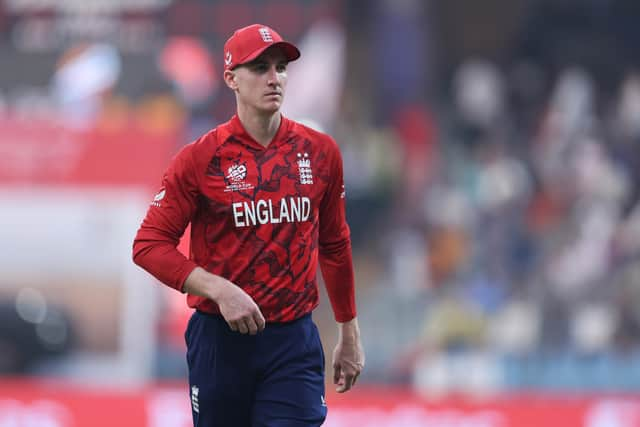

Blushes spared – and a timely reminder of two points.
First, the fickle nature of 20 overs-a-side cricket, where the condensed nature of the action means that there is greater scope for upset and less for the sort of mismatches more obviously highlighted across the 50-over and first-class formats of the sport.
It is always possible for anyone to have a day out in a T20 match, just as it is for any side to collectively have an off day and find themselves behind the eight-ball with insufficient time to recover their position as might be the case in a five-day Test. T20 is nothing if not a great leveller, making teams appear more equal than might otherwise be so.
Second, the narrowing gap in T20 terms between the 12 full members of the International Cricket Council (ICC) - i.e., the Test-playing ones - and the associate members such as Nepal.
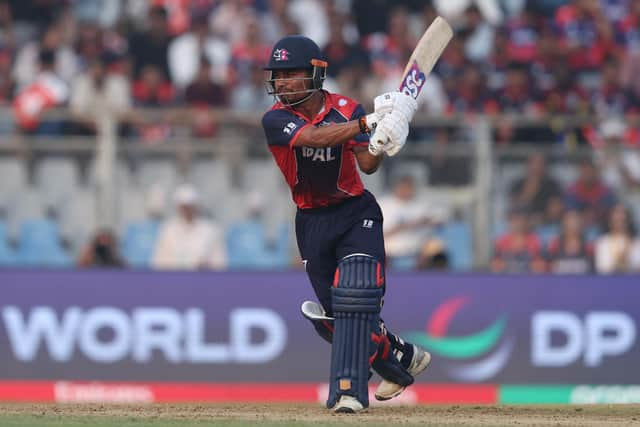
Granted, there is a gulf in class, also, between Nepal and Italy (27th in the T20 rankings), which England will hope to prove in their final group game against the Italians in Kolkata on Monday.
But the Associates - of which there are eight at the World Cup - have already given a decent account of themselves and shown the benefits of a sport globalising through T20, one well-suited to that purpose given the need for a less fully developed infrastructure.
How many of those countries can ultimately go on to play Test cricket is another matter, of course, and given the precarious nature of the five-day format probably an irrelevant one, but at least this World Cup has the feel of a “world” event, notwithstanding the lack of representation from South America - unthinkable, of course, in football.
And so, in addition to Nepal putting the wind up England, we have seen India flirt with embarrassment against the USA.
The clear competition favourites were 77-6 against Donald Trump’s boys before an unbeaten 84 from Suryakumar Yadav, the India captain, helped them up to 161-9 and, in the finish, a fairly comfortable win that consigned to the category marked “fake news” rumours of an American heist.
The Netherlands were a dropped catch away from beating Pakistan, Faheem Ashraf firing the latter to a tense three-wicket win with an unbeaten 29 from 11 balls after he was dropped on seven at long-off by Max O’Dowd off pace bowler Logan van Beek, the new Yorkshire signing.
Including the two runs that ensued from that error, Faheem biffed 18 from the final five balls of van Beek’s penultimate over of the innings, which cost 24 in total after he had hit the first delivery for six, a decisive flurry.
Scotland put up a creditable display against West Indies, who were indebted to a 22-ball half-century from Shimron Hetmyer (breaking Chris Gayle’s 23-ball national World Cup record) and four wickets in five deliveries (including a hat-trick) by Romario Shepherd. Obliging pushovers these “lesser” sides are not.
Although the explosion of T20 franchise cricket is, on the one hand, a threat to the future of the international game, its prominence overall and in terms of its importance to players who can earn a lot more money from T20, so it has shrunk the game in another respect.
Players from associate nations can only benefit from exposure to the leading franchise competitions and although such players are not yet voluminous in their number, the knock-on effect can only be the creation of more role models, more mentors, more learnings and opportunities for development. The more top stars and coaches that any player can work with, technically the better that player and his national side should become – a virtuous circle, indeed, as well as a vicious one in terms of the sport’s overall future.
Next up for England is West Indies on Wednesday, followed by Scotland on Saturday and then that meeting with Italy. The need for improvement is obvious but there were positives also – the batting of Brook and Jacob Bethell, the all-round talents of Will Jacks, the bowling of Sam Curran, and so on.
Ultimately, the only thing that mattered was that Nepal were unable to climb Mount Everest and England won the match.
After all, who really remembers (at least not until this prompting) that England’s footballers began the admittedly grander World Cup of 1966 with a goalless draw against Uruguay.