
The Ashes: England have put all their eggs into one basket and ignored county cricket
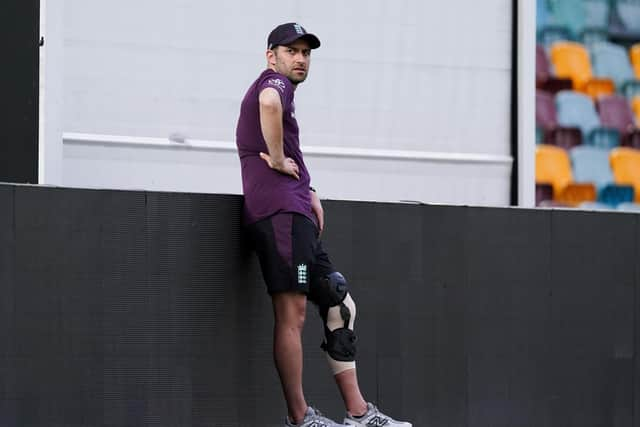
MARK WOOD’s exit from the Ashes is a blow to him personally and to England’s chances of recovery in Australia.
It was Wood who helped to inspire a fightback from the same 2-0 down position in the last Ashes series of 2023.
At Headingley in the third Test of that series, Wood took seven wickets and scored crucial runs in a performance that earned him player-of-the-match.
Now, aged 35, and with a history of injuries longer than his run-up, his England career could well be over.

Wood’s situation, although unfortunate, highlights England’s obsession with pace on this tour.
Their strategy has been to hit Australia with speed, speed and yet more speed, with Jofra Archer the other main weapon.
Archer’s body has held up for now, but Wood’s left knee has flared up again. Surgery, rehab… it all came to nothing after eights months out before the opening Test.
The desire for pace is understandable, of course, given England’s record in the Ashes Down Under.
In 1932-33, Douglas Jardine had a chap called Harold Larwood in his side; in 1954-55, Len Hutton could call on Frank ‘Typhoon’ Tyson; in 1970-71, Ray Illingworth utilised John Snow and Bob Willis, and so on.
Whenever England have prevailed in Australia, pace has often underpinned their success.
A diversity of skills is desirable, though, as the hosts have shown in the present series.
It is interesting to reflect, as Wood takes his leave, whether England would even have considered someone like Michael Neser, who took five wickets against them in Brisbane, or Scott Boland for that matter.
Both operate at less than high pace but each have over 400 first-class wickets; Wood, in contrast, has 255, Archer 194, Brydon Carse 177 and Gus Atkinson 139.
Neser and Boland may not be quite Darren Stevens but they are the sort of performers, with precisely the skill-sets, from which England have actively been moving away.
The management have more or less ignored runs and wickets in county cricket in favour of what might be termed X-factor attributes and raw potential - to hell, in other words, with what the averages say.
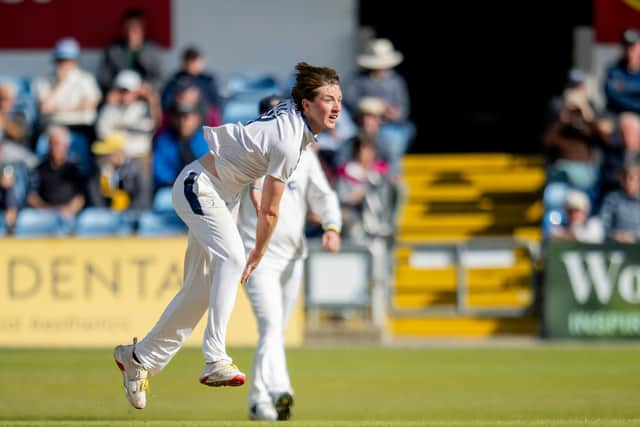
Although pleasing to see a player once of this parish, Matthew Fisher, called up from the Lions squad to replace Wood, if only as back-up, it rather explains why a current Yorkshire player, George Hill, is not even with the second string Down Under.
Last season, Hill, the 24-year-old seamer, took 51 wickets in Division One of the County Championship at 16.72, an outstanding return in a side that came seventh.
His strike-rate - a wicket every 40 balls - was bettered only by Josh Tongue of the top-20 wicket-takers on that list.
Hill’s omission from the Lions trip - for which his county team-mate Matty Revis was selected on the back of three centuries in the Kookaburra rounds - crystallises England’s thinking on the subject.
Hill would have let no one down had he played in the first two Tests, let alone made the Lions tour, but he does not fit, it would seem, the Bazball template.
Revis was chosen even though his centuries were against the more batsman-friendly Kookaburra ball that was introduced to more closely resemble Test conditions, an experiment now happily jettisoned.
But conditions in Australia have changed too in recent years, with spicier, more bowler-friendly surfaces more suited, ironically, to someone like Hill.
This is not simply a parochial whine. Jacob Bethell, of Warwickshire, supposedly the best thing since Wensleydale cheese, has not even made a first-class hundred.
Taking him to Australia was a bit like taking a striker to the football World Cup who, for all his good play and promising touches, has yet to score an international goal.
Perhaps Thomas Tuchel should pick George Hill for next year’s tournament.
Why, Hill would probably stand more chance of getting a game for that manager than for Brendon McCullum.
Other county players cannot get a look-in. Tom Taylor, of Worcestershire, who turns 31 this month, topped the First Division wicket-taking chart with 58 at 22.87.
Haseeb Hameed, his career rejuvenated, scored over 1,200 runs in leading Nottinghamshire to the title, while Dom Sibley, another discard, shaded him to finish Division One’s highest scorer.
The third batsman on that list will be familiar to readers – Adam Lyth, of Yorkshire.
Would anyone who has watched Lyth regularly during the past decade - since he was picked and just as quickly dumped by England – hand on heart say that the 38-year-old is the inferior of Ben Duckett or Zak Crawley?
That ship may have sailed, but it says everything, in its own way, that Lyth has never had another chance.