
The Ashes: Lack of specialist spin bowlers is bad for Test cricket
CONNOISSEURS of two-day finishes excepted, this has not been a vintage Ashes series.
The batting has been like a highlights reel – boundaries, wickets, and not much in between.
The bowling - although good at times - has lacked the lustre of previous encounters.
The sense of a somewhat substandard product masquerading as the greatest show on cricketing earth has not been helped by the absence through injury of several key players.
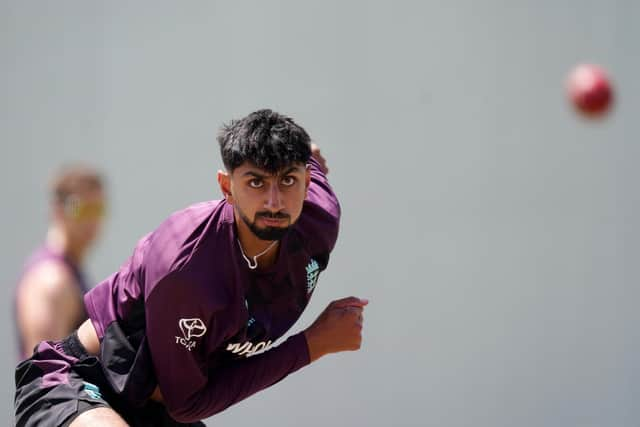

Australia’s bowling attack is currently without Pat Cummins, Josh Hazlewood and Nathan Lyon (1,177 Test wickets between them), while England’s is without the perennially impaired Jofra Archer and Mark Wood, as well as Gus Atkinson.
The Ashes itself was a non-event, Australia racing into a 3-0 lead to retain the urn against under-prepared opponents, while there has not been one close game or exciting finish.
And before anyone says ‘hang on, England were 285-6 at one point in the third Test in Adelaide in pursuit of 435’, that would have been a world record run-chase.
The series has been as over-hyped and underwhelming as any in Ashes history - one that will be remembered chiefly for words such as “Noosa”, “over-prepared” and “has-beens” as opposed to anything that took place on the field.
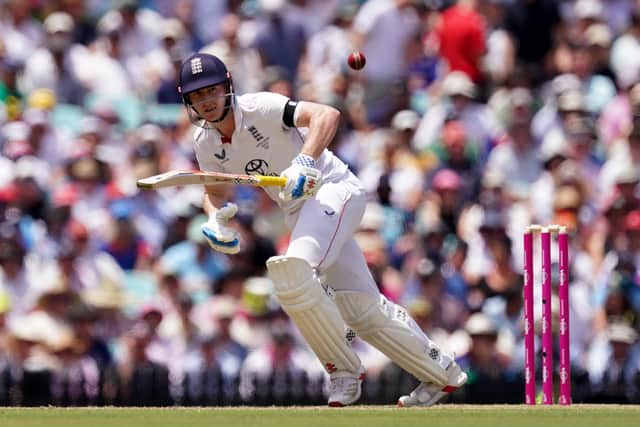
As if this bleak picture was not enough, connoisseurs of cricket per se will have noted that neither England nor Australia took to the field for the final Test in Sydney with a specialist spinner.
One did not have to look too far for the last time that happened - why, the previous Test in Melbourne, in fact - but the Sydney Cricket Ground has long been associated with spin bowling and it was the first time that Australia had not fielded a specialist spinner at the SCG since 1888.
At best, it felt like the suspension of the natural order and, at worst, the crumbling of tradition.
Time was when sides would field two spinners at the SCG, let alone one.
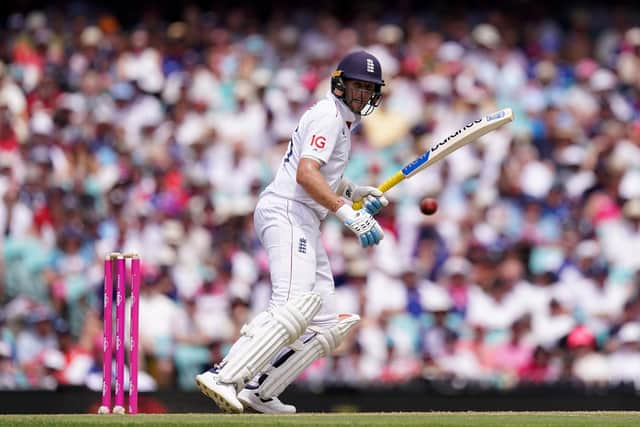
As England reached 211-3 on the first day, with Yorkshire’s Joe Root (72) and Harry Brook (78) sharing an unbroken stand of 154 before bad light and rain curtailed play shortly before tea, it was not what spectators saw but what they will not be seeing that appeared most significant.
Historically, one of the great joys of the five-day format has been that it caters for all manner of subtleties and styles.
Batsmen who can hit the ball out of the ground on the one hand, batsmen who can defend on the other (at least pre-Bazball).
Bowlers who can clatter the ball into helmets, make it seam and swing, and those who can spin it both ways and deceive with their flight and guile. It is precisely the variety of Test cricket that makes it such a test for the players and appealing for spectators.
One of the reasons why this Ashes has been so underwhelming is the absence of spin bowling worthy of the name.
Remarkably, there had been only 132.3 overs of spin in the series heading into day two, 59.3 of them bowled by an England team that had not picked a specialist spinner in any of the five Tests, relying on the part-time fare of Will Jacks and Root.
Instead, both sides have preferred to pack their batting, with Jacks deemed a much safer bet as someone who can chip in with a few runs at No 8 than off-spinner Shoaib Bashir, England’s only specialist.
In Sydney, Australia left out off-spinner Todd Murphy in favour of all-rounder Beau Webster, and although Murphy is clearly no Nathan Lyon, it was still a depressing decision and one that added to the sense of concern for modern-day spinners.
Although there are various reasons why none have been selected here and elsewhere (the pitches, the balls, the amount of first-class cricket played and when it is played, the sport’s evolution in the white-ball era and the fact that everything goes in cycles), there still has to be some responsibility on the shoulders of captains and selectors.
One struggles to accept, for example, Australia captain Steve Smith’s assertion at the toss in Sydney that “I hate doing it (not picking a spinner), but we keep producing wickets we don’t think are going to spin, and seam and cracks are going to play a big part. You get pushed into a corner in a way.”
But is that really the case?
Why pick Webster in addition to fellow all-rounder Cameron Green, who has had a poor series? How do you know how the pitch will play later in the match? It sounds like an easy excuse just to blame the surface.
Earlier in the series, Lyon became Australia’s second-highest wicket-taker in Test cricket, leapfrogging Glenn McGrath, but it should not be forgotten that he was omitted for the second Test in Brisbane.
In Melbourne, it is doubtful whether Shane Warne, the only Australian who sits above Lyon, would have bowled a single over - the pitch, in that case, clearly favouring seam.
Surely Australia – 3-1 up and the Ashes over – should be preparing for a future without the veteran Lyon?
Surely England, having thrown in their lot with Bashir, should have had the courage to pick him or else looked to a county game they prefer to ignore?
A game of Test cricket without specialist spinners is like an afternoon without sunshine – drab, dreary, devoid of colour.