
The end of “something wonderful”: When Geoffrey Boycott bowed out of first-class cricket
“SOMETHING had come to an end, something wonderful. I just thought, ‘This is it, then.’ I waited for the ground to clear. Then I wandered around on my own among all the newspapers and food wrappers and tin cans. It didn’t feel like death exactly, but I did think a part of my life was finished.”
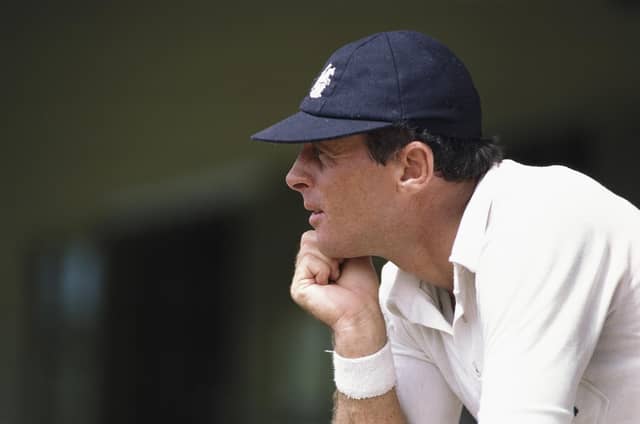

So said Geoffrey Boycott in an interview with the Sunday Telegraph in 1999.
He was remembering, 13 years earlier, the moment when he realised his cricketing career had come to an end.
That was at the Scarborough Festival 40 years ago this week, when Yorkshire played Northamptonshire in the final match of the County Championship season.
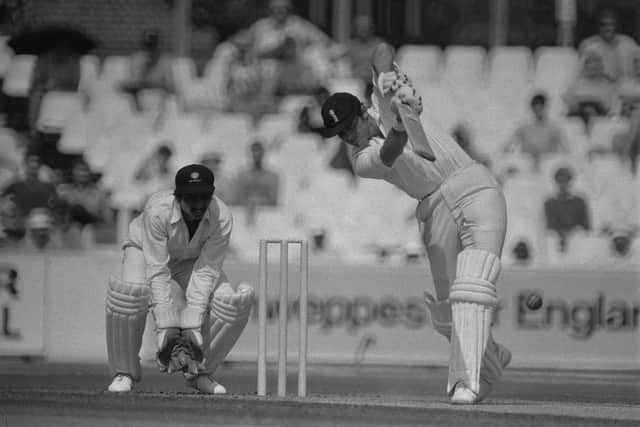
Although nothing had been officially announced about a new contract, Boycott — just over a month short of his 46th birthday — knew deep down that his time was up.
As he lingered for a while at North Marine Road, where seagulls picked at the debris left by spectators, he roamed alone with his thoughts at a venue where he scored 12 of his 151 first-class hundreds. It was his most prolific ground away from Headingley, where he reached three figures 19 times.
There was to be no farewell century for Boycott in September 1986.
He had missed a chunk of Championship cricket going into the game, having suffered a broken bone in his left hand when scoring his 150th first-class hundred against Leicestershire at Middlesbrough in June.
A ball from Phillip DeFreitas did the damage, yet Boycott was still able to add his 151st and final hundred against Surrey at Headingley a fortnight later, before the fracture was diagnosed.
After his spell on the sidelines, he had proved his fitness with 81 against the touring New Zealanders at the start of the Scarborough Festival, then 121 in a second-team game at Warwickshire.
In a season in which he had also suffered a hamstring problem, Boycott went into his last match having managed 931 runs in 12 first-class games at an average of over 50. He needed 69 more to make it 1,000 for the season — a feat he had achieved in each of the previous 23 seasons.
For Yorkshire, there was little riding on the match with both themselves and Northamptonshire stuck in mid-table. Yorkshire won the toss and chose to bat. Over to Boycott…
Writing in The Sweetest Rose, published to mark the club’s sesquicentenary in 2013, David Warner recalled: “Boycott set out in determined fashion to notch the 152nd century of his amazing career but it was slow stuff and he took eight overs to get off the mark.
“He moved to 61 in as many overs before being run out, a mode of dismissal he had more often witnessed from the other end.
“Looking for his first run, new batsman (Jim) Love steered a stroke to third man and sent Boycott back when the pair turned for a second run but Boycott could not beat Alan Walker’s accurate throw to the wicketkeeper.”
According to the Yorkshire Post, Boycott’s disappointment was echoed by the crowd. “Until then his defences had looked as solid as ever and the applause which tracked Boycott’s disconsolate route back to the pavilion bore a sense of grievance. One particularly crass cry of ‘get off the field, Love!’ pierced the silence but Love responded with his first Championship century for more than two years to restore some sanity.”
Love made 109 out of 352-7 declared. Northamptonshire were skittled for 197 and were 422-8 when the match ended, having been asked to follow on. Boycott never got another chance: he was left eight runs short of 1,000.
Two weeks later, the end of his Yorkshire career was officially confirmed. His fate was decided at two meetings that ran for a total of six hours. The club’s six-man cricket committee voted 4-1 against offering him a new contract, with chairman Brian Close not needing to exercise his vote. Their recommendation was supported 12-9 by the general committee.
In his autobiography, a wounded Boycott wrote: “There were the usual expressions of regret, of course, familiar and mealy-mouthed references to my services with the club and the pious statement, the same old worn-out refrain, that the decision had been taken ‘in the best interests of Yorkshire cricket’.
“It was pure window dressing. The decision to sack me was taken with relish, the culmination of a campaign that had been waged for too many of my twenty-four years with the club… Nothing I might have done in 1986 could save me. My opponents on the committee were resolved.”
Boycott received interest from Glamorgan and Derbyshire about continuing his career, but his loyalty remained with Yorkshire.
He never picked up a bat again.
A clean break was preferable to the painful reminders of what had been lost.
He loved cricket too much for it to be any other way.