
'Top-drawer': How new England Test head coach Stephen Fleming wowed Yorkshire CCC in his year at Headingley
England’s new Test head coach Stephen Fleming once played for Yorkshire. Chris Waters spoke to the man who signed him about that period and the qualities Fleming will bring to the role.
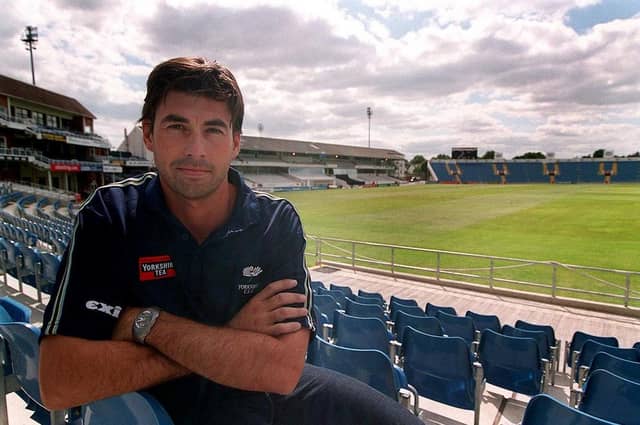

GEOFF COPE liked the look of the tall, left-handed opening batsman and captain of New Zealand.
Yorkshire were in the market for an overseas player, so he picked up the phone to one of his old mates.
“I rang Stephen Boock,” he recalls, “a left-arm spinner who’d played for New Zealand. We’d been pals ever since I went there in ’76, and I asked him about this lad Stephen Fleming.
“‘Boocy’ goes, ‘Geoff, you’re a Yorkshireman. I’m not going to have you wasting money. You can’t get anyone better. Any more questions?’ And that was it…
“We went and signed ‘Flem’, and I tell you what, ‘Boocy’ was right. He was absolutely top-drawer, ‘Flem’, a fantastic fella.”
Cope was Yorkshire’s director of cricket at the time – just another entry on a White Rose CV that includes player, committee man, operations director, president, you name it.
It was a period of significant upheaval. The previous August, Cope had been part of the four-strong management team that replaced the old general committee, helping to haul Yorkshire back from the brink of administration after the rising costs of Headingley’s redevelopment.
He was instrumental in bringing in Colin Graves as chief executive, the pair forming half of the so-called “Gang of Four” alongside chairman/president Robin Smith and finance director Brian Bouttell.
As the only member of the “gang” with playing experience – his off-spin brought him just under 700 first-class wickets for Yorkshire and England – Cope took over as director of cricket at a time when the club couldn’t afford to appoint anyone else.
“It was a case of needs-must. I’d just been on the committee prior to that. Colin, Robin and Brian looked after the various areas, and I was left to sort out the cricket. But everything was more or less done as a four.”
And then, of course, it never rains… Yorkshire were thrown a curveball at the start of the 2003 season when they lost Matthew Elliott, their Australian overseas batsman. The hero of what remains their most recent limited-overs silverware – his unbeaten hundred helping to beat Somerset in the 2002 Cheltenham & Gloucester Trophy – returned to Australia to rest a knee injury and to be closer to his terminally ill brother-in-law. He never came back.
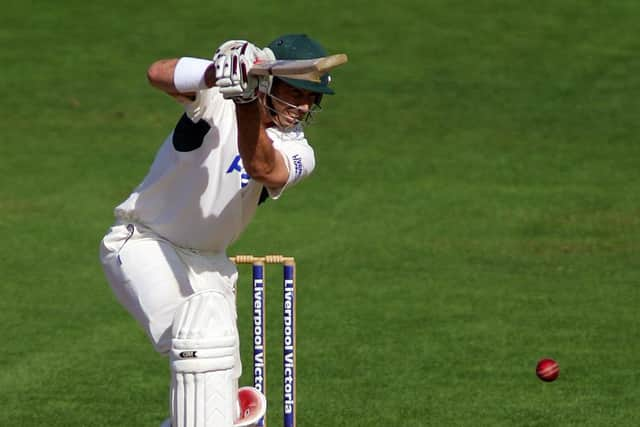
In his place, Yorkshire signed Yuvraj Singh, the Indian batsman, who turned out to be one of their earliest overseas disasters: 145 runs in 12 County Championship innings. Trying to stabilise the finances on one hand while also attempting to return to Division One after relegation in 2002, Cope and the club felt they needed extra ballast in the batting department. Fleming was the man.
He arrived seemingly at the peak of his powers. Only weeks before, he had scored what would remain his career-best 274 not out for New Zealand against Sri Lanka in Colombo, adding an unbeaten 69 in the second innings for good measure.
Yorkshire recruited him in June on an 11-week contract running until the end of August, after which he had to prepare for a tour of India.
With Anthony McGrath then Yorkshire’s captain, Fleming said he was looking forward to concentrating on his batting without the responsibility of leading the team.
“Right now, I feel I’m going through a growth spurt in terms of my batting development, and I want to take every opportunity to consolidate this,” he told The Yorkshire Post.
But things didn’t turn out quite the way he hoped.
Indeed, Fleming started in a manner that made Yuvraj look like Bradman.
He was out three times in the first four balls of his Yorkshire career, at which point Cope could have been forgiven for ringing ‘Boocy’ again – this time to give him a friendly rollicking.
First came a golden duck in Yorkshire’s first-ever T20 game – lbw to Derbyshire’s Dominic Cork at Headingley.
A two-ball innings followed at Leicester – lbw to Charles Dagnall – then another golden duck against Lancashire at Old Trafford, caught at cover off a leading edge from Glen Chapple.
Three T20 failures – 0, 4, 0 – and then 58 in his fourth and final innings in the format for the club against Durham at Headingley, followed by 98 on his Yorkshire Championship debut against Somerset at Taunton.
Seeking to go to his century in the grand manner, Fleming was caught on the straight boundary off the left-arm spin of Ian Blackwell.
It was his highest score for Yorkshire in the Championship (469 runs in 14 innings, average 39.08) but he did reach three figures in a National League game against Warwickshire at Headingley, his unbeaten 139 remaining the highest score of his one-day career.
“He didn’t accumulate a huge number of runs during his time with us, but his influence was massive,” says Cope.
“He wasn’t a Darren Lehmann-type figure, who scored loads and loads of runs, but he was a very good player and a very good pro. He had a presence about him and he cared about other people. He’d have a quiet word with the players and help them with their games.”
Cope recalls a match at Colwyn Bay. There’d been some bad weather and time to kill back at the hotel.
“We must have talked for three or four hours, and it was just what he’d observed, what he’d seen during his time with us, where he felt he could offer some help. But ‘I don’t want to interfere’ was always the comment. It was just little observations, and those little observations were always superb.”
Cope, 79, is not surprised that the 53-year-old Fleming has gone on to a successful coaching career. He believes England have struck gold by appointing him in succession to his former New Zealand team-mate Brendon McCullum, who is now solely coach of the white-ball set-up.
“I think England have pulled off a masterstroke. I just think he’s a top-drawer guy who understands people, and who doesn’t make a lot of noise and go around shouting and bawling.
“I think he’s very much a man-manager, which is why I would have loved him to be able to come back to Yorkshire at the time and do a pro’s job full-stop.
“I’ve got nothing but good words to say about him and what he gave to our dressing room and the players around him.”
Sadly for Fleming and Yorkshire, the club missed out on promotion in 2003, finishing fourth. Damien Martyn, the Australian batsman who became their fourth overseas signing of the summer, lit up September but they fell just short.
Cope returned to an operations role in 2004, with David Byas coming in as director of cricket.
Fleming’s fleeting Yorkshire alliance had come to an end.