
Twenty years on: when Yorkshire cricket descended into chaos
THERE are winters of discontent, and then there was Yorkshire’s winter of 2006-07. It was a time of great turmoil, even by Headingley’s towering standards. From players leaving the club or threatening to leave, to public rows with the game’s governing body, it seemed that just about everything that could go wrong did. And at the heart of it all was one of the most remarkable U-turns in the game’s history, one that would have put many a political volte-face to shame.
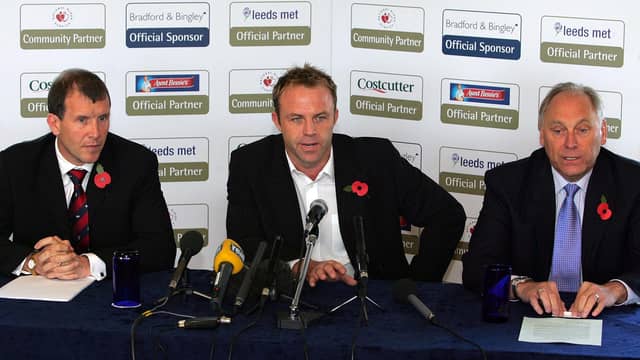

Twenty years ago this month, Yorkshire unveiled Chris Adams as their new captain and director of professional cricket. It was quite the coup: Adams was captain of the reigning county champions Sussex and, at 36, still one of the country’s most accomplished batsmen. Craig White had stepped down as Yorkshire captain, after the club avoided relegation by a single point, while star batsman Darren Lehmann had played his final game, signing off with a triple hundred in the last match of the season. With director of cricket David Byas effectively elbowed aside and offered a development role, which he did not take up in the end, Adams was seen as the man who could tick three boxes: captain, batsman and chief decision-maker.
At the press conference at Headingley to announce his arrival, Adams had the air of a man who seemed slightly out of place – as though Brian Close had walked on to the set of Celebrity Big Brother. He said all the right things – “I’m very excited about what we can achieve … it’s all about enjoying your cricket and creating the right environment …” – but he sounded like a man whose mind was elsewhere. A few days later, Adams returned to Headingley to meet the players. By all accounts, the meeting went well. That night, though, he slept badly in the Headingley Lodge (he wouldn’t be the first) as the reality of what he’d agreed to sunk in. By 5.30am, he was back on the road down south and, by mid-afternoon, he had got his old job back. There remained only one thing to do – to break the news to Yorkshire. He rang Stewart Regan, then Yorkshire’s chief executive.
“We spoke for no more than a couple of minutes and I hardly allowed him to get a word in edgeways,” said Adams in his autobiography. “I explained that my change of heart was the best decision for my family and me and that I wanted to finish my career in a Sussex shirt. He was stunned and asked if a face-to-face meeting with Colin Graves might salvage the deal. I told him I would happily talk to Graves on the phone. Regan knew my reasons and I was sure he could easily convey those to his chairman. That phone call never came. Fortunately, I had never signed a contract.”
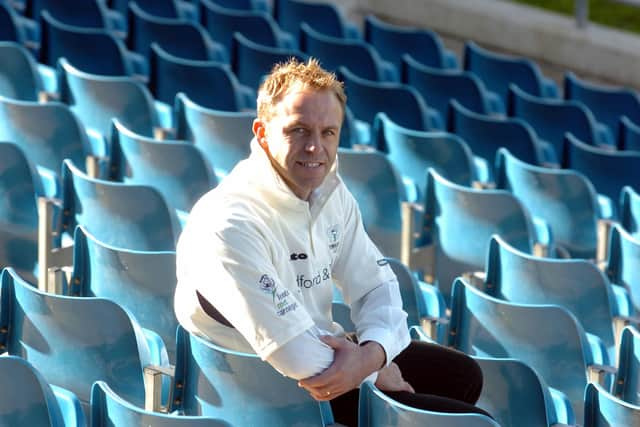
That Yorkshire had paraded a man who had not yet put pen to paper rather summed up the chaos of 2006-07. They said the paperwork was still being finalised and that Sussex still held Adams’s registration. But it did not look good from a PR perspective. According to Adams, his U-turn was motivated not only by his love of Sussex, but also his belief that Regan had reneged on certain assurances. First, the selection of Lehmann’s replacement as overseas player:
“I had asked for full control over the selection of his replacement but the next thing I knew Regan was telling everyone he had some great news – Younus Khan, the Pakistan batsman, had been signed for 2007,” wrote Adams. “I was stunned. What happened to the assurances I’d been given about overseas players at previous meetings? Of all Pakistan’s batsmen he was probably best suited to English conditions but I was concerned how much he would play because of international commitments. At that stage, I was really beginning to have serious doubts but it felt as if I was on a conveyor belt and couldn’t get off.” Second, Adams’s plan for the support staff structure:
“Again, Regan pulled the rug from under my feet. I wanted a first-team coach and physiologist, with Steve Oldham taking over as senior bowling coach and Kevin Sharp looking after the second team. I also wanted David Byas’s new role of head of cricket development more clearly defined. All fairly basic stuff, I felt, but Regan dismissed my plan to bring in two new people out of hand. I got the impression that if it wasn’t his idea he wasn’t interested.”
In his defence, Regan told The Yorkshire Post back then that Yorkshire were simply exercising due diligence. “Chris asked to bring in two new people – a strength and conditioning coach and a No 2 – and we said he could bring in the first straight away but that we wanted to know more about how the No 2 idea would impact on our existing coaching team.” As for Adams’s U-turn, Regan added: “There are just a lot of gobsmacked people around at the moment because it’s simply unbelievable. That someone could stand up at a press conference two weeks ago and say what it meant to him to play for Yorkshire; well, it’s staggering.” Geoffrey Boycott, who was on the board at the time, criticised Adams’s “lack of moral fibre”. Ultimately, Adams - who had been attracted primarily by the managerial side of the role as he contemplated life after playing - suffered a case of cold feet. With hindsight, it was possible to have sympathy with both sides.
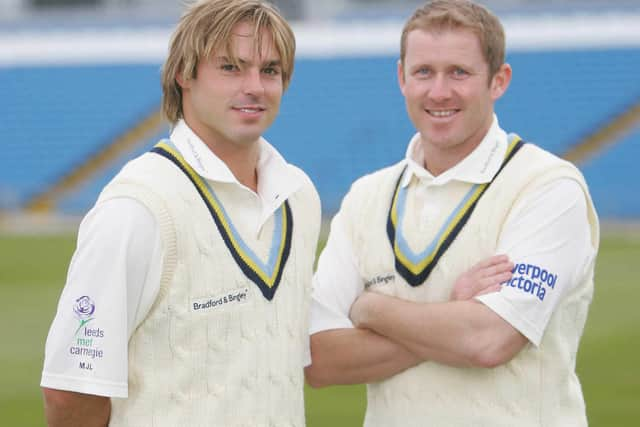
As if the Adams saga was not enough, Michael Lumb went off to join Hampshire, with a broadside from Graves ringing in his ears. Graves claimed the batsman had shaken hands on a new deal but then “reneged” on it. More seriously, the club was at war with Anthony McGrath, the current head coach, who wanted out of the final two years of his contract. “I am leaving as a result of my differences with the club that I have not been able to resolve and for no other reason,” McGrath announced at the time. He later elaborated that the environment had become “unbearable” and that he was no longer enjoying his cricket. Yorkshire’s response was to threaten legal action. “We have tried endlessly to resolve the differences Anthony has with the club and feel very hurt that he has chosen to try and break his contract in this manner after being with us for so long,” said Regan. “We are now in discussions with our solicitors regarding the possibility of legal action against Anthony and also prospectively against his agent regarding his role in this matter.” The situation rumbled on for months before the return of Darren Gough as captain and Martyn Moxon as director of professional cricket eventually persuaded McGrath to stay. He described them as “a breath of fresh air” and said he had “no intention” of going anywhere. All’s well that ends well, but there was still another problem for Yorkshire that winter.
As they faced up to life without Lehmann, Lumb and, for a long time, McGrath, who between them had accounted for over 50 per cent of the team’s Championship runs in 2006, Yorkshire exploited a legal loophole to sign South Africa batsman Jacques Rudolph as a Kolpak player. Under the Kolpak rule, clubs were allowed to sign players from countries with associate trading agreements with the European Union who were not then classed as overseas players. However, under England and Wales Cricket Board (ECB) regulations, Kolpaks were not supposed to have played Test cricket in the previous 12 months – and Rudolph had done so as recently as August 2006.
Yorkshire discovered that this provision was not enforceable in law, much to the chagrin of the ECB, which “unanimously condemned” their conduct and vowed to tighten the rules on player registration. The Professional Cricketers’ Association (PCA) also weighed in. Ian Smith, its vice-president (legal affairs), told The Yorkshire Post: “There are more than enough good young players coming through the Yorkshire system, and while some of them may not yet be the finished article, it’s not always about buying instant success. In my view, this sort of thing is extremely short-sighted and it’s the young English players who suffer in the long run.”
Rudolph signed a sworn affidavit that he would never play for South Africa again, a provision that was also thought to be legally unenforceable. Sure enough, with the ECB concerned that he was using county cricket as a springboard to an eventual return to the international game, Rudolph went on to play for South Africa again in 2011. Ironically, considering the hoo-hah caused by his signing, Rudolph turned out to be one of the best players in Yorkshire’s history and the nicest of men, a model professional both on and off the field.

Regan said he understood that Rudolph’s signing was “an emotive subject” but that the decision had been made in Yorkshire’s “best interests”. Expediency, though, had clearly won the day. Just another twist in the winter of discontent – the iciness of which can still be felt now. At least the arrival of the “dream ticket” double act of Gough and Moxon heralded a brighter, more harmonious spring.