
When a Yorkshireman inspired the last batch of two-day finishes in an Ashes series
WHAT do you know about the 1888 Ashes?
Me neither.
According to the stats, it was the only previous occasion when there have been two two-day Test matches in a series involving England and Australia.
All three games in that series, in fact, were done inside two days.
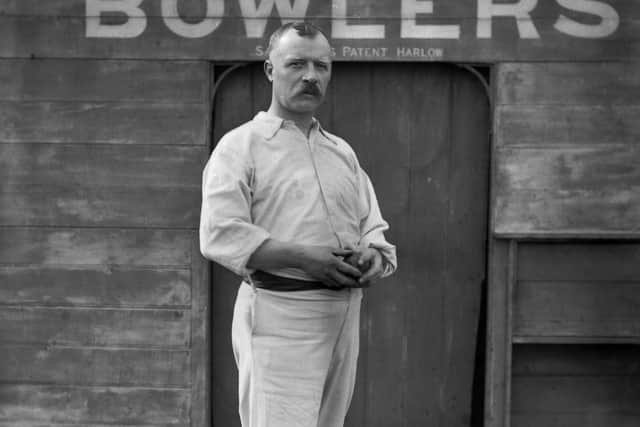

The man who helped to spin the rare narrative was Bobby Peel, the Yorkshire and England slow left-armer.
Peel took more wickets in that series than anyone – 24 at an average of just 7.54 – as England recovered from 1-0 down to win 2-1.
In one of the wettest summers on record, bowlers prospered on pitches exposed to the whims of the elements.
Only three of the 10 team totals exceeded 100, and in two of the games there were no half-centuries – just as none were achieved in Melbourne last week, where the fourth Test followed the first in Perth by finishing inside a mere six sessions.
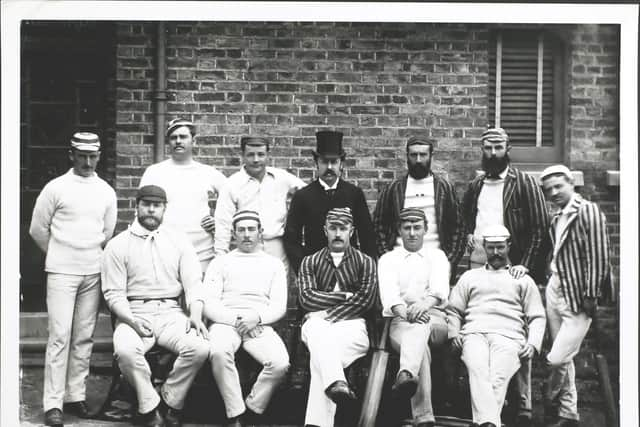
The first Test of the 1888 series was played on a wet pitch at Lord’s in mid-July.
The wonder, perhaps, was that it was played at all, with London one of the worst-hit areas by the weather that year.
As one local paper observed of the mood: “Everybody in Parliament and out of it is suffering from the depression and bad temper which such atmospheric conditions naturally provoke.
“The West End tradesmen are looking anxiously for a burst of sunshine that may tempt people to leave their homes to do the long-deferred shopping and to circulate the much-needed sovereigns.”
A fair few were circulated at St John’s Wood on the opening day of that Ashes series 138 years ago.
According to Wisden Cricketers’ Almanack: “It was for some hours uncertain whether there would be any play at all and the gates were not opened until after lunchtime.
“Some thousands of people had crowded in the St John’s Wood Road, and there was a great crush to get in, but the people had obtained places and formed a thick ring all round the ground when play began at five minutes past three.”
Wisden considered Australia “by no means equal on their merits to the best team in England” and said that “there was a considerable amount of anxiety as to the result of the first of the three great Test matches”, given that conditions were likely to act as a leveller.
“In dry weather and on a hard wicket,” it added, “confidence in the strength of English batting would have been almost unlimited, but the weather for weeks had been so bad, and the Australian bowling had proved so destructive (in the tour games), with the condition of the turf favouring it, that many quite dispassionate judges thought the game would be so fluky that victory would depend almost entirely upon success in the toss.”
Percy McDonnell, the Australia captain, won it and the rest, as they say, was history.
Despite four wickets in each innings for Peel, Australia won by 61 runs, pace bowler Charles “The Terror” Turner taking 10 wickets in a match in which W.G. Grace’s second innings 24 was the highest score.
Four weeks later, in the middle of August, the second Test took place down the road at The Oval, a game that began against the grim backdrop of news that the body of a woman had been found in Whitechapel.
A serial killer was at work that wretched year, colloquially known as Jack the Ripper.
England’s cricketers now did their utmost to lift a depressed national mood, bouncing back with a thumping win by an innings and 137 runs as Australia were rolled over for 80 and 100, Peel taking one wicket in the first innings and four in the second and bowling “remarkably well”, felt Wisden.
Aged 31 at the time, Peel was the second in the long line of great Yorkshire slow left-arm bowlers after Ted Peate, and he was renowned for his meticulous accuracy and control, one contemporary referring to his "diabolical cleverness”.
Throw in a wet wicket or two and helpful conditions, and Peel was virtually unplayable, as he proved in the decisive Test at Old Trafford with the Ashes on the line.
This time, the toss helped England and their captain, W.G. Grace, who top-scored with 38 out of 172 when batting conditions were at their best on a soft, wet surface, Australia reaching 32-2 at stumps on day one.
Remarkably, Australia then lost 18 wickets before lunch the next day as, helped by a drying sun and the proverbial “sticky dog”, Peel took 7-31 as the tourists were shot out for 81 and, following-on (the compulsory follow-on margin being 80 runs at the time), 4-37 as Australia were dismissed for 70 to lose by an innings and 21 runs.
Wisden said the result “was received with extreme satisfaction throughout the country”, a country left battered into submission by the winds and the rains, which relented just sufficiently to allow Peel to spin his wondrous web.