
When Len Hutton and co showed Ben Stokes the way
IF Ben Stokes and his team are looking for inspiration heading into the second Ashes Test in Brisbane, they need look no further than to Len Hutton’s side in 1954-55.
That was the last time that England recovered from 1-0 down to win the Ashes Down Under.
It was a series that started with a similarly disastrous defeat from the tourists’ perspective as the two-day debacle in Perth last month.
Hutton, in what one Australian journalist called “a gamble more fitted for Monte Carlo than Brisbane”, put Australia into bat at the Gabba and saw the hosts reach 208-2 at stumps on day one - the pitch, according to another writer, “as devoid of vice as the quilt on your maiden aunt’s bed”.
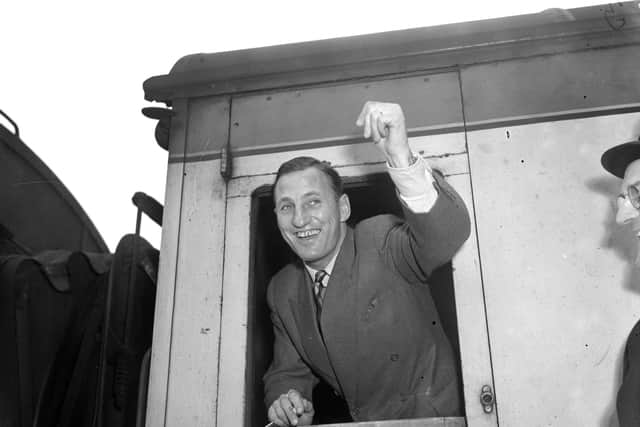

As Richard Whitehead writes in his magnificent new book on the series, Victory in Australia: “England awoke on the second morning, a Saturday, to find themselves the subject of ridicule. On the front page of Brisbane’s Courier-Mail, Hutton was depicted as Father Christmas, with white beard and bobble hat under the headline, ‘Hutton… he’s Santa Claus to us.’
“Writer Arthur Richards gloated, ‘England’s captain Len Hutton may well be considering a change of costume… Hutton acted the part of Father Christmas to Australia in this Test. He might just as well look the part.”
Evidently, Australian media mockery of England’s cricketers is no modern phenomenon.
Australia went on to score 601-8 declared - and won by an innings and 154 runs.
At least the Yorkshireman had the ability to laugh at himself, as a lovely anecdote from Whitehead’s book shows. “Publicly at least, Hutton had the ability to smile at his misfortune,” reveals the author, whose masterpiece brings the great tour to life.
"In a good-luck message to his football counterpart Billy Wright, due to lead his team against world champions Germany at Wembley hours after his own team’s defeat, Hutton wrote: ‘MCC wish best of luck to you and your team. Hope you score as many goals as Australia scored runs, and if you win the toss make sure you don’t put ‘em in - kick with the wind.’”
England’s footballers won 3-1 - as Hutton’s team would go on to do - with Blackpool’s Stanley Matthews to the fore.
As the “has-beens” no doubt grumbled and groaned after that first Test defeat in late 1954, Hutton empathised with the national mood.
“Back there in England it’s cold and wet and miserable,” he had said prior to the crucial second Test in Sydney. “The least we could have done was something to cheer them up.”
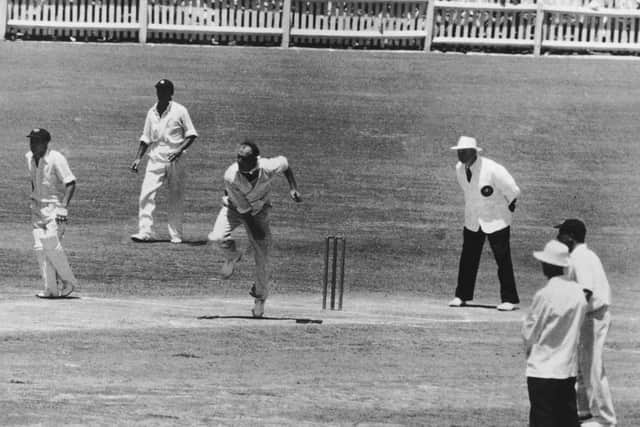
It wasn’t long before Hutton had them dancing in the streets of his home town of Pudsey and beyond as his side fought back in memorable style, hitting Australia with pace - specifically with Frank Tyson, the Northamptonshire fast bowler - as England hope to do now with Jofra Archer.
Tyson, who was chosen for the tour ahead of Yorkshire’s Fred Trueman, a decision that might have made a man intone “I don’t know what’s going off out there”, was a former English literature student from Durham University who had a habit of quoting Wordsworth as he walked back to his mark.
Fred wasn’t in the habit of quoting Wordsworth - at least not to this knowledge - and he never got over the blow of his omission, which stemmed from a number of controversies on the 1953-54 tour to the West Indies.
Trueman was blamed for various things and was a fish out of water socially too, a young man who knew nothing back then but the South Yorkshire coalfields. He was seen as a liability and a potential embarrassment by MCC in those class-conscious days, while Hutton’s handling of him - or non-handling - added to the uneasiness at Lord’s concerning his captaincy.
Despite having only been appointed in 1952 - England’s first professional captain of the 20th century - and leading England to Ashes glory in Coronation year, Hutton was disfavoured by some who wanted instead the Cambridge-educated amateur David Sheppard, but a pre-tour coup failed.
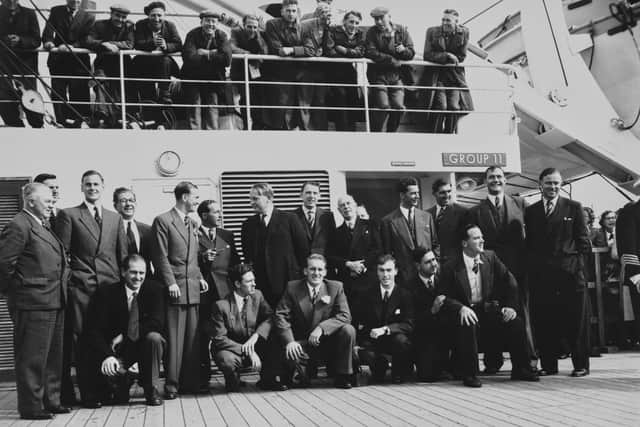
At Sydney, Hutton lost the toss but won the match. Tyson took 10 wickets in a 38-run thriller as England drew level. With his Yorkshire team-mates Bob Appleyard and Johnny Wardle in the team from that Test onwards, the spinners having missed the Brisbane opener, Hutton led England to a 128-run victory in the third Test in Melbourne, a five-wicket triumph in the fourth Test at Adelaide before the final game back at Sydney was drawn.
It was England’s first series triumph in Australia since the Bodyline tour and proof, were any needed, that it is by no means mission impossible for Stokes and his men.
* Victory in Australia: The Remarkable Story of England’s Greatest Ashes Triumph 1954-55 by Richard Whitehead is published by Bloomsbury priced £22.