
When Yorkshire saw off Sobers and co in Scarborough many moons ago
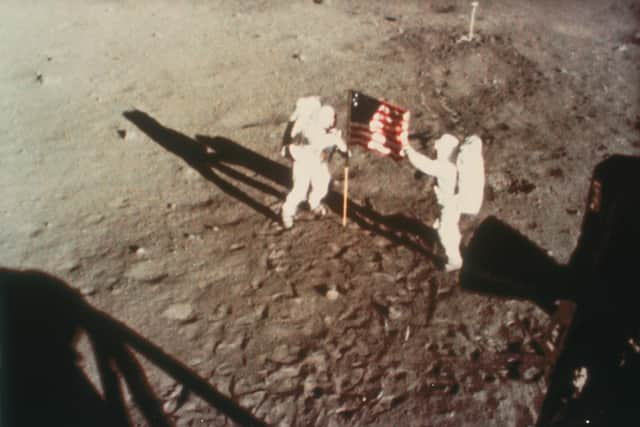
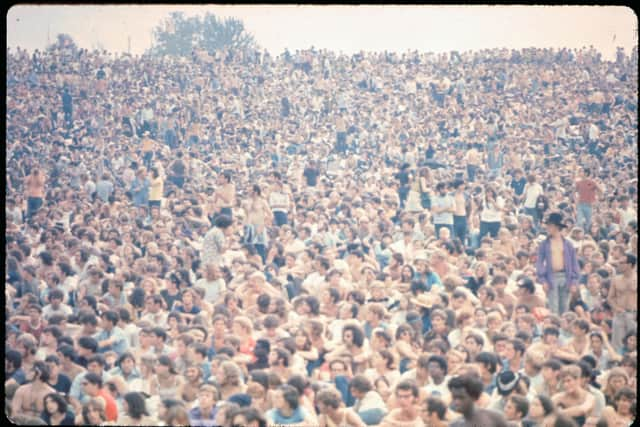
THE summer of ‘69. A summer so good that Bryan Adams wrote a song about it. A summer that brought us the Woodstock festival. A summer in which Neil Armstrong took his “one small step for man, one giant leap for mankind”, closely followed by Buzz Aldrin on to the moon’s surface. A summer that rocked and shook the world.
It was a summer - turning to more parochial matters - in which Yorkshire won cricket’s Gillette Cup, beating Derbyshire by 69 runs in the final at Lord’s. Prior to that, they beat Nottinghamshire by 68 runs in the semi-final at Scarborough, to where Yorkshire’s class of 2025 head on Sunday to face Hampshire at the same stage of the Metro Bank One-Day Cup.
It will be the club’s third semi-final at North Marine Road after that match in 1969 and the 2010 game against Warwickshire in the Clydesdale Bank 40, which the visitors won by four wickets when, as is the case this time, Headingley was preparing to host an international fixture and thus out of commission, with England taking on South Africa in the one-day series that starts on Tuesday.
Back in 1969, however, Yorkshire purposely took the semi-final to Scarborough because they wanted to make more use of their outgrounds; it was the first county one-day game staged at North Marine Road.

In those days, the club still played first-team matches at Bradford, Harrogate, Hull, Middlesbrough and Sheffield, as well as at Headingley and Scarborough, although the latter had previously held only first-class and festival fixtures.
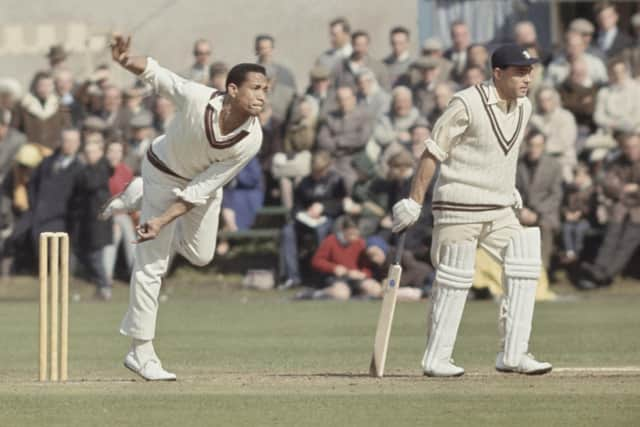
It was a decision born out of the best of intentions but one that backfired on Yorkshire as Scarborough was not big enough to cope with the demand for tickets against a Nottinghamshire side led by Garry Sobers, widely considered the greatest cricketer to have walked the earth.
Whereas on Sunday a crowd of around 5,000 is expected, hoping to cheer Yorkshire on to their first one-day final since 2002 when they beat Somerset in the Cheltenham & Gloucester Trophy, the crowd on July 30 1969 - nine days after Armstrong stepped on to the moon’s surface - was three times that size, with another 5,000 or so unable to get in.
The official attendance, on a day when the gates were locked at lunchtime and the health and safety police would have had a fit, was a staggering 15,242, which forked out a combined £5,230 for the privilege.
According to Alan Gibson, who was covering the match for The Times, the ground “seemed to sway with the heat of the sun and the emotions of the packed crowd” and “whole processions of youngsters found weak spots in the outer defences” when the gates were closed. “Sheer physical pressure caused constant encroachment on the boundaries, and every time the (sight) screen was moved it was as if a volcano had erupted.”
Sobers won the toss on a pitch that started damp after an inch of rain two days out, followed by another day of persistent drizzle, “the bowlers’ feet cutting black marks on the pale green”, wrote Gibson. The decision to insert looked a good one when Yorkshire slipped to 3-2 including the prized scalp of Geoffrey Boycott, caught behind off Barry Stead, the Leeds-born left-armer, as indeed was Barrie Leadbeater, Boycott’s opening partner.
At the other end, Sobers sent down eight overs for two runs with seven maidens - the sort of figures that you do not see in one-day cricket these days, any more than you see 15,000-plus crowds at North Marine Road, with men stationed around the bat and one-day cricket still played with the air of a first-class contest.
The supporting cast was not nearly as accurate or probing and Phil Sharpe and Doug Padgett set about steadying the ship, adding 101 for the third wicket in 100 minutes to reclaim the initiative. Sharpe was then another caught behind victim on a day when wicketkeeper Deryck Murray held five catches, Sharpe’s dismissal for the top score of 67 followed by that of Padgett for 46 as the hosts were bowled out for 191 with two balls left of their 60 overs.
Nottinghamshire reached 40-0 in reply thanks to Brian Bolus, the former Yorkshire batsman, and Pasty Harris, and they were still pretty well-placed at 89-3 once Chris Old had removed Harris for what would prove the top score of 31 as Sobers walked out at No 5.
According to Alan Gibson, “a hush fell on the babbling multitude” as Sobers emerged from the pavilion, all eyes trained on the charismatic West Indian who had celebrated his 33rd birthday two days earlier. His reputation preceded him, his legendary status long since secured; Sobers was the holder of the highest score ever made in a Test match at the time (an unbeaten 365 against Pakistan at Jamaica in 1958, which had beaten by one run the mark set by Yorkshire’s Len Hutton against Australia at The Oval 20 years earlier), and in the previous summer of 1968 had become the first man to hit six sixes in an over off Glamorgan’s Malcolm Nash at Swansea.
This was not a Scarborough pitch conducive to fast-scoring, however, nor a Yorkshire attack inclined to invite such punishment and Sobers faced an instant and gritty examination of his prowess.
“(Don) Wilson bowled him two beautiful overs, both maidens,” wrote Gibson. “The great man took his time to settle down. He hit the ball back to (Richard) Hutton and a roar began to climb the sky as he walked away. But it was only his little joke, not universally appreciated.”
Having pretended to perish to that return “catch”, Sobers had battled his way to 20 in around 50 minutes when frustration got the better of him and he flashed impatiently at a flier from Old and was caught behind. It was a blow from which his side never recovered as they limped to 123 all-out in 50.3 overs, Old and Peter Stringer each taking three wickets as Yorkshire comfortably booked their place in the final.
The Nottingham papers were unimpressed, the late Pat Gibson - who went on to a distinguished career at The Times, and who this correspondent had the great pleasure of sitting next to in the Scarborough press box many times - writing that “Sobers and the rest went under with scarcely a murmur of protest against the tigerish attacking of their determined opponents”. Pat added that it was a triumph that proved that Yorkshire, having lost Boycott and Leadbetter so early in the piece, “must never be underestimated whatever the state of the contest”.
Low scoring match or not, what an occasion it must have been for everyone present.
Sobers, Scarborough, and more than 15,000 people crammed into cricket’s greatest outground.
The summer of ‘69, a summer in which man first walked on the moon.
So many moons ago now.