
Why tri-series are no silver bullet for cricket’s ODI problem - Comment
“I’D like to see more of it, to be honest. I think bilateral ODI series, as a spectacle, are dying in relevance. I think that a tri-series is something that creates a little tournament and more context around the games that you’re playing. Clearly, it’s a logistical challenge for the country that’s hosting it, but I would rather see one big tri-series in the UK than two bilateral ODI series a summer.”
The words of Steven Finn, the former England fast bowler, on Test Match Special on Tuesday morning.
His comments came during England’s opening game in the tri-series in Pakistan - one also involving Sri Lanka, who provide the opposition for England in Rawalpindi on Thursday.
The three teams play each other twice before a final in Lahore on Saturday week. The whole thing is done and dusted in less than a fortnight with some jeopardy added. What’s not to like?


Ostensibly, Finn’s suggestion makes plenty of sense. As he also pointed out, countries do not always field their strongest XIs in bilateral one-day internationals, unless they are building specifically towards a World Cup, as England are ahead of next autumn’s tournament in South Africa, Zimbabwe and Namibia.
Creating more context, more relevance in terms of the bigger picture, can help keep things fresh for players and spectators. A win-win situation, as some would see it.
But would a good idea in principle substantially change things? I would suggest not, and here’s why.
In my view, the attempt to give international cricket “context” outside of global white-ball competitions is fundamentally flawed.

The most glaring example is the World Test Championship, a protracted concept that takes place over a two-year cycle, with teams playing different numbers of matches against some of their rivals, but not all of them - rather like a Premier League season in which Arsenal might not face Liverpool or Manchester United.
In the last World Test Championship, the winners, South Africa, played 12 group matches and the runners-up, Australia, 19. England, meanwhile, played 22, West Indies 13 and Bangladesh 12. Go figure.
In the current cycle (2025-2027), Australia are top of the table with nine wins from 11 matches, New Zealand second with four wins from six, and England down in sixth place with seven wins from 16, the teams arranged according to a system of percentage points won. All of which, in my opinion, creates confusion rather than context.
The first tri-series - or triangular tournament, as it was officially called - was a Test competition involving England, Australia and South Africa, held in this country in 1912. That was a bad year for ships, if memory serves, and it wasn’t much better for lovers of that short-lived idea, which ran into the iceberg of one of the wettest summers on record.
After that, the next multi-national competition did not take place until 1975, when the one-day World Cup got under way. Four years later, the Australian one-day tri-series came into being and was part of the calendar for 30-odd years. Other ODI triangular tournaments sprang up globally before the format gave way to bilateral tours, which have proved more attractive, financially and logistically.
Finn actually played in England’s previous tri-series, in 2015, when Australia won a home competition that also featured India. That served as preparation for a World Cup that began a fortnight later, although there were grumblings then about the tri-series format.
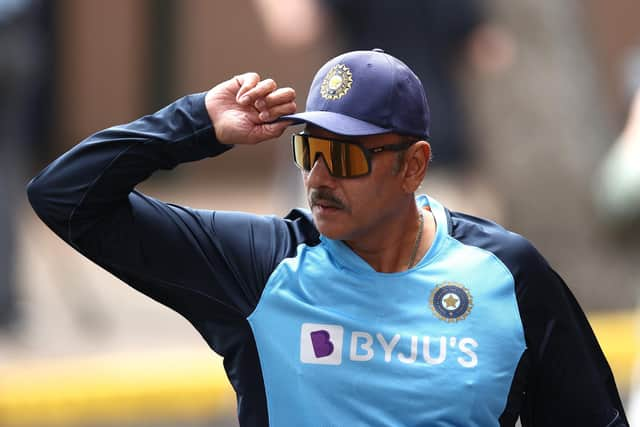
As Ravi Shastri, then India’s team director, put it: “Frankly speaking, I believe this tri-series was a sheer waste of time and energy.”
The problem, I would argue, is not that ODI cricket needs “context”, but that there is simply far too much cricket.
Test cricket has the context of each individual series, most notably the Ashes. It doesn’t need any convoluted World Test Championship to provide any more.
There is now so much white-ball cricket that efforts to make every match feel significant are doomed to failure. Too many games invariably become “just another game”.
Less is more, in other words, and no amount of tinkering with the format can overcome the problem.
Ironically, the one thing that T20 franchise cricket has in its favour is that it does have context in terms of each particular competition.
What it lacks, of course, is any context outside of that narrow parameter. Test cricket has history and tradition. What, by comparison, does Major League Cricket have in America beyond being one of many competitions still finding its feet?
So, play tri-series cricket if you must. It won’t do any harm. But don’t expect anything fundamental to change.
A tri-series cannot manufacture significance when there is too much cricket for the matches to stand out.
After all, who will remember much about the tri-series taking place now in a few weeks’ time?