
Yorkshire CCC season review part one: Tough year spells out size of challenge
THE bookmakers got it wrong - Yorkshire didn't get relegated on their return to the top-flight, but they weren’t too far from suffering that fate even if it always felt, to this observer anyway, that they would have enough to beat the drop.
So it proved as the club finished seventh in the County Championship First Division, two places and 24 points above Durham, whose defeat at Headingley on the last day of the season sent them down along with bottom club Worcestershire.
Having gone into the campaign with high hopes after promotion and an overhaul of the coaching staff which saw the return of one of county cricket’s most successful coaches in Anthony McGrath, their former batsman, Yorkshire had what might be described as “a reality check”, one which should leave no one in any doubt that it will necessarily be much easier next year either.
It is, at the outset of reviewing the season’s performance, important to remember where the club has come from and what it has been through.

Relegation in 2022 capped a complete downfall of the organisation, on-and-off the field, caused by the racism crisis, with some key players leaving directly or otherwise - Gary Ballance, Tom Kohler-Cadmore, David Willey and Matthew Fisher, followed now, for various reasons, by Jordan Thompson, Matt Milnes and, lest we forget, given his considerable role in captaining the club to promotion last year, Jonny Tattersall.
That amounts to seven first-team players who have gone, or are in the process of going, which soon becomes effectively a full team when you factor in the regular absences of England’s Joe Root and Harry Brook, and the ostensibly terminal one of Adil Rashid, whose ongoing association with the club remains more puzzling than the The Yorkshire Post’s puzzles page. Any county would be hit by that state of affairs - even one of Yorkshire’s size.
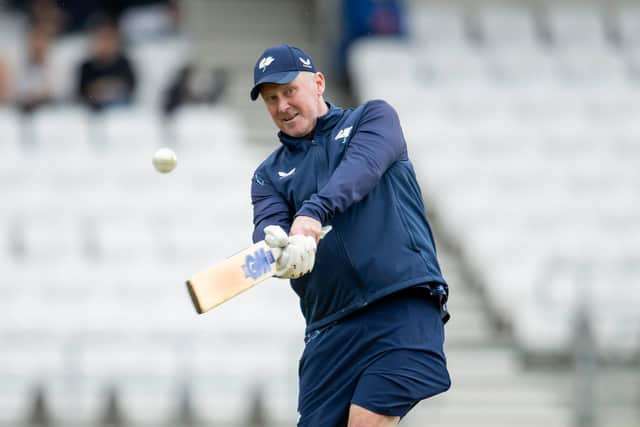
Having come into the job playing down talk of transition and indeed trumpeting Yorkshire’s immediate ambition to win all three competitions, McGrath nailed his colours to the mast with refreshing candour.
On Saturday, after the last ball had been bowled, he was equally honest in admitting that he was therefore “disappointed because I expected more in terms of challenging”, conceding that the One-Day Cup was the only competition his side looked capable of winning after a rousing run was ended at the semi-final stage, the 19th time that Yorkshire have fallen at that hurdle in the last 22 attempts.
When this correspondent asked what mark he would give the season overall, McGrath replied “a six or a seven”, which seemed fair enough. Personally, one would incline more towards a “six” given the final Championship position and a particularly disappointing T20 Blast (nine defeats in 14 group games), with only the One-Day Cup saving it from being a “five”, or perhaps lower.
McGrath not only talked a positive game but he and the coaches also played a positive one, calling for heavily-grassed surfaces at Headingley.
That strategy of risking defeat in order to win emphasised the club’s ambition to win the title rather than simply stay up and reflected the graveyard nature of the pitches there previously, with Yorkshire having won only one of their previous 17 Championship matches at HQ, 12 of which were drawn, including eight of the previous nine.
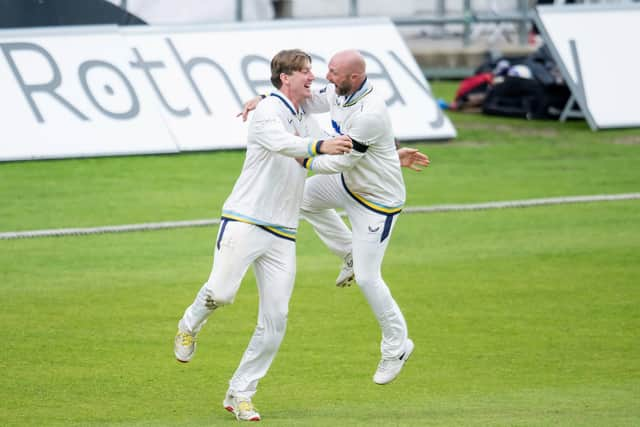
The attacking strategy paid off most dramatically in the opening home game when Worcestershire were walloped by 504 runs, the biggest winning margin in the tournament’s history, but with that result quickly put into perspective by Worcestershire’s subsequent slide, defeats to Warwickshire and Nottinghamshire in the next two fixtures at Headingley exposed batting frailties that were costly early on.
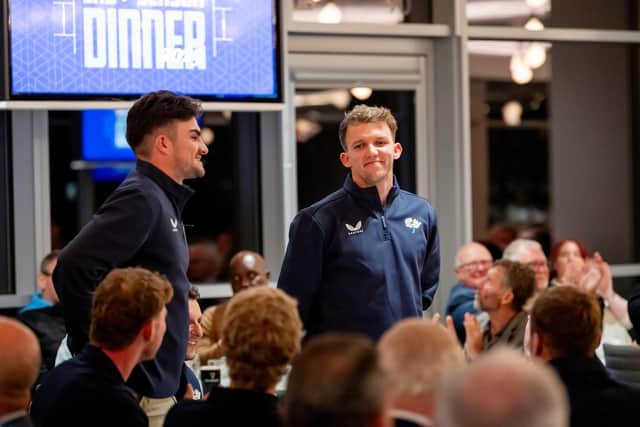
Yorkshire lost four of their first seven games, in fact, with just the Worcestershire win to show for their efforts, as some of the younger players experienced a sharp learning curve in terms of those challenging pitches and the standard of opposition, challenges to which they rose increasingly well as the season wore on as the club lost none of its final seven fixtures, albeit four of them played with the dreaded Kookaburra.
Inevitably, the recruitment of overseas players proved an inexact science, with some falling injured and/or falling short. Imam-ul-Haq was the obvious standout, scoring four hundreds and three fifties in eight One-Day Cup games, with most of the rest showing glimpses of quality but nothing to suggest that you would throw your membership card into the fire if they did not return next year.
Instead, it was two home-grown products who led the way with bat and ball - Adam Lyth finishing third-leading scorer in Division One with 1,173 behind Dom Sibley (1,274) and Haseeb Hameed (1,258), and George Hill the fourth-leading wicket-taker with 51 behind Tom Taylor (58), Kyle Abbott (56) and Jack Leach (52), despite having played one game less.
Hill’s average (16.72) was streets ahead of his rivals, and although he was disappointed with his batting returns, it is worth pointing out as well that only Nottinghamshire's Freddie McCann (21) took more outfield catches than Hill (20).
Elsewhere, three successive hundreds by Matty Revis in the Kookaburra rounds stood out, while although neither produced a sizeable score, Jonny Bairstow (despite a mid-season IPL move) and James Wharton both struck 700 or more Championship runs and made seven half-centuries each, with an honourable mention, also, for Jack White (42 wickets at 23.14).
Off the field, the club pocketed some £58m from the great Hundred sell-off, including offloading its full stake in Northern Supercalifragilisticexpialidocious.
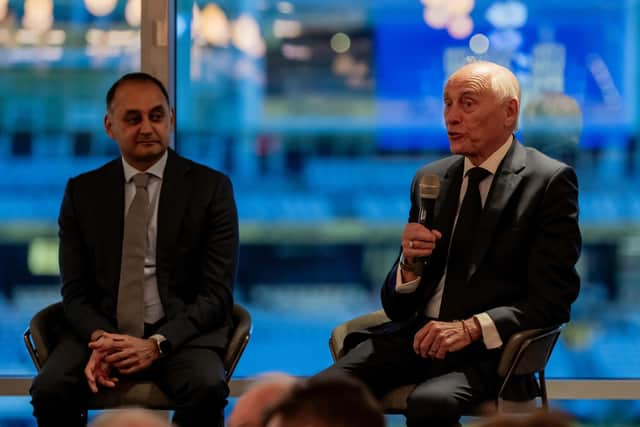
With that cash clearing Yorkshire’s debts and giving them £30-odd million to play with, and with Colin Graves and Sanjay Patel at the helm, it feels as if the club is in the safest of hands now financially - in stark contrast, it might be said, to the last time Yorkshire had a Patel running the show.
Ultimately, as Graves always says, Yorkshire is a cricket club and the challenges going forward are clear.
The club has not won a trophy for 10 years, a limited-overs trophy for 23 years, and perhaps needs at least three new players (a batsman and two bowlers) to inspire genuine confidence that it can end the drought in 2026. It will not be easy.