
Football Regulator Exclusive Pt 2: David Kogan on saving football from rogue owners and vested interests
If England's richest clubs had not tried to form a breakaway European Super League, if the Premier League and Football League (EFL) had been able to agree a financial settlement over the last six years, David Kogan would probably not be sat in the National Football Museum as the sport's first regulator.

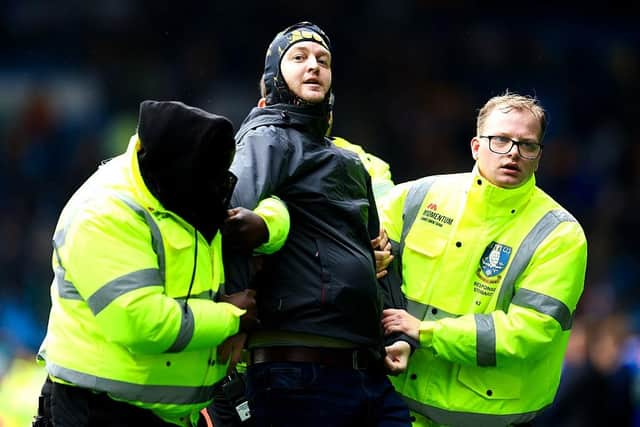
It is an onerous task, but he only needs look at the damage being done to Sheffield Wednesday to feel glad it exists, and that he has been landed with it.
Fighting baddies, like Owls' owner/chairman Dejphon Chansiri, will be part of the chairman of the Independent Football Regulator’s remit, but fighting alongside the good guys is what he is more interested in.
Wednesday, officially Kogan’s third day in the job, was busy, travelling to Manchester first thing to address representatives of 110 clubs from the country's top five divisions, then various broadcasters and one newspaper – The Yorkshire Post. More than once he apologises if tiredness has dulled his answers but it has not – nor his enthusiasm.
“This job isn't straightforward and I'm old enough to be able to have a happy retirement not doing it,” he says. “But I honestly believe as a long-time football fan that football is really important in this country.
“When a club like Bury, like Sheffield Wednesday, when a club like any of them are on the point of going under or go under, that has a seismic impact on the place in which that club is based.
“I was reading a book by Arthur Hopcraft called The Football Man the other day. He wrote it in 1968 and it's fascinating that a lot of the issues he's raising then are still issues now. Football somehow survived but it was a simpler easier time.
“It's getting more complicated so my motivation is trying to help protect the pyramid, trying to protect clubs as they go about interacting with their communities and also continuing this real success story.


“We're looking at owners – current owners and new owners; next week we're putting out consultations on financial regulation, fan engagement, corporate governance and licencing (the consultation on owners ended on Monday).
“The financial regulation is all about looking at the risk, assessing how clubs are run, how football's managed, how it's owned and how it engages with its fans – which, by the way, would also have been a test in terms of Sheffield Wednesday if we'd existed three or five years ago.
“If football had reached its own accommodation about risk, financing and all the rest of it, it's possible the powers we have wouldn't exist but that wouldn't necessarily have sorted a problem like a rogue owner.”
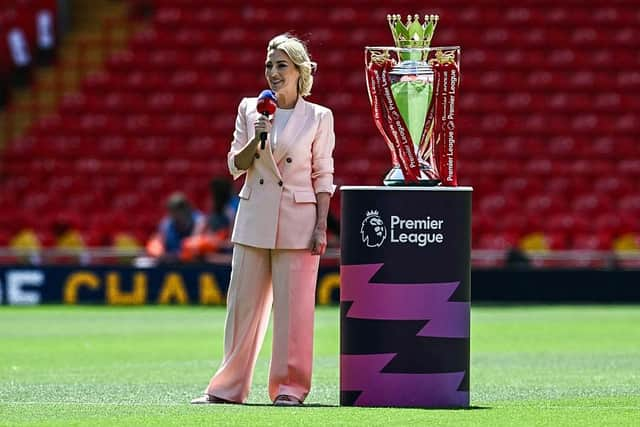
The Premier League lobbied hard to stop the post being created, anxious to keep control of how they spend and share the unprecedented amounts of money pouring into their coffers.
The Conservatives objected to Kogan personally, aware he is a Labour donor in a role supposed to be completely independent of the Government. FIFA forbids political interference in national associations.
Kogan thinks the first Premier League battle is won but there will be many more in a job basically supposed to over-ride vested interests to protect the wider game. One with Chansiri could be next assuming he has not sold Sheffield Wednesday by the time – hopefully later this year – Kogan gets legal powers to remove him.
Asked how much pushback he is expecting, he is blunt: “I'm not.
“The Premier League were here, all 20 clubs were here today,” he explains. “The Premier League exec, its chair, its board were engaging with us. I've got a two-hour meeting with them on Monday morning.
“I think they have taken the totally sensible view that they fought the battle and they lost the battle and now we're all in a different battle, not of them versus us, but about how we exist, they exist, the EFL exists, National League exists and all the rest of it.
“When we talk about the state of the game and these issues come up I'm sure that there'll be quite an interesting debate but I don't get the impression they're edging (towards a settlement) particularly at the moment. Let's see how we can help them edge in the next few months.”
The Premier League argument has always been that football can run itself, thank you very much.
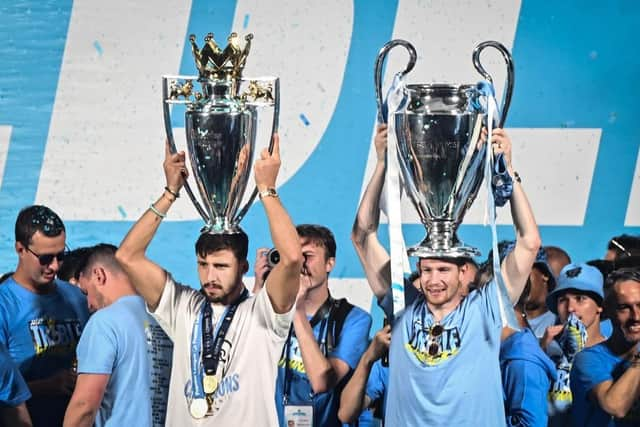
In one sense, they are emphatically right. Theirs is not just the most lucrative domestic football competition ever, but successful on the field too. Their teams are regulars in the latter stages and winners' podiums of all three European club competitions and England have reached the last two European Championship finals.
But ask a fan of Sheffield Wednesday or Morecambe if the system is working. Ask fans of clubs like Leeds United trapped on the trampoline between the Championship and the top tier. Ask those like Hull City and Middlesbrough beneath the second tier's glass ceiling, tens of millions of pounds behind the parachute regiment and limited in how much they can pour in to make up the gap even if their benefactors have it. Another level up, Newcastle United and Aston Villa face similar problems.
Ask a York City fan as they fight over just one automatic promotion place into a division arguably weaker than the top half of the one they are in, or a fan of Yorkshire Amateurs, whose decision to mothball their first team because it is unsustainable is described elsewhere on these pages. It seems to this observer like a model serving the elite nicely, but not always the wider game.
“Come back to me in a year's time when I've done the State of the Game report and I'll answer your question,” Kogan responds.
“We're going to be doing an assessment of the state of the 116 clubs and leagues in this country. How risky is it? How secure is it? What's the long-term financing?
“We're also going to be engaging with the EFL and the Premier League about should there be a new financial settlement? Quite a lot of the clubs who were here today, certainly from the lower leagues, regard it as the most important thing.
“At the moment I officially don't have a view on any of that but I will do once we've done the basic research on the report.
“We need lots of financial data, we need to analyse each of the 116 clubs but also look at the issues that affect those clubs. Those issues aren't always obvious. Then there's the (financial) distribution the Premier League already does, things like parachute payments. All of that is this great big bucket of stuff and we're going to sit back and just take a long hard view of that. No doubt the EFL and Premier League will give us lots of information and we'll engage.”
As a media rights executive, Kogan helped negotiate some of the deals fuelling the Premier League's amazing success, and some of the EFL's as they tried to keep up.
“I've worked at all ends of this over the last 30 years and I've seen clubs with lots of money, I've seen clubs with very little money,” he says.
“Owners trying to keep clubs going in the face of all the economic pressures they've got have an incredibly difficult life and difficult job and I think giving them support is an admirable thing to do in my old age.”
Then comes the philosophical question of how much of a safety net sport should have – it is, after all, a competition.
Football needs bad owners, managers and players to have good ones, losers to have winners. But what is the difference between a bad owner and the rogue ones Kogan will actively try to keep out and throw out?
As he puts it: “We look back since 1992 (when the Premier League broke away from the other 72 league clubs) at the number of clubs that have gone to the wall and go, 'How many of them were bad owners? How many have gone through sheer mismanagement?'
“I'm way more worried about good owners, owners who actually are responsible and are paying their bills and all the rest of it but are losing money.
“Bad owners under our regime are going to be very obvious very quickly because we're going to have all power to investigate clubs just through our licensing, to know when bills aren't being paid or whatever.
“Because every club now knows we're going to be going through a licensing process and they're going to have to give us information they have not really had to give before, the amber light will start flashing.
“The difference between a bad owner and unacceptable one is when that amber light starts flashing and we get involved to try and resolve the issues with them whether they are prepared to work with us or not.
“If there happens to be an owner who entirely ignores the fact we're trying to engage with them and just carries on as they are – well, that takes you into a different place.”
“Backstop” is a word commonly used about Kogan, English football’s new last resort. He will soon have powers he would rather not use, but ones he is unafraid to. The day cannot come soon enough.