
Kevin Keegan: The force of personality with a people's touch born of Yorkshire values

It was as much through his force of personality as his considerable footballing ability that Kevin Keegan, who died of cancer aged 75 on Monday, was one of the most important figures in the English game.
Keegan captained and managed England during some tough times for the national team – he only went to one World Cup, in 1982, and then not fully fit – was the only Yorkshireman to win the Ballon d'Or (he did it twice), was a key figure in the Liverpool team which dominated the late 1970s, showed bravery to play in Germany when Englishmen abroad were rare in football, and produced perhaps the most exciting team the Premier League has known.
But more than anything, he had a charisma and an aura which inspired.
He was treated with God-like status in the north east, where he ended his career playing for Newcastle United, entrancing a ballboy by the name of Alan Shearer and mentoring the likes of Peter Beardsley and Chris Waddle.
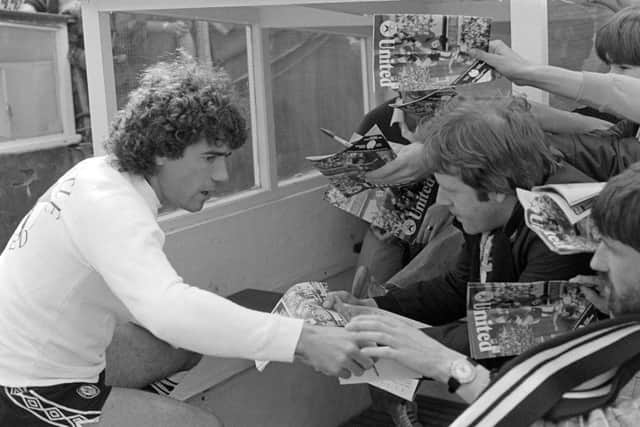

Like the messiah he was hailed as, he ended his playing days by ascending into the heavens in 1984, leaving the St James' Park pitch in a helicopter still in his black-and-white kit at the end of his testimonial as Shearer watched on.
He disappeared into obscurity on Spanish golf courses before dramatically returning to and reviving Newcastle in 1992. He managed Shearer and Beardsley to some thrilling football, but no silverware.
For years Keegan seemed in control of his destiny, and only last month returned to the city to say farewell to his adoring public after it had been announced on the day of Leeds United's game at Newcastle in January he was suffering from cancer.
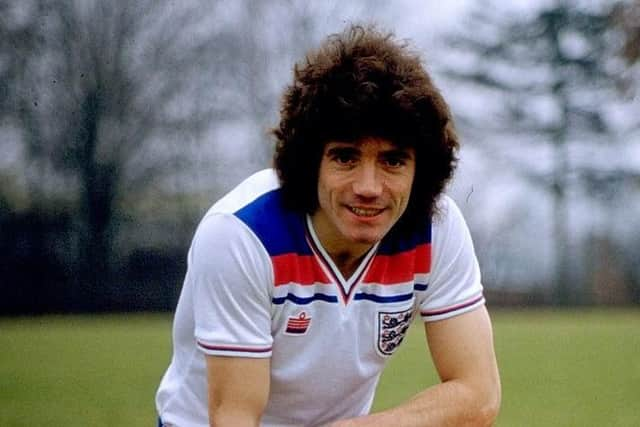
If his father, Joe, instilled a love of Newcastle, growing up in a mining community in Armthorpe imbued him with the work ethic that made him the player he was, and the everyman personality that so endeared him to supporters.
Keegan's career started with five years at unglamorous Fourth Division Scunthorpe United and as speculation grew that he might move on, he was quoted as saying: "I'm getting first-team football here. I should think if I went First Division, I'd struggle a bit."
Liverpool manager Bill Shankly and more importantly his trusted chief scout Geoff Twentyman thought otherwise.
Always aware of his value, Keegan negotiated £50 a week for himself when the Reds seemed reluctant to go above £45. At Anfield he was converted from a midfielder to a centre-forward, forming a near-telepathic partnership with John Toshack.
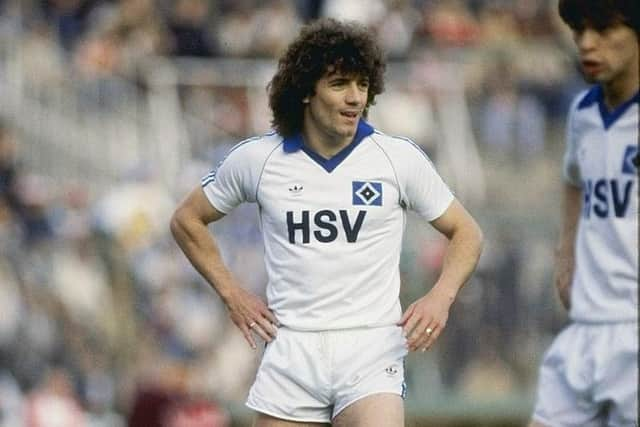
After three league titles, an FA Cup and two UEFA Cups, he once more signed off in style, agreeing a move to SV Hamburg in the build-up to the 1977 European Cup final, which Liverpool won for the first time. Keegan was fouled for the penalty which rounded of a 3-1 win.
A middling Bundesliga side, Hamburg nearly doubled the German transfer record for Keegan and won the title in his second season, though they lost to Nottingham Forest in the 1979 European Cup final.
His next move was a surprise, Liverpool not exercising their buy-back clause and allowing him to join unglamorous Southampton in 1980, the diamond light in a high-scoring team of entertainers.
After falling out with manager Lawrie McMennemy, he joined Second Division Newcastle and led them back to the top-flight in his second and final season.
When he came back as manager Newcastle were once more in Division Two but in danger of relegation. His bravado led them to the brink of the 1995-96 Premier League title, conceding a 12-point lead to Manchester United in a season typified by a 4-3 defeat at Anfield.
As chief operating officer then manager he began Fulham's rise from the third to the top tier, and managed Manchester City.
In between time he had a spell with England which ended with his resignation in a toilet after the final game at the old Wembley. No fairytale ending this time, just defeat to Germany in a World Cup qualifier.
His second spell at Newcastle, in 2008 was not the same either, going from the dreamer Sir John Hall as chairman first time around to the frugal Mike Ashley.
As someone who covered the Magpies at that time, longer-serving journalists told me the old spark was not there, but an aura remained. I had seen his people's touch when, at the peak of his managerial powers, he had popped in for a game of 10-pin at the ramshackle bowling alley on Scarborough seafront where I was working that summer.
Keegan always had the people's touch which is why, unlike so many who reach the top in this country, he never lost the public’s affection.