
Kevin Keegan: Why Doncaster's 'Little Big Man' never left his home town

KEVIN Keegan lived away from his home town for over half a century, but never lost his unmistakable Doncaster accent.
He never forgot his roots, family values hewn from being part of a pit community, decency and sense of injustice at things he didn't like either.
Or his humility and self-deprecating traits, despite being the first true British footballing 'superstar'.
Keegan, who passed away on Monday at the age of 75, left 'Donny' in the early Seventies. Emotionally, he stayed there, although Merseyside, northern Germany and definitely Tyneside would also claim him as one of their own.
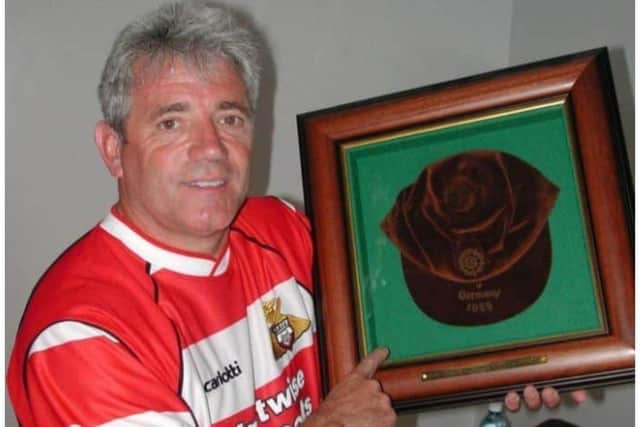

On the sporting front, the Doncastrian was - and will remain in death - the town's little big man. From his home village of Armthorpe to Askern and Arksey to Auckley - alongside the one-time rival who also came to be revered in Doncaster after making it his home in Billy Bremner.
Like King Billy, King Kev could be feisty - the pair infamously walked off at Wembley after being dismissed in the 1974 Charity Shield between Liverpool and Leeds United.
Both were magnificent footballers who shared the mantra of 'never give up'. In Keegan's case, that was reinforced at the age of 16 when a Doncaster Rovers official literally slammed the door in his face when he headed to Belle Vue for a trial.
A late developer, Keegan - previously overlooked by Doncaster Boys - received a stinging missive. 'Tha should be across the road, son - at the racecourse, you look like a jockey,' he recalled.
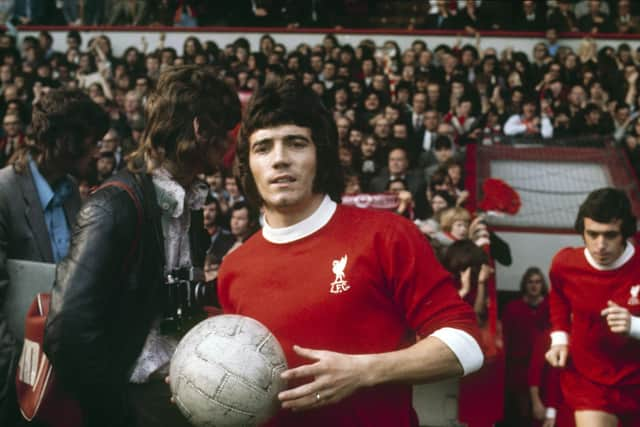
He didn’t head across Bawtry Road but trialled at Coventry for six weeks, staying with his uncle Frank - a boxer under the wing of the legendary Bruce Woodcock - in nearby Nuneaton.
From a group of 200, young Kevin got down to the last two, but lost out to a lad called Brian Joy. ‘'You've got something, but you’re just too small, son' was the message.
Keegan went home and took a job in the Peglers brassworks, while playing football for Elmfield House and the Lonsdale Hotel.
It was while playing for Lonsdale against Woodfield Social in 1966 that his break arrived. His marker that day, a well-known local player called Bob Nellis, recommended him to Scunthorpe United for a trial and Keegan, who excelled at cross country at school, was off and running.
In the 1970s, his playing journey saw him help Liverpool become the kings of Europe, captain England, and become the only Englishman to win the Ballon d'Or twice, while at Hamburg.
Feted moments arrived. Two goals in the 1974 FA Cup final, that dart past Berti Vogts to earn Liverpool a penalty in the 1977 European Cup final in Rome, his last game in red.
In the same year, Keegan, blessed with strength, stamina, skill and remarkable aerial ability for someone who stood just 5ft 7in, scored a wonderful header for England against Italy. It helps explain why Hamburg supporters endearingly christened him ‘Mighty Mouse’.
Keegan’s axis with Trevor Brooking stood out in a forgettable era for the national team. At Anfield, his partnership with John Toshack was legion.
His union with Mick Channon showcased a fine Southampton side in the early 1980s before his emotional swansong at Newcastle United, the family team, alongside two able accomplices in Terry McDermott and Peter Beardsley.
Keegan’s grandfather Frank, a mines inspector who heroically saved lives in the West Stanley Pit disaster of 1909 - father Joe and uncle Frank were all ‘Toon’ supporters. After his pit closed in the north east, County Durham-born Joe headed south for work at Markham Main.
He wasn’t around to see his son revive United and stir a region, first as a player and then as a manager. His boy did good.
Management saw Keegan just miss out on Premier League silverware with Newcastle in 1995-96. It’s a time remembered for his emotive ‘I’d love it’ outburst following a game at Leeds - amid an epic championship race with Manchester United, but Keegan deserves more than that.
His ‘Entertainers’ side are remembered fondly to this day. Few second-placed teams are. And his time in management did see him win three football league titles, with Fulham, Manchester City and Newcastle.
For all his football feats, Keegan’s Everyman qualities and generosity of spirit set him apart.
Following his passing, individual stories of his good deeds for people have flowed like fine wine. Unlike many feted players of his era, Keegan did not fall into the bracket of womaniser, boozer or gambler. Here was someone high on life.
Someone there to help. In the second half of the 1980s, he flew from his 'retirement' home in Spain to represent England in the official reopening of the redeveloped Valley Parade after the fire disaster. He also jetted in for Don Revie's fundraising match for MND at Elland Road.
Once asked what he’ll be remembered for, he said: ‘The perm, falling off a bike (in a Superstars episode in 1976) and 'I'd love it if we beat them!'
Keegan remarked that he was the most ordinary player to win two Ballon d’Ors. He was not ordinary. As a person, he was extraordinary.