
Leeds United's 2025-26 was about adaptability – it could be a theme in the transfer market

THE 2025-26 season did a lot of good for Daniel Farke's reputation.
Leeds United's manager had to shake off the tag of being good at getting teams into the Premier League but no good at keeping them there. How he did it was important too.
Inflexibility was one of the sticks used to beat him when things went wrong in the previous two seasons, but his adaptability was a big factor last term, and could be reflected in how they approach this summer.
Whatever the mitigating circumstances – and there were some pretty strong ones – Norwich City were a yo-yo club under Farke, comfortably relegated in 2019-20 and on their way when he was sacked two seasons later. Dean Smith was in charge for more than two thirds of the matches, but they had Farke's fingerprints.
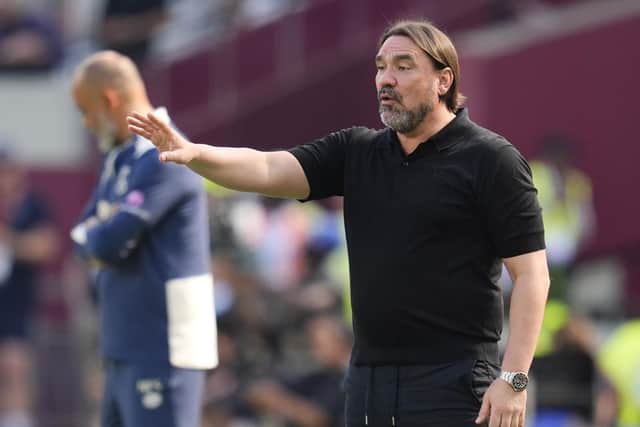

And whilst some – himself included – thought he was a better manager than that, it was all hypothetical until he actually kept a team above the dotted line. At the first time of asking, he has done so with Leeds.
The doubts about Farke were strongest in November as for the only time in 2025-26 they dropped beneath the point-a-game line and into the relegation zone.
The complaints were familiar – he was too stubborn in his tactics, too slow and too formulaic in his substitutions, too wedded to his favourites, with Brenden Aaronson exhibit A.
Farke had already changed approach from the Championship, where he was a fairly resolute 4-2-3-1 manager in charge of a team determined to hog the ball. Leeds did not try to in the Premier League and just looking at the size of his signings suggested they would be more direct. It was not a bluff, making the most of Dominic Calvert-Lewin's old-school strengths.

Farke said last summer his homework highlighted the importance of set pieces – something Leeds were weak on in the second tier – and his prediction proved even shrewder than we might have imagined. It was indeed the season of dead balls, so signing players like Anton Stach and Sean Longstaff who could deliver them and Calvert-Lewin, Jaka Bijol and Lukas Nmecha to get on the end of them was important.
But the biggest change came in the final game of November, at Manchester City, where a change of formation to three at the back set the blueprint for the rest of the season. It was 3-5-2 in that second half but generally 3-4-2-1 in the months that followed, with only occasional switches to a back four.
His determination to play Daniel James at wing-back as injuries piled up during the last few games rather than go with a full-back formation suggested he is pretty sold on his new shape.
But the lesson of 2025-26 was not to be wedded to anything. As he reflected on the campaign during its last knockings, Farke spoke like a man who has learnt it.

"Even during the season you can see the way the teams develop," he commented.
"You always see new trends and new developments and even during the season you see new trends.
"This is what I'm always open for. I try to evolve and it's not like you start the season and you play the same way (throughout).
"Nothing has impressed or surprised too much about the Premier League (in 2025-26)."
Some of the names Farke has been linked with suggests he will start the new campaign in 2026-27 in a 3-4-2-1 again, but perhaps with more flexibility to change.
Harry Wilson seems likely to be Leeds' first summer signing, about 10 months after they initially tried to land the Welshman. For Fulham he has mainly played on the right wing – not as a chalk-on-his-boots winger but a left-footer able to drift inside as an extra "No 10". Occasionally he has been on the left and even in a deeper central midfield position. Wales have used him as a "false nine".
He seems ideal for the inside-right position Stach did so well in, but the German can also play in central midfield or at centre-back.
Likewise, whether or not Leeds are able to sign Julian Brandt, with competition fierce, he mainly played last season as one of the two behind the striker in Borussia Dortmund's 3-4-2-1 but he too can also play in central midfield or as a drifting centre-forward.
Having them on the shopping list suggests Aaronson could have a tougher job starting matches next season, which is no bad thing.
Aaronson is a workhorse, Wilson and Brandt have the guile which would allow Leeds to play a bit more.
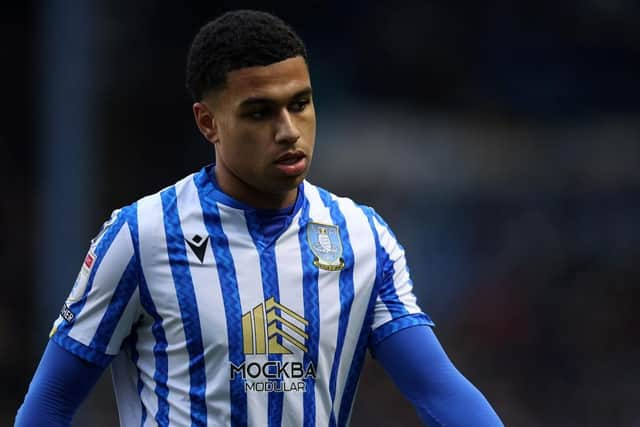
Shea Charles showed at Sheffield Wednesday how adaptable he can be – as a holding midfielder, a box-to-box man or a classy centre-back.
Who you are linked with and who you end up signing are rarely one and the same, but the players Leeds are looking at suggests a big theme of this summer's recruitment will be adaptability.