
Neil Redfearn: Young players bring so much to a squad but supporters want to see you winning

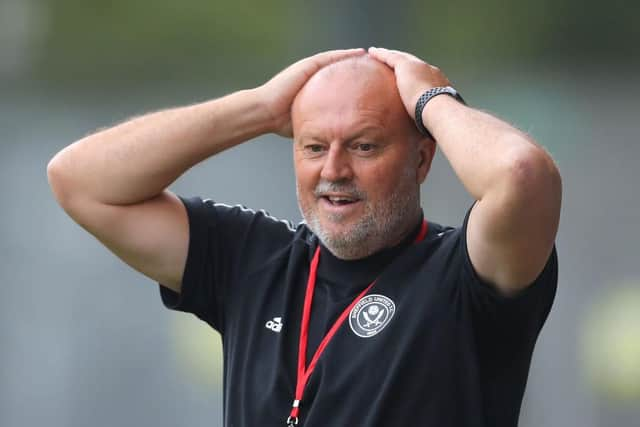
Having played in the Premier League and Northern Premier League and just about every level between, having managed at academy, senior men's and women's level, Neil Redfearn has experienced the whole gamut of the professional game, but youth football will always have a special place in his heart.
The 60-year-old started in development football at York City, and most recently worked there with Bradford City, but it was at Leeds United where he was most able to translate it to senior level.
So nobody needs to tell the former midfielder the value of bringing through young players. Equally, being sacked after just 33 games at Elland Road and 21 with Rotherham United reminded him of the pitfalls.
Still, he likes to see managers try. It is just how he was brought up.
"I'd supported Leeds as a kid," he explains. "Under (Don) Revie, basically, they had no money initially and they had to put kids in like (Peter) Lorimer and (Billy) Bremner. And they swam.
"They got promoted (to Division One) and ended up winning the league and getting to a European Cup final (in 1975). All that started from that vision from Don Revie to develop young players."
The importance of home-grown players can be seen across Yorkshire's Football League clubs.
Oliver Arblaster marked himself out as the future of Sheffield United before rupturing his anterior cruciate ligament, and the day he and Sydie Peck are the heartbeat of the team cannot come soon enough.

Academy graduate Hayden Hackney is driving Middlesbrough's flying start in the Championship whilst Sheffield Wednesday's youngsters have been a ray of light in dark times.
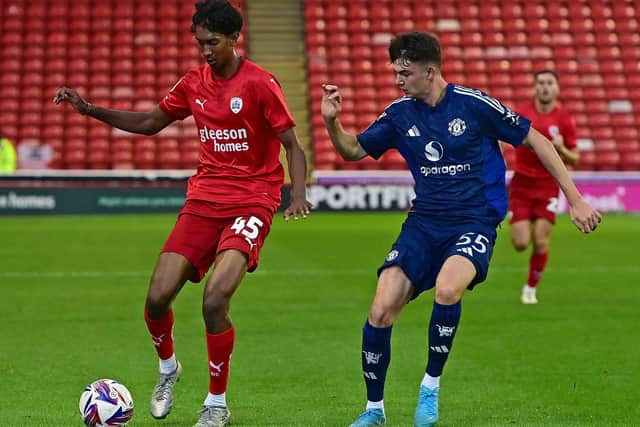
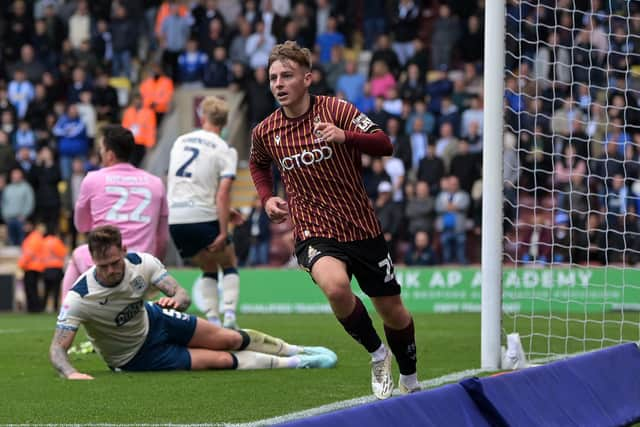
Jonathan Bland and Vimal Yoganathan have revitalised Barnsley in League One, and Bobby Pointon and Jay McGrath have been influential in Bradford and Doncaster Rovers' good starts back in the third tier.
Six of this year's 30 Ballon d'Or nominees – Cole Palmer, Harry Kane, Scott McTominay, Jude Bellingham, Declan Rice and Michael Olise – were graduates of English academies. England's under-21s have won the last two European Championships, the seniors have been runners-up twice.
All are products of the Elite Player Performance Plan launched in 2012 when Redfearn was Leeds' academy director.
"It made you have a look at yourself inwardly, what you wanted to do and how you wanted your academy to look," he recalls. "We had a massive overhaul.
"It's working well at elite level.
"Man United, Man City, people like that just corral the best kids. If it's not through satellite centres where they see them early, they'll pay fees and bring them into their academy. It works for the top end.
"They've got some really good young kids and some really bright coaches at Bradford City. The whole process runs well but by the time you get to (under-)18s, a lot of the better kids have been picked off."
Bringing through young players is something fans like to see, but doing it is easier said than done.
"As soon as you put your football team out on that pitch, people will judge you," warns Redfearn.
"I was fortunate at Leeds because I followed the same cohort. I got the (under-)15s, went to 18s, then I got the 21s job. There was (Charlie) Taylor, (Sam) Byram, (Kalvin) Phillips, (Alex) Mowatt, Lewie Coyle. Tom Lees was at the top of it with Aidy White.
"I had the job of caretaker for three stints then I got the job (full-time) so I was in a unique position where I could give them an opportunity.
"I'd seen Leeds under (Neil) Warnock and Simon Grayson and I knew these kids were as good as the players that had been playing in first team – if not better, some of them.
"It gave the club some stability at a time when it was tough and benefited the club big style in the end."
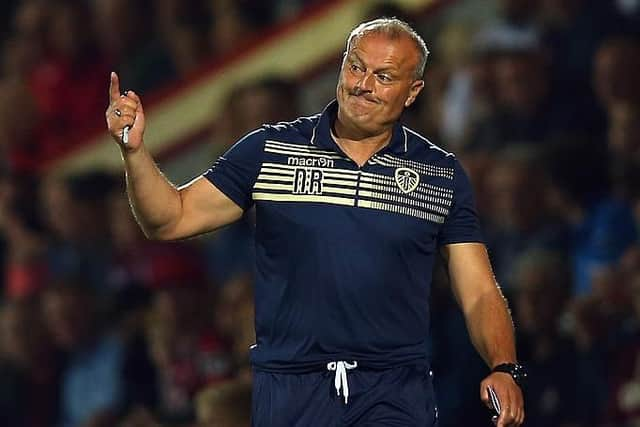
But stability is always difficult in football, as he found in his next job at Rotherham, where he was brought in on a two-and-a-half-year contract and sacked after four months with the Millers 22nd in the Championship. His successor, Warnock, was an inspired replacement but 65 years-old then, not a long-term one.
"The manager before, Steve Evans, just brought players in at that mid-20 age that were established,” recalls Redfearn. “The remit for me was basically to build a club so there were young players coming to compete and have that little bit of stability rather than be a yo-yo club.
"It just got to first base and then that was it (and Redfearn was sacked).
"As much as you want the business model in place, your supporters want to see you winning."
But as long as they are good enough, young players will always add to a club.
"Fans sometimes are willing to cut the young kids a bit more slack," he argues.
"These kids become assets, which probably quadruples the money they would have got (by selling) at youth development phase
"It's different for kids coming through. They don't understand the pressures of having to win and lose. They don't know how serious it is for the manager.
"They don't see any danger. They just want to play their football and get on.
"It actually frees up the mentality of the senior players. It gives them a lift because they play as they train."