
Rival Yorkshire managers Grant McCann and Conor Hourihane on social media - and 'fandamentalism'

FOOTBALL supporters are as angry as they have ever been.
Rising ticket prices, kick-off times, VAR, sanitised match-day experiences and the dominance of an elite Premier League 'cartel' are among the grumbles - justifiable ones at that in fairness.
Such dissatisfaction has an ready-made outlet on social media and some of that anger can be constructive in giving fans a voice and making important points and being a force for good.
Such gripes are only part of the story.

Unfortunately, there is an other side to the cyber world.
It is increasingly a place where the fury of fans - 'fandamentalism' as one article labelled it recently - has a more personal side, with players and managers in the firing line alongside rival supporters or even those who follow the very same club.
Several Yorkshire clubs have experienced periodic bouts of ‘hate’ during the current campaign among sections of irate followers.
Things also have the potential to turn sinister and cross the line, sadly, in the worst examples across the country. The catalogue of incidents involving vile online trolls has been a depressingly long one in recent years.
Earlier this week, an Everton fan was given a three-year football banning order after being convicted of posting racist, homophobic and transphobic comments on social media.
Given examples such as the above, everyone involved in the game - from managers and players to right-minded supporters - are entitled to ponder: 'Why should we bother?' when it comes to using online platforms.
It was also revealed this week that social media bans, digital curfews and time limits on apps are to be trialled in the homes of hundreds of UK teenagers.
Many managers would be forgiven for wishing it to be extended across all age ranges, in truth, given the levels of toxic abuse which can pollute discourse and cross the line by targeting their players in particular. Managers as well in some cases.
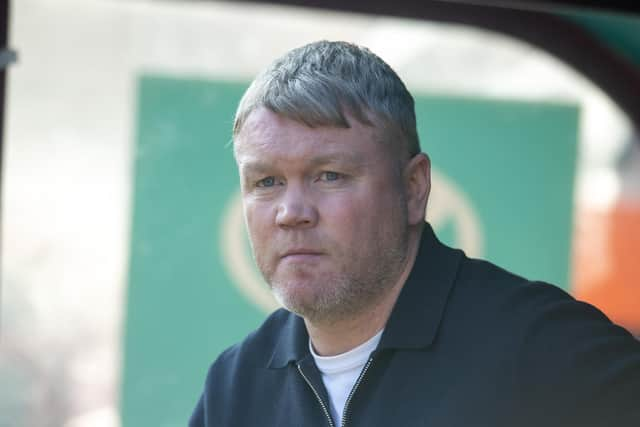
Offering a managerial perspective, Doncaster Rovers chief Grant McCann said: "I get it if you're upset and you're frustrated and disappointed that the team is not playing well and not getting results.
"I understand you pay hard money. It's not cheap to go and watch football these days, particularly if you go with your family.
"But I just don't think that gives you the right to abuse people and then call everyone all names under the sun.
"And I've seen it so many times in football and I've suffered. Particularly when we were in a bad spell at Hull.
"But I think you just need to be a sort of different sort of brain to be a manager.
"You need to be able to take that upon your shoulders and try and see through it and try and keep your team focused on what the job is.
"Players get abused and all sorts online. These days, the way social media is, there's no hiding place now, people can just say what they want to you.
"If you respond to them, you get in trouble. So it's hard. It really is."
In the past, online boycotts of social media across the Football Association, Premier League and EFL have proved effective in displaying solidarity against racism and discrimination.
They have formed part of collective attempts to try and put pressure on social media companies to do more, much more, to combat online hate following heinous examples of online abuse disgracefully meted out to footballers.
Little has been done by tech companies in truth.
At it's best, social media can be a way of players interacting with supporters in positive ways. But there is a trade-off.
Most managers leave it up to the discretion of players regarding whether they chose to interact on various platforms, given the obvious pitfalls in doing so.
More especially in this day and age where a team losing a few games rapidly lurches into a full-blown crisis on various interaction platforms.
Equally, there can be an overreaction when a teams wins a few matches amid an increasingly polarised environment.
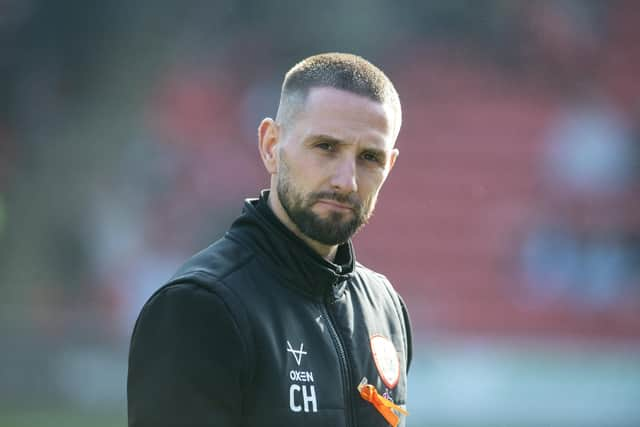
Giving his take, Barnsley head coach Conor Hourihane said: "I think that's the kind of world we're living in now.
"Everyone gets so excited about something and then if something goes wrong, it's like doom and gloom constantly.
"If it affects players - and I'm not saying it about just my players but any players - don't go on it, don't look at it.
"If you can handle it because it's toxic and it's chaotic, then by all means go for it. It's completely how you see it.
"But from my point of view - win, lose or draw, social media frenzies or negativity - it's really irrelevant.
"People have their own mindset and thoughts on things - and about anything by the way.
"My biggest thing is always being emotionally in control. I speak about it a lot and that's never high when we win and never low when we lose."