
Ex-Sheffield United and Leeds United boss on dealing with reality of Championship management and his Leeds Beckett University education

It is rare to get a football manager outside of his comfort zone – away from the dugout or the dressing room – but that’s where Paul Heckingbottom was to be found last Wednesday night, back at the institution that helped shape him as a coach.
Heckingbottom was a guest at the Carnegie School of Sport for a reception to honour he and the 36 other inductees into Leeds Beckett University’s Sport Hall of Fame.
The Barnsley lad who played for Bradford City and Sheffield Wednesday, and managed his hometown Reds, Sheffield United and Leeds United, was back among fellow scholars like rugby league star Jamie Jones-Buchanan, Olympic triathlon champion Alistair Brownlee and weightlifter Emily Campbell; sportspeople whose time at the university helped propel them to success in their chosen fields.
When Heckingbottom first went to study at Leeds Beckett University more than 15 years ago, he was a retiring footballer looking to add a string to his bow.
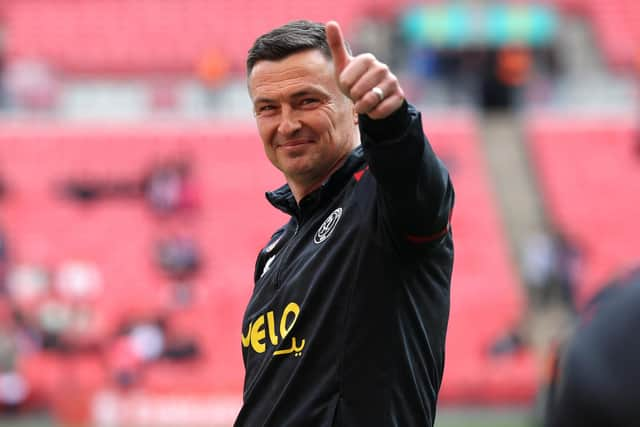

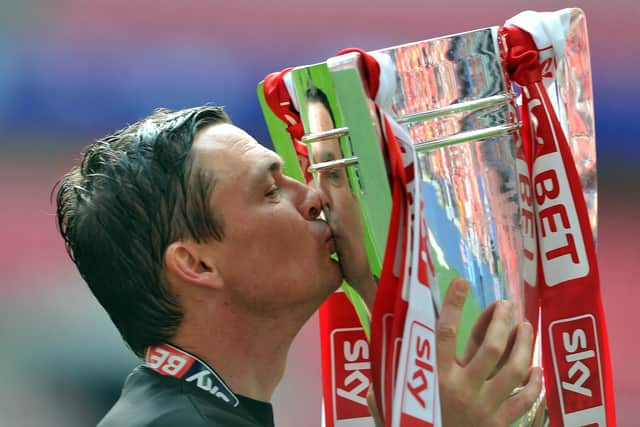
By the time he gained his Masters in Sports Coaching in 2016, having already gained a BSc degree in the same subject three years earlier, he had used his hard-earned skillset to make an explosive start to life in football management, winning a League One play-off final and Football League Trophy double under the Wembley arch while in caretaker charge of Barnsley.
“This place was huge for me,” Heckingbottom tells The Yorkshire Post in the atrium of the state-of-the-art Carnegie School of Sport building on the Headingley campus.
“The only reason I started out was I wanted my CV to look different. When you’re a player, if you want to stay in the game you’re competing against all your peers who have played hundreds of games and have probably done the FA qualification. So I wanted to add something else to my CV. But about five, six months into it I realised I was learning a lot and could take a lot from it.
“Which is why as soon as the degree had finished I jumped straight on the Masters as well.”
Interacting with people outside of the world he had created for himself in football, proved invaluable for Heckingbottom.
“Not only did it get me out of the football bubble, but you were mixing with different people who were dealing with similar situations in different sports and you were learning loads,” he recalls.
“And I still refer back to it now. I don’t think I would have jumped at the chance to be a manager, or learnt as much as a manager and had the reference points that I do, if I hadn’t have done the degree and the Masters.
“I say it all the time – individual athletes, I find them so inspiring because there’s no hiding place, their mental resilience and the qualities they show is what you’re trying to achieve in football. But in football it is a lot more about talent and personality on the pitch. There’s generally 20 of you and it’s about the team rather than the individuals. There’s so much to take from these guys.
“And I’d encourage any footballer to do it. What I’m seeing more and more of is players doing unrelated degrees, not so much sports coaching, maybe it’s a sports directorship course, maybe it’s sports finance, maybe a sports psychology course.
“When I did it, it was sports coaching. I’d been in football since I was five years old, so I knew that side of it, but what was great for me was the coaching, leadership, management, learning about the politics of sport.
“So whatever they can open themselves up for is really important for footballers and it gives them a different perspective on what life gives them.”
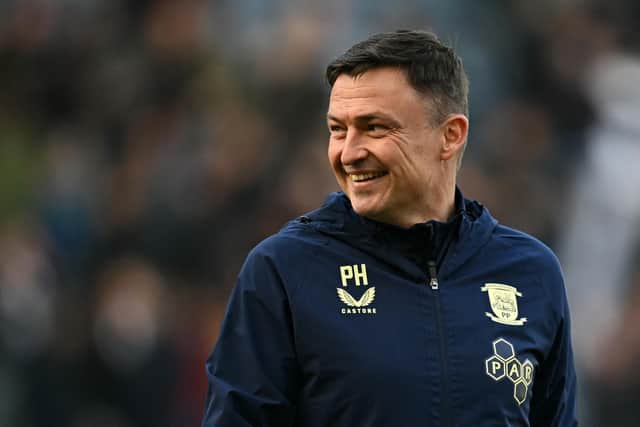
That sense of perspective helps. When we speak, Preston are fourth. Subsequent defeats to West Brom on Saturday and Birmingham on Tuesday have seen them drop to 10th.
This Friday night, Heckingbottom welcomes his former employers, Sheffield United – who have won their last two games – to Deepdale.
Heckingbottom led the Blades into the Premier League in 2023 but was sacked eight months later.
“I think back to one of the things I’m proudest of at Sheffield United, was when we got promoted, just that sense of reality, blocking out the outside noise,” recalls Heckingbottom.
“When there’s issues, when there’s lots of people’s opinions, just forget about it and focus on your own job. That is evidence to me of how important that was and we use it all the time now at Preston.
“We were favourites to go down this season. Now those people who said that are saying nice things about us…but we’ll still ignore them.”
Heckingbottom concludes: “All the jobs that you have, you get better, you don’t get worse.
“That fallacy in football of if you get sacked you’re no good…I’m a far better manager/coach now than I was when I had my first job when I got Barnsley promoted and everyone raves about you.
“If you’re able to learn, stay motivated and deal with everything that comes with being a football manager, you can only get better.”