
Sheffield United retro: Thirty years on from Dave Bassett's stormy exit at Bramall Lane

DAVE BASSETT'S tumultuous tenure at Sheffield United was never going to end quietly and it didn't.
Thirty years ago this month, something had to give when a feisty, streetwise working-class Londoner in Bassett collided - almost literally - with an adversary from a Yorkshire pit village.
The name of Bassett's rival was Charles Green, a one-time Mexborough Sunday League footballer.
The story back in December 1995 revolved around Bassett’s deteriorating relationship with the Blades board.
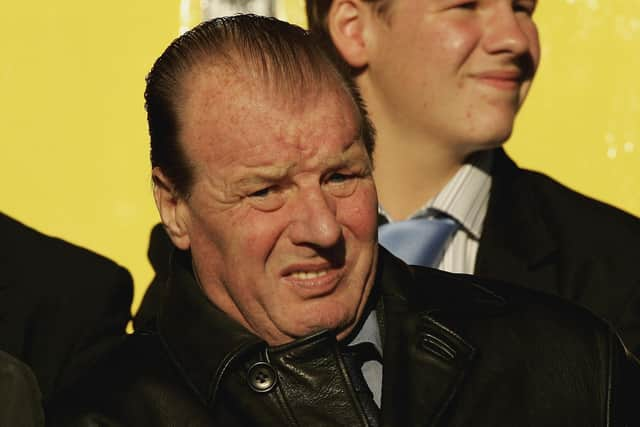

Bassett’s days were effectively numbered when Reg Brearley sold out to Manchester-based businessman Mike McDonald and it was McDonald’s acolyte Charles Green who wielded the axe and delivered news of his sacking one early winter's day.
A row over cash erupted between Bassett and Green and almost came to fisticuffs.
Details of the stoush between Bassett, in the one corner, and Green – who subsequently became chief executive of the Blades and later Glasgow Rangers – was chronicled in a book entitled Fit and Proper?: Conflicts and Conscience in an English Football Club.
An excerpt read: “Bassett... claimed that his pay-off wasn’t the full amount owed to him and an argument ensued with Charles Green.
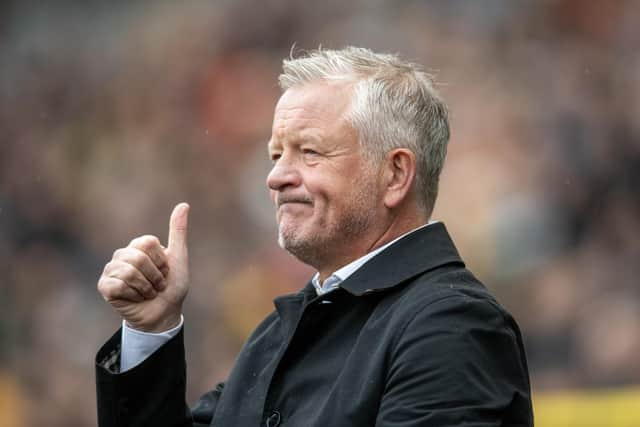
"The club’s management style of the time decreed that Green offered to settle the dispute by physical means in the car park; it wasn’t the first time he had employed this unique style of ‘diplomacy’.
"But Bassett called his bluff and Green backed down.”
It was a sad and unedifying end to Bassett's stint in charge which lasted seven years and 11 months and brought pride and prominence back to United, after being on their uppers in the mid to late 80s.
Bassett arrived in January 1988 at the cash-stricken Blades, whose morale was at rock-bottom. It got worse before it better with the club relegated to the third tier after losing a play-off against Bristol City.
It proved the nadir and former Wimbledon legend Bassett rebooted the club in his own image.
The unbridled passion and enthusiasm of Bassett earned him the job ahead of the likes of Keith Burkinshaw, Ken Brown and Cyril Knowles.
On his qualities, widely-respected Blades director Derek Dooley memorably said at the time: "He’s more than a breath of fresh air: he’s more like a hurricane. He could even have got me playing for him and I’ve only got one leg!”.
Bassett got to work in 1988-89 and a golden Blades era began, with Brian Deane, Tony Agana, Ian 'Jock' Bryson at the forefront alongside the likes of Bob Booker and Paul Stancliffe.
The United boss reprised his cherished days at Plough Lane with the Dons as his new bunch of blue-collar grafters became a band of sporting brothers who could play if opponents wanted to play and also fight if rivals wanted to fight.
Among their number was a Blades-daft full-back by the name of Chris Wilder, who has regularly spoken about Bassett being a mentor for him in his own successful managerial career.
Back-to-back promotions arrived culminating in promotion to the top-flight at Leicester's former Filbert Street home in May 1990, in front of 10,000 travelling Blades in the sunshine.
The Blades’ exploits that season were captured in a documentary called United! – including some memorable footage from the East Midlands.
Needing a win to clinch promotion, Bassett’s final words to his players just before kick-off were succinct: “If you’re shi**ing yourself, just imagine what me and Bag (nickname for his number two Geoff Taylor) are doing..” The Blades won 5-2.
And then the big time. And a roller-coast first season back in 1990-91.
Some 11 points adrift of safety, the Blades propped up the old Division One table with just four points ahead of one of a truly miraculous story, which germinated after a pre-Christmas home win over Nottingham Forest.
United, incredibly ended the season in 13th place, with their magnificent form including a seven-match winning streak.
Bassett's Blades finished ninth in the following campaign and he was rewarded by way of a new four-year deal in time for the inaugural Premier League season when his side finished 14th and faced Sheffield Wednesday in an all-Steel City FA Cup semi-final at Wembley in April 1993.
Thirteen months later, at a venue not too far away, there was further despair for the Blades, who were relegated on the final day of 1993-94 at Stamford Bridge following a late goal from Chelsea's Mark Stein. It was the Blues of Everton and not Chelsea who cheered the result most heartily as they staved off relegation.
Boardroom tension rose on the Blades' return to the second tier culminating in those events of three decades ago. But Bassett's place in Bramall Lane folklore is forever assured.
A supreme man-manager, tactical organiser and occasional rabble-rouser, Bassett – now 81 - was also a trail-blazer, according to present-day Blades boss Wilder, who pinpointed his embracing of sports science, psychology and video analysis during that feted 1989-90 season which was subject of that aforesaid TV documentary.
Great managers adapt and Bassett, who has later spells in Yorkshire as boss at Barnsley and assistant at Leeds United - did. His later success down the M1 at Forest was testament to that.