
Sheffield United Women using Moneyball to bridge widening financial gap in Women's Championship
AFTER a summer in which the future of the women’s football programme at Sheffield United came into question, the team tasked with rebuilding the squad have turned to a radical form of player evaluation to combat bigger budgets and the inexorable march towards professionalism in the second tier.
Moneyball was a buzz word two decades ago when a book exposed the methodology of the Oakland A’s baseball team of using statistics and data to recruit players to even the playing field against more handsomely resourced opponents.
The movement filtered into football. Mark Warburton was a big proponent of it, Brentford have been, even Barnsley have dabbled.
Now first-year head coach Ash Thompson, head of women’s football Aaron Little and analyst Ben Lewis have adopted the approach with Sheffield United.
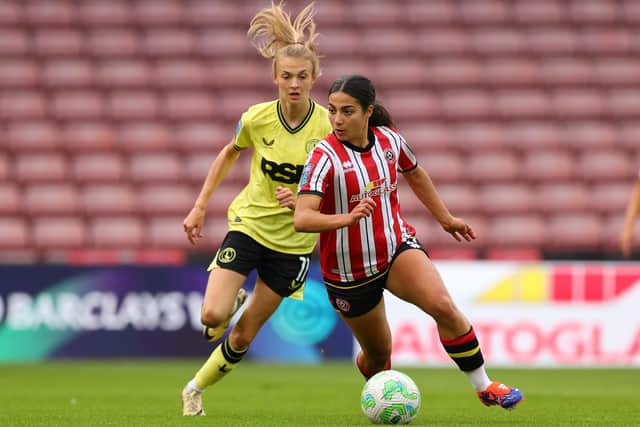

They needed to do something. After a tumultuous season in which popular player Maddy Cusack died, their head coach Jonathan Morgan was sacked under a cloud and they were almost relegated from the Championship, worse was to follow in the close season as stalled takeover talks at the top of the club left the women’s team in limbo.
When Thompson - the club’s Under-21s coach since November 2021 after joining from Leeds United - was asked to step up to head coach, he had only two players contracted to the club because the vast majority had moved on as their deals expired amid the uncertain future.
Furthermore, new money was starting to filter into the Championship as clubs tried to keep up with the rampant move towards professionalising the top two divisions. Newcastle United were promoted into the division with money, London City Lioness have big investment.
“Because we had a whole squad to fill and not a lot of time to do it, we were quite savvy and I’m proud of the work we did in that time, given the preparation was an absolute disaster,” admits Thompson, who had a taste of the dugout with the senior team when assisting interim head coach Luke Turner towards the end of last season.
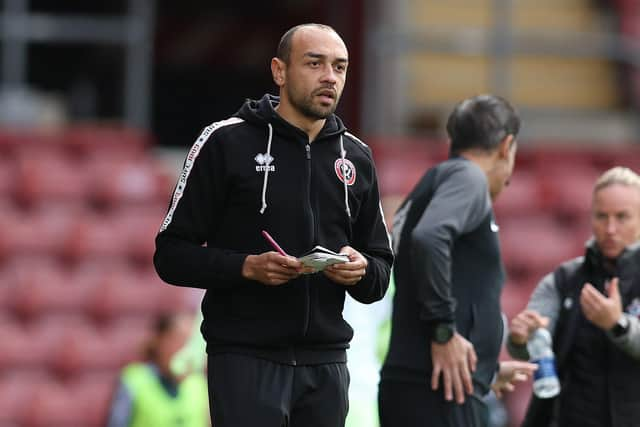
“We’ve got a really good analyst in Ben Lewis, so we worked together to create stats models which helped us identify targets, similar to the Moneyball process.
“With me stepping up I don’t have a huge breadth of relationships with players of Championship level, I can’t just pick up the phone to players I’ve worked with in the past and get them to jump on board.
“We’ve had to be clever in the way we’ve gone about it.”
Delving a little deeper into the stats-based process, Thompson explains: “We’re trying to find additional value in players and trying to understand and map players abilities to what I want to do as a coach.
“We broke down every player’s stats to understand them as a player, so we don’t have to watch hours and hours of footage. We use it more as a filtering tool as anything else, to rank the players as to how well they fit for the position that we wanted.
“Take centre-back for example - we have a diverse range with some excelling as ball players, some defensively, and you want a blend of that across the squad.
“We are an operation of limited resource, we don’t have the manpower to go and scout all the leagues in detail, so this model has allowed us to go and look at the League of Ireland, the Scottish League, the academy league, and just get a feel for what’s out there.”
Together they have built a squad, it’s just not a winning one yet. Sheffield United have lost their first five games of the season and sit second bottom in the Championship before a game under the Friday night lights of Bramall Lane tonight against a Birmingham City team Thompson rates as one of the five or six in the division who have ambitions of reaching the Women’s Super League.
“We had to delay pre-season by two weeks and this will be the first-team squad’s sixth game together, and it’s already the sixth league game of the season,” he says.
“I’d be lying and naive to say that it isn’t a factor. We know that one team goes down and after the preparation we’ve had, the priority is not to finish 11th, but that doesn’t define what we do day to day, it is all about tracking our own performance, our own improvement.
“I think we’ve made positive steps and I’m confident we’ll be able to meet our objectives.
“It’s not lost on me or anyone in the building that we need points.
“There’s probably five or six teams that from a financial perspective are higher than the rest, it does make it harder for us to compete, but that’s the challenge. The one great thing about football is it’s not played on paper, it’s not played in boardrooms, it’s played on the grass.
“Part of my job as a coach is to over-achieve, that’s the barometer of success for me.”