
Sheffield United's Chris Wilder: I know more about football than I ever have but I still want to keep learning

Chris Wilder says he knows more about football than he ever has in his 58 years on this planet, but he is enjoying further expanding his horizons working with the men who took his dream job from him last summer.
When Sheffield United lost last season's Championship play-off final, COH Sports, who had been in charge for six months, decided to move in a different direction, sacking boyhood Blade Wilder and appointing former Hull City coach Ruben Selles in his place.
The club is still recovering from that spectacularly bad move, left with only an outside chance of making the play-offs in a campaign where they should have been firm favourites to go up automatically.
But COH reversed it in September, sacking Selles and reinstating Wilder, who says they now have a good working relationship.

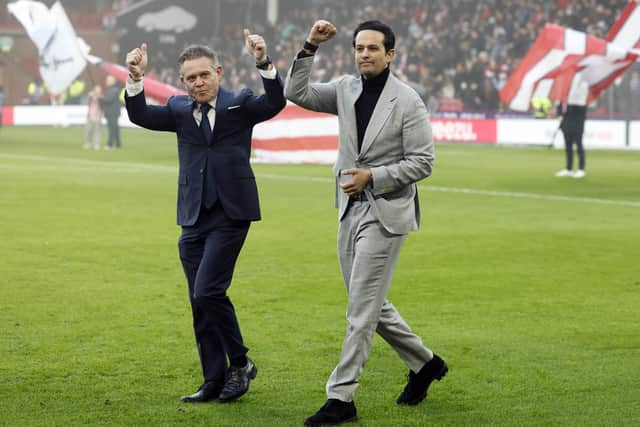
Nobody could argue the Americans, some of whom have scientific backgrounds and others experience of working in US sport, are football experts but Wilder says he is enjoying exchanging ideas and learning from their careers.
“I think it's key to listen to their experiences,” says Wilder, who has been involved in professional football since the mid-1980s, and managing for a quarter of a century.
“To buy a football club you've got to be successful in your business. They've not inherited money or won one of those big rollover jackpots for $500m that they do over there!
“Steve Rosen (the co-chairman) is from Cleveland, I've been there and it's got a lot of similarities with Sheffield, a working-class city where nothing's given to anybody.
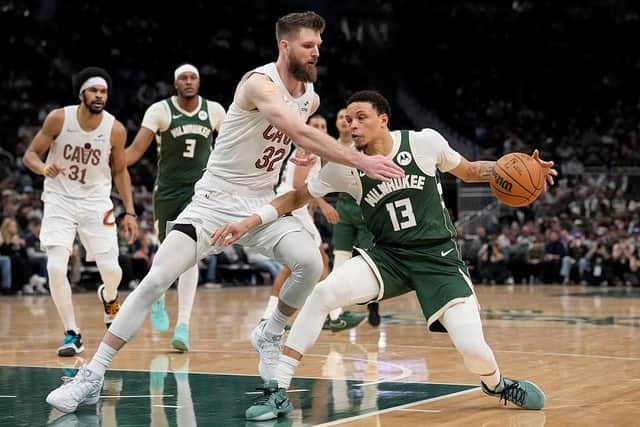
“One of the directors (Len Komoroski) is involved in the Cleveland Cavaliers basketball team so it's interesting to listen to what he has to say as well.
“There's dialogue right the way through. They're supportive of what we do and I think rightly so. There's a lot of experience at the football club through Steve (Bettis, the Blades' chief executive) and Carl Schieber (head of football administration), through the coaches and myself and Alan (Knill, his assistant).
“We're learning about the guys, which I think is really good, and they're looking and learning.
“They've not been steeped in football but they want to bring their ideas in, be positive and drive the club in a good direction in my opinion.”
Wilder admits it frustrates him when he is portrayed as difficult to manage, and someone who wants the powers of a 20th Century English manager, with complete say over all aspects of his club. The role is no longer like that.
“My job is to work with people – it always has been, always will be,” he argues.
“Sometimes you get tagged with being difficult to work with and it's my way or the high way. It's never, ever been like that.
“I'm a servant to the football club but if somebody asks my opinion I'm going to tell them what I believe is the right way to go. Then we have a discussion.
“But I don't make the huge decisions, I give my experience and try to give them what I know about the game and certain situations and my viewpoint on stuff to make us better.
“I could easily say, 'You need to write a cheque for £150m and sign those players,' but what happened down the road (at Sheffield Wednesday) can happen to us.
“I've been part of that when players haven't been paid and staff have been laid off and everything goes the way nobody wants it to go.
“There are always club decisions to be made working in conjunction with people like Kevin McCabe, who I had a fabulous relationship and Prince Abdullah – we had a good relationship.
“I wouldn't have had that conversation in September (about coming back as manager) if they didn't feel I was the right person or they didn't seek my knowledge and advice.”
Wilder showed himself to be one of the great tactical innovators in his first spell at Bramall Lane, taking the club from League One to the Premier League with a game based on overlapping centre-backs, yet the Sheffielder is painted in some quarters as a relic of past times.
“You get a little bit frustrated at times,” he admits.
“We played Coventry City last week and I like to think tactically we were okay. Out of possession we stopped them playing and in possession we played.
“We don't survive in this business without evolving, moving forward and learning in the job.
“When you see what's happened at West Brom, where they appointed a young manager (Ryan Mason), then another young manager (Eric Ramsay), maybe West Brom fans will be a little bit frustrated.
“I know more about the game than I've ever done but it’s important I'm willing to open that up, listen and work with people, which I have done.
“The best in the business (Sir Alex Ferguson) was still working away at 70 and winning Premier League titles. I'm not at that level but I still feel I've got a lot to offer in the back end of my career.”