
Football Regulator Exclusive Pt 1: Sheffield Wednesday crisis sees new powers sped up to deal with Dejphon Chansiri

English football's first regulator, David Kogan, says his new powers are being accelerated to allow him to deal with the "absolutely critical topic" of Dejphon Chansiri’s mismanagement of Sheffield Wednesday.
That Kogan chose The Yorkshire Post for his first print interview in the job perhaps highlights the importance he places on resolving the mess at Hillsborough, an issue he says goes way beyond the boundaries of the Championship club's home city.
And although he cannot take a public stance on the Thai businessman before an investigation has taken place and will not put timescales on the process, the newly-formed Independent Football Regulator (IFR) he was only confirmed as chairman of on Monday is trying to speed it up as much as possible.
"I am really aware Sheffield Wednesday isn't just a problem in terms of Sheffield," said Kogan, whose appointment was endorsed by a select committee in May despite concerns in some quarters about him being a Labour party donor. "Sheffield Wednesday was a founder club of the football in this country.
"Sheffield Wednesday is a club that is way too important to be ignored because it's got this 158-year history."
Of the IFR's powers, measures to block and weed out "rogue owners" are due to be first on the statute book, and it is no secret Owls chairman/owner Chansiri will almost certainly be the first target if still in situ by then.
Pressure from the Football League has so far not forced Chansiri to sell the club, but Kogan will have the power to forcibly remove him if he sees fit.
One of the regulator's jobs will be to "assess the honesty, integrity and financial soundness" of would-be and current owners. This is something the leagues currently do, but once signed off by Parliament, Kogan’s powers will go much further, ranging from fines and public censures to prison sentences in the most extreme cases.


Kogan has kept fully up to speed with the situation at Hillsborough, where Chansiri has become unwilling and/or unable to provide the financial backing which had been propping up the club since he bought it in January 2015.
Wages of players and non-playing staff have not been paid in full and on time for five of the last seven months, and debts to HMRC and other clubs have not been settled on time either.
The result has been 10 Football League (EFL) transfer embargoes – six still active – the decimation of the playing and coaching staffs, 13 points won from the last 54 available, fan boycotts and protests, and disciplinary charges against Chansiri and Wednesday, with the latter almost certain to lead to a substantial points deduction.
Chansiri has long said he is willing to sell the club, but none of the interested parties have yet been able to strike an agreement.
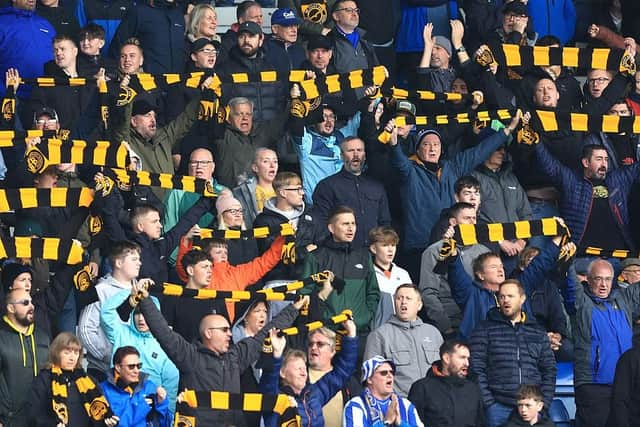
"We have been in direct contact with any number of people involved in the Sheffield saga," stressed Kogan. "We've talked to fans groups only this week, we have constant communication with the EFL, we have constant communication with the political figures who are obviously very involved in this from the city of Sheffield.
"So we are not sitting there ignoring this at all, quite the contrary. I'm very really conscious of this and so are my colleagues.
"We only got Royal Assent at the end of July, we have been moving heaven and earth to speed things up.
"It's about every club but clearly we're very aware of Sheffield Wednesday being the absolutely critical topic that it currently is.
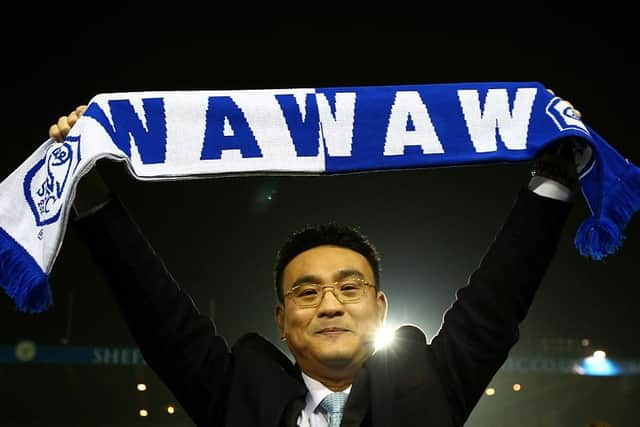
"We have been working with DCMS (the Department for Culture, Media and Sport, which created the IFR) to try and get our powers and our consultation processes up much earlier than they originally intended.
"At the end of August we put out our first consultation about owners, directors and senior execs. That consultation came to an end on Monday. We had 70-odd responses, which we need to go through.
"That's then going to flow into a process in Parliament where they have to go through secondary legislation and that in turn will then lead to our powers.
"So that's all happening, it's all in train.
"The train has left the station and it's going to go through to its inevitable consequence which is that we will be empowered first of all to look at clubs about which you may have a concern, secondly to investigate them and thirdly to take action on them.
"We've got to see whether bills are being paid, how the club is operating and then we're going to have to take a review.
"All you have to do is read the legislation – which of course most people don't – to see that our powers are are very clear.
"We ultimately have the power to do any number of things including basically get an owner out of a club and put in some form of replacement executive management, be it an administrator or whatever.
"We have the authority that the EFL doesn't have. It's powers we don't particularly want to use but we will use if we have to."