
'I was inspired by the Tour de France': How Yorkshire entrepreneur took cycling to a new audience

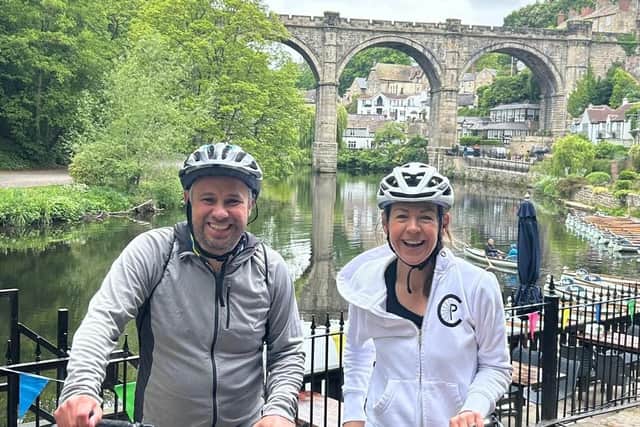
IT IS a fresh spring day, a little cloudier than the recent wall-to-wall glorious sunshine, that affords myself and my cycling companion a little more comfort on a weekday morning’s bike ride around the greenways and urban thoroughfares of Harrogate and Knaresborough.
It is a 27km jaunt from Rudding Park and back again, one that can one minute be testing our road safety etiquette, the next, plunging us along country lanes lined by million pound homes or weaving through dog walkers on canal paths.
There is a freedom to it, a certain kind of peace. At one with nature. Out of the office. Sampling the great outdoors.
To me, not even a weekend cyclist, it is a bit of a one-off, much longer than any other of the infrequent rides that populate my Strava App.

To my companion, Kate Auld, it is the day job.
“Come for a bike ride,” she said, when I put an appeal out to sports clubs to let me come and have a go at their sport and write about them, to help spread their gospel.
“I know how to ride a bike,” I responded, without admitting that anything to do with maintenance - even repairing a puncture - is where my interest ends.
“I’ll make you fall in love with cycling again,” was her response.
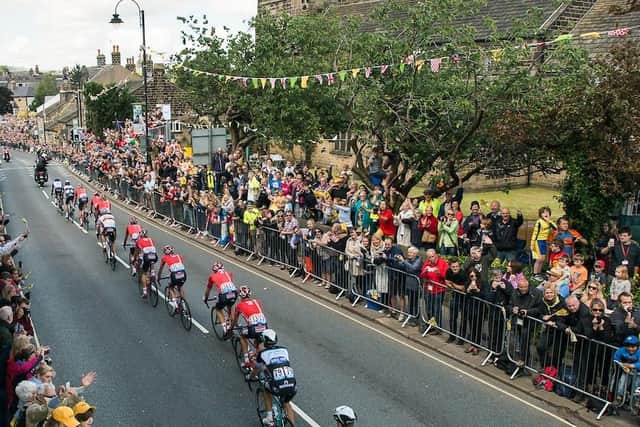
So off I went to Rudding Park, hybrid mountain bike unceremoniously folded into the boot of the car, lycra shirt that was a gift from one of the teams that contested the Tour de France here 11 years ago, clinging to my skin a little too tightly for comfort.
It was around that watershed moment for cycling in Yorkshire that Kate got the bug.
A mum of two, wife of a husband who cycled, it had never been something for her.
“My husband Rob had been the one who’d done the big rides, his cycling escapades put me off because I’d been called in to rescue him off various hills,” she says.
“I just saw it as something for blokes…and punishment, as opposed to freedom and joy which it gives me.
“It started off with me actually seeing people like me doing it. I’d been doing the local bed race with friends a few times and it built my confidence up. When I saw them start cycling, I thought if they can do it, I can give it a go.”
By 2021, when society was emerging from Covid, Kate had quit her old job and launched her own company, The Personal Cyclist, aimed at getting more people cycling, and normalising the pursuit.
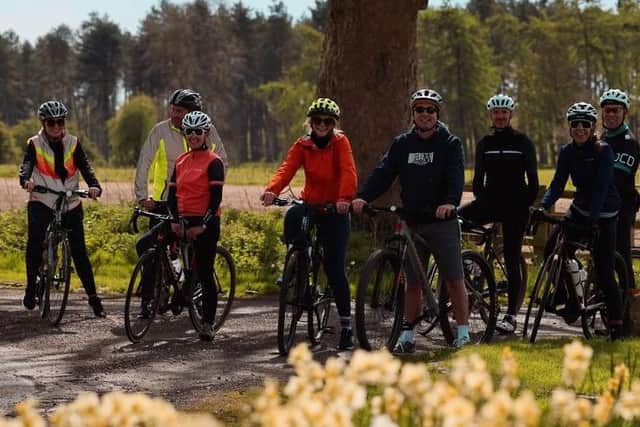
The day after our ride, she took a group along a similar route on a corporate day. There are one-on-one sessions and repeat visitors who just want a structured ride.
“In this job, I don’t feel like I have to be the best cyclist, I need to be the best at communicating that, sharing that, and giving clear instructions,” says Kate, who took a British Cycling bursary to get her company off the ground.
“It’s not about my ride, it’s about them finding their thing.
“I’ve done myself out of clients before because they’ve come to me and I’ve helped them and then sent them on to clubs or whatever their next thing is.
“I’m not an outdoors instructor, I’m simultaneously trying to spread the word that cycling is life-enhancing.
“The idea was to share that experience with as many people as possible and bring it to people who maybe thought it wasn’t for them; busy working professionals who don’t have time.
“My background in travel and hospitality PR in Yorkshire has helped me with that, I knew there were so many amazing venues and cycle routes that we could make it more inclusive for everyone.”
As much as her client base is a mix of genders, Kate’s modus operandi is to get more women out on a bike.
“It’s just putting yourself out there, particularly women,” she says.
“They’re brilliant at asking for help. But women’s bodies are built for endurance, we just lack confidence.
“There’s a reason why there was an outcry back in the day that all the suffragettes were getting out on their bikes - it’s because it was freeing, it was the original freedom machine.”
Riding a bike does come with risk though.
If you’re anything like me, then the act of powering up a steady incline on a busy road with articulated lorries, vans and cars slowing up behind you or swerving out and shaking their fist as they drive by, has you gripping the handle bars in panic and hugging the line closest to the curb.
It can be a hair-raising experience, off-putting almost, as a nice leisurely ride suddenly becomes a game of chicken with vehicles tearing around at 60mph.
I’ve been on the other side of it as well, in those cars that exaggeratedly swerve into the oncoming lane.
Cyclists and motorists are not the happiest of road-sharers, but it is their road to share.
“We have to start getting people out of their cars, because the roads are horrendous,” says Kate, who is a good educator in how to ride safely on the road.
“It’s a case of trying to avoid those situations, and putting yourself in a position where mentally if you’ve had a positive experience on a bike it’s going to set you up to have more positive experiences.
“I’m a driver, but I also used to walk my kids to school. There’s a space for everybody.
“The infrastructure needs improving. In Paris, the female mayor during Covid decided to cordon off parts of the roads and it’s now tree-lined and has become one of the best cities to cycle.
“It’s normalised there, I want to help normalise it here. People getting from A to B on their bike, not in the car.
“The first time it might be scary, but then it gets easier.
“What I’m encouraged by is in Leeds and in York, they’re putting investment in.
“In Harrogate the cycling lanes are really patchy, they’re there and suddenly they stop.
“From a safety perspective, if you’re driving in a car you’d want the cyclist to be cycling in a straight line not jumping in and out of cycle lanes. But that’s about not being joined up.
“The new station development at York will have integrated cycle lanes, but what the council is doing more of is guiding residents through where those networks are and helping them: a) have access to bikes and then b) navigate their way through. There are cities and towns that have got really good interactive cycle maps.
“Change is going to be controversial, but you have to be quite brave about it because the impact it has long term is worth it.”
There are enough cycling routes, clearly identified by blue signposts, to keep you off the roads almost entirely.
Having cycled down the canal path for a coffee stop by the River Nidd under the viaduct in picture-perfect Knaresborough, it was blue cycle routes nearly all the way home for Kate and I.
“The Beryl Burton Cycleway in Yorkshire, there’s plaques all along it. People don’t realise the history,” says Kate as we travel along the Nidderdale Greenway.
“Even riding around Harrogate, which has a history of cycling, I see more and more women, even in full work gear, not just the cycling gear.”
Yorkshire’s cycling boom of the past decade may have fizzled out but a second wave is coming. As well as regular visits for key national races to these parts by British Cycling - like next week’s Women’s Tour of Britain in Dalby Forest and Saltburn-by-the-Sea - the Women’s Tour de France is coming to Leeds in 2027.
For Kate, who was inspired over a decade ago by the men’s peloton, it is a second chance to get the legacy right.
“In West Yorkshire I would hope that’s already something that’s on the agenda,” she says. “For me the missed opportunity last time around was the legacy.
“I’m a case in point, I was inspired by having it in my town. I was riding a bit by then, but getting close to the teams and seeing them up close, made me realise ‘well okay I’m not going to become a pro rider but I can certainly help people get back on two wheels’.
“There’s an opportunity for other women to see other people like them, and for young girls this is something you can do as a career.”
And with that we’re back at my car. Two hours have elapsed; fresh air, exercise, and confidence levels riding on busy roads restored.
Kate has even arranged for the sun to peak out from behind the clouds.
“I’d love to think in five years time we’re having a conversation where all these people have been inspired to get back on their bikes and are riding into work,” concludes Kate.
“They’re riding with their families, and that cycling is normalised.
“Cycling is a collaboration of the willing, it’s not for everybody, but just to say it’s not for me and rule it out entirely is a great shame because of the pleasure and independence.”