
Quinn Ellis: The making of a Sheffield basketball star who hit the jackpot at US college St John's

Sheffield’s Great Britain international Quinn Ellis is going back to school after signing a multi-million dollar deal to play in America’s collegiate basketball system for one season.
The 23-year-old point guard, who has enjoyed a breakout year in EuroLeague with Olimpia Milano, had the pick of some of the biggest basketball schools in the United States and has opted for St John’s in New York under legendary college coach Rick Pitino.
For one season that will begin after the summer and end with the NCAA tournament next Spring, Ellis will reportedly earn between $4.5m and $4.8m. He is then free to return to Italy for the third season of his four-year deal with Milano, unless he impresses and earns a contract with an NBA team.
Ellis - who is part of the Betty Codona family tree that has run Sheffield Hatters since their inception in 1961 - tried to get into the NBA two years ago when he made himself eligible for the draft. But he was not one of the top 60 players selected.
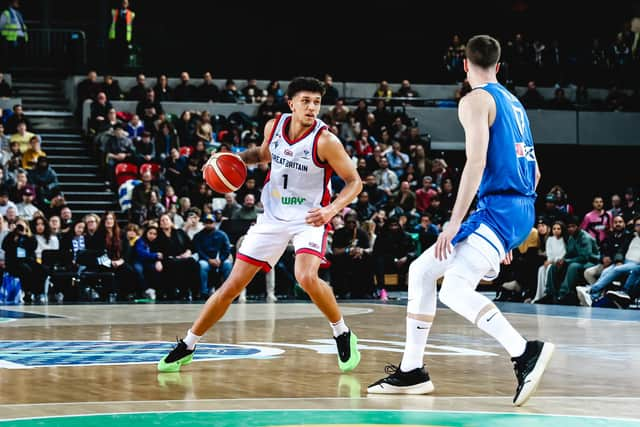

Having moved to Italy when he was 16 and worked his way up the professional ladder there, he has now taken advantage of a changing landscape in American amateur sports by going to college and putting himself in the shop window to make it to the NBA.
In 2021, student athletes became eligible to earn money through their personal brand by a policy known as NIL (Name Image Likeness). That has shifted the goalposts dramatically, and means professionals can now play alongside amateurs in the college game, when for so long the real stars of what is a billion dollar industry were not legally allowed to be remunerated.
Ellis becomes one of the first Britons to benefit and back at his old club, two family members who helped him on his journey think he is making the right move for the development of his game.
Vanessa Ellis, Quinn’s mother and head coach of a Sheffield Hatters team who can clinch the Super League Basketball Women’s regular-season title on Saturday, said: “I am very proud of him and I know he will keep grounded. It’s important that he has people around him; close friends, family, his agent, who always make sure he keeps his feet on the ground.
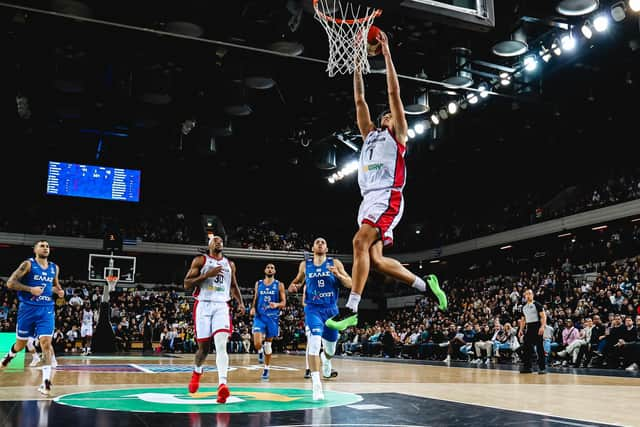
“He’s done amazingly well this year, had a breakout season in the EuroLeague and it’s just building on that, building his own skillset - being the man. He’s got to go there and be the leader, that’s a big change of roles from being the young kid coming in among a lot of very experienced professionals.
“There might be some seniors at college who are older than him but he’s had a lot more experience at a higher level of basketball.
“This is what he needs for a year, to take that lead and be a leader.”
For his junior coach and cousin Tyler Gayle - the brother of Hatters star Georgia Gayle and assistant to Vanessa - going from a man’s league in Europe into a competition where boys are still forming, will allow him to flourish. “The physicality of college is a bit lower, because they’re not seasoned professionals he is playing against every week,” said Gayle.
“The EuroLeague is known as the second toughest league in the world, so it’s really a great opportunity for him to step up.”
At 6ft 5in tall Ellis is by no means a towering presence on the court, but it is his basketball smarts from the point guard position that catch the eye. Coming from a family so ensconced in the sport, mum Vanessa believes that has helped shape the intelligent player he has become. “He’s been around the sport for a long time,” said Ellis, whose son was with the Sharks up until he was 16.
“He’s been around conversations, watching the game, watching training - so you learn the sport from that. He always played in the age group above as well so he was always the youngest on the floor.
“Because of all that - height, age - you’ve got to develop your skills, develop your knowledge, and be able to read the game better. He didn’t just rely on his athleticism. It’s a combination of both nature and nurture.”